
On April 3, 2008, a mother I did not know held her newborn daughter for 27 minutes of life in a Virginia hospital.

The newborn, in utero, had developed with a chromosomal disorder called Trisomy 18, or Edwards Syndrome. The mother knew this from amniocentesis. She knew that this tiny girl would have so many defects of essential organs, including the heart, that life expectancy at birth was virtually zero. A late-term abortion would have been understandable. But Cathleen Warner, a Roman Catholic mother of two boys, chose an option she had learned about in her desperate online research. She would go through with a C-section and be with her daughter for whatever time God gave her. It lasted 27 minutes. For Warner, it was the worst, and best, 27 minutes she will ever experience in life, she said.
I don’t weep easily over the radio, but I wept when I heard this story on NPR’s “On Point” today.
The program was about parinatal palliative care, an approach to the birth of babies so physically compromised that they can live for only a day, or hours or minutes.
I first heard about this form of hospice while I was on a Christian retreat in Virginia: Hospice for a dying newborn. The host who owned the retreat farmhouse also supported a parienatal hospice program, she said.
What’s that, I asked.
When she explained it, my instincts as a journalist perked up, having been the kind of writer who loves long-form stories that touch the human heart. Would a family anticipating the deeply private poignancy of this experience ever give a writer permission to document it, even after-the-fact? I never followed up on that idea.
But it came back to me listening to Cathleen Warner tell her story on public radio.
My emotional tears may also have been salted with anger – election-stress anger. The program framed its subject, perinatal hospice, around what former President Donald Trump had been saying. In his debate with President Biden on June 28, Trump said “they” (meaning Democrats, or maybe undocumented migrants) will allow abortions up to the seventh, eighth and ninth months and even after birth. “They will take the life of a child after birth.” He cited an unnamed “former governor of Virginia” on this. Later, debating Vice President Kamala Harris and at a rally, he pumped this up to be “execution after birth,” and now he was citing an unnamed former governor of West Virginia.
It turns out, the former Virginia governor he had probably heard about, through right-wing filters, was Gov. Ralph Northam, a pediatric neurosurgeon who made the mistake of describing in medical terms what happens when a mother goes into labor with a severely deformed nonviable fetus. “The infant would be delivered,” he said in a radio interview in 2019. “The infant would be kept comfortable. The infant would be resuscitated if that’s what the mother and the family desired. And then a discussion would ensue between the physicians and the mother.”
Cathleen Warner did not need to have her baby resuscitated nor did she need to have a discussion. Her perinatal hospice experience was what it was supposed to be.
I can only imagine the intensity of that experience.
But I understand something of its spiritual nature and the blessing of having the presence of hospice when a child dies. My wife and I also lost a daughter, who also had a chromosomal defect. She lived a rich life, longer than her doctors or statistics thought possible.
Around that April in 2008 when Cathleen Warner was in a Virginia hospital with tiny Erin Warner resting in her arms, our daughter Sarah, then 17, was getting chemo in a hospital in Atlanta and awaiting a bone-marrow transplant. The transplant was successful, while I was the one to receive her high school diploma that spring in Lexington, Va., where I stayed for my teaching job.
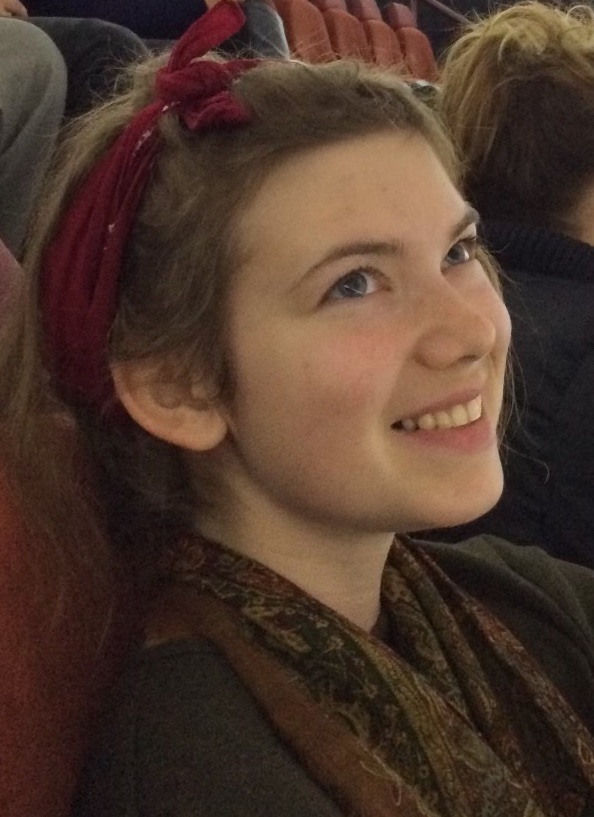
Seven years later, when Sarah was working in New York, a massive seizure revealed a brain tumor. It turned out, the genetic mutation she carried since birth was associated with all three of the cancers she fought, with amazing stubbornness and courage, until she died last December at 33. She was in a mountain house where she wanted to be, surrounded by family and friends and music, under sensitive hospice care.
What struck me most about Cathleen Warner’s story was her understanding of life as a gift, no matter how brief or long. We were gifted with 18 years of Sarah after she was first hospitalized with bone cancer in her right arm. A mother has a special relationship to such a life, and to its mortal end. It is a relationship that a politician can never express, whether their rhetoric is “pro-life” or “pro-reproductive rights.” All I can say about Trump calling perinatal hospice care an execution is this: “Shame! Shame on you and, at this late date, on all of your pious voters!”


 Docs and musings