
I miss waves. When my love and I transplant to Italy, it will be on the Adriatic. Waves there are small, but they have a lot of history. I look forward to walking the beaches of the Marche where Romans landed and 16th century galleons fought in a clash of civilizations. In the summer, the beaches are covered with rented umbrellas in bright colors and the waves are like a steady snore.
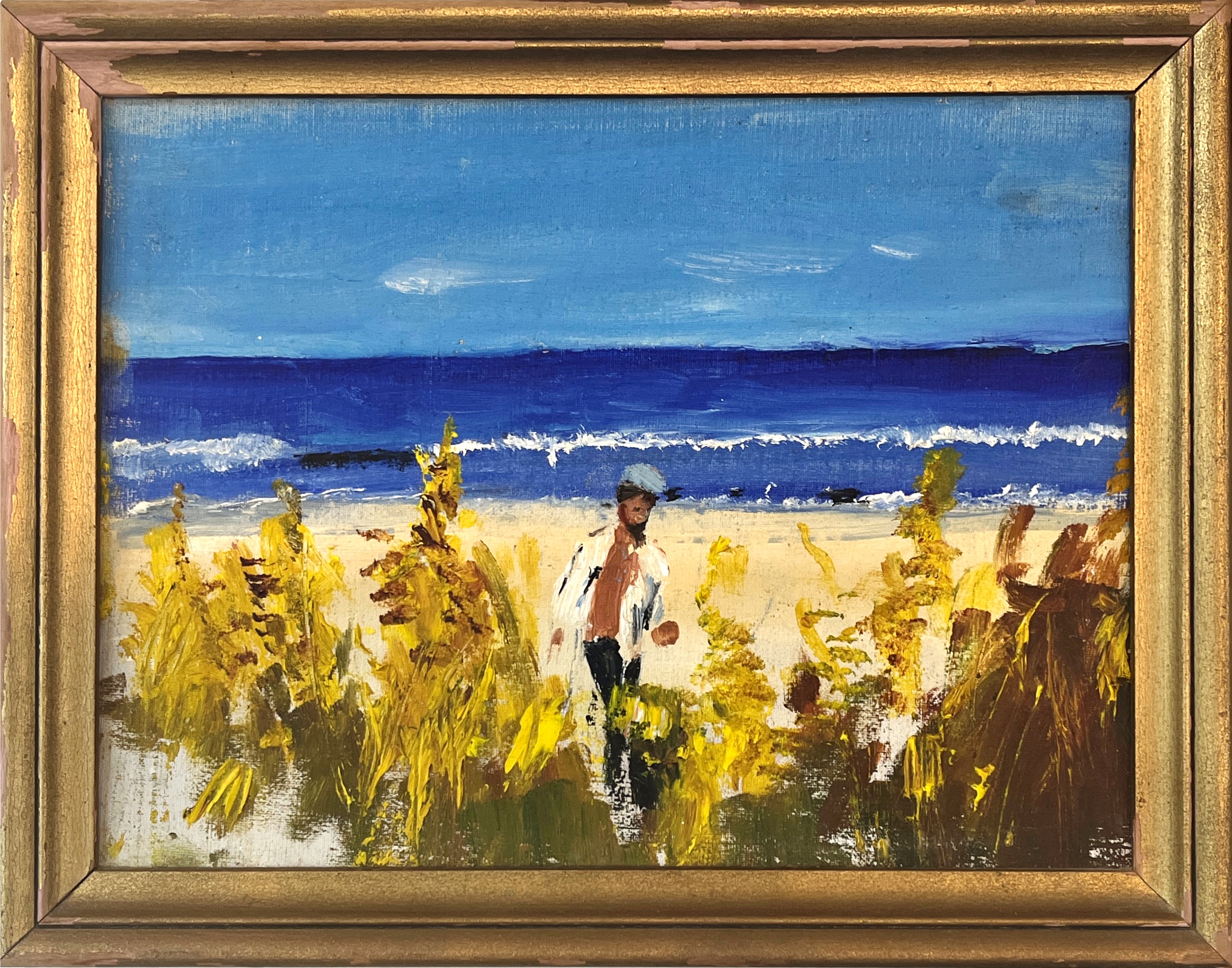
Waves are endlessly fascinating. As a general principle, they are how energy is transmitted, whether that is in the slosh of the world’s oceans, or as sound waves or the mysterious “wave” of electromagnetic energy we call light. My love is a physicist, so she tries to explain this to me, and it only deepens my wonder.
The Brazilian composer Antonio Carlos Jobin wrote a wonderful bossa nova he titled “Wave.” Right now, I am studying the chords, which curl and slide like I imagine the waves that inspired him in Rio.
Poets have been inspired too, drawn by the infinite meanings and rhythm of being shore to ocean, as one poet wrote. “Holding the curve of one position/Counting an endless repetition.”
But has anyone, from science or art, observed waves as beautifully as Gerard Manley Hopkins did in this passage I found from his journals? We’ve all stared at waves for a long time, so we can all nod yes, yes, exactly. But I wish I were patient enough to observe nature this steadily, and to get it down in writing. It’s a good example of journal writing and maintaining attention. I’m transcribing the whole thing here.
Aug. 10 [1870]. I was looking at high waves. The breakers always are parallel to the coast and shape themselves to it except where the curve is sharp however the wind blows. They are rolled out by the shallowing shore just as a piece of putty between the palms whatever its shape runs into a long roll. The slant ruck of crease one sees in them shows the way of the wind. The regularity of the barrels surprised and charmed the eye; the edge behind the comb or crest was as smooth and bright as glass. It may be noticed to be green behind and silver white in front: the silver marks where the air begins, the pure white is foam, the green/ solid water. Then looked at to the right or left they are scrolled over like mouldboards or feathers or jibsails seen by the edge. It is pretty to see the hollow of the barrel disappearing as the white comb on each side runs along the wave gaining ground till the two meet at a pitch and crush and overlap each other.
About all the turns of the scaping from the break and flooding of the wave to its run out again I have not yet satisfied myself. The shores are swimming and the eyes have before them a region of milky surf it is hard for them to unpack the huddling and gnarls of the water and law out the shapes and the sequence of the running: I catch however the looped or forked wisp made by everybig pebble the backwater runs over – if it were clear and smooth there would be a network from their overlapping, such as can in fact be seen on smooth sand after the tide is out –; then I saw it run browner, the foam dwindling and twitched into long chains of suds, while the strength of the backdraught shrugged the stones together and clocked them one against another.
Looking from the cliff I saw well that work of dimpled foaming – strings of short loops of halfmoons – which I had studied at Freshwater years ago.
It is pretty to see the dance and swagging of the light green tongues or ripples of waves in a place locked between rocks.


 Docs and musings