What the Angels Said

“Fear not.” Someone should preach that sermon. Or write a book on it as a theme that runs throughout the Bible, from Abraham to Paul. The very announcement of Jesus’s birth to the shepherds begins with that assurance, “Fear not.” It’s not just a theme, but the very nature and sign of the salvation the Bible maps out.

There’s so much fear in the land today, and loss of self-confidence. Reporting the news, for me, took a measure of confidence and a certain fearlessness. Now, people are afraid of what they read in the news, and afraid OF the news. They go instead to websites that make them feel good by reinforcing what they want to believe.

But this leads to a different kind of fear. In dark corners of the web, where social media sites ooze disorganized propaganda, fear sells. Be afraid, these oozings say. Afraid of liberals. Of transgendered teens, and the teachers that coddle them. Of CRT. (I remember when that meant Cathode Ray Tube, i.e. desktop computer, then Criterion-Referenced Tests.) Of secular humanists, socialism, gays, crime, Democrats. “Them.” They are behind the inflation you suffer at the grocery stores. They are behind a “soaring” crime rate. They rig elections, open our borders to drug dealers and terrorists, promote abortion, want to take our guns.

An op-ed I read recently made a convincing argument that the big-tech social media companies like Facebook and Twitter have a huge gap in their filters against bad actors. They filter “hate speech,” but not “fear speech.” They censor comments that are deemed racist, homophobic or antisemitic, but not those comments that merely warn of the dangers that any particular group allegedly pose to your lifestyle, or life. Be afraid, they say.

I don’t know how that can be filtered without stifling healthy free speech and important intellectual grit. I’m not even sure I agree with how Facebook defines “hate,” let alone how it might take on “fear.” Still, the drumbeat of conspiracy theories and “them” feeds a culture of fear. The op-ed argued that this kind of fear speech is what led to the Jan. 6 insurrection and the Nazi death camps. The dark depths of mass fear can tip the scale of civil society into the torch-light mob of a lynching bee or to genocide.

Now, here’s one of those fears: They are coming for our guns. Heather Cox Richardson, the historian whose “Letters from an American” start my day, makes a good case for “the right to bear arms” applying ONLY to individuals who belong to a state-supported militia. That’s exactly what the Framers meant when they wrote the Second Amendment, she says, although she acknowledges that the wording is elusive (and has too many commas, in my opinion). She quotes an 1840 ruling of the Tennessee Supreme Court that makes it clear:  “A man in the pursuit of deer, elk, and buffaloes might carry his rifle every day for forty years, and yet it would never be said of him that he had borne arms; much less could it be said that a private citizen bears arms because he has a dirk or pistol concealed under his clothes, or a spear in a cane.”

How did the NRA (formed in 1871 to promote marksmanship and sport shooting after the Civil War) turn into the lobbying giant of Movement Conservatives from the Reagan presidency to today? It was a marriage of convenience – opposition to business regulations and social programs, Richardson says. And it worked on fear of “gun control,” something that had previously been a strong bipartisan consensus. And so we’re left with a greater fear – that when we send our children to school or attend a concert like the Mandalay Bay country music festival in Las Vegas (where 60 were killed), another mass shooting might take place, for no reason.

I didn’t feel any hint of that fear as we walked down the four closed-off Ponce de Leon city blocks between rows and rows of arts & crafts tents last night. Four days ago, seven miles west of here, an “active shooter” killed one and wounded four in a waiting room in a Midtown Atlanta medical high-rise. But this is Decatur, on the Square, with the kind of open yet rich community culture I wish every community had.

Posted in Uncategorized | Tagged , | 1 Comment

“Refuge”: Across the Great Divide

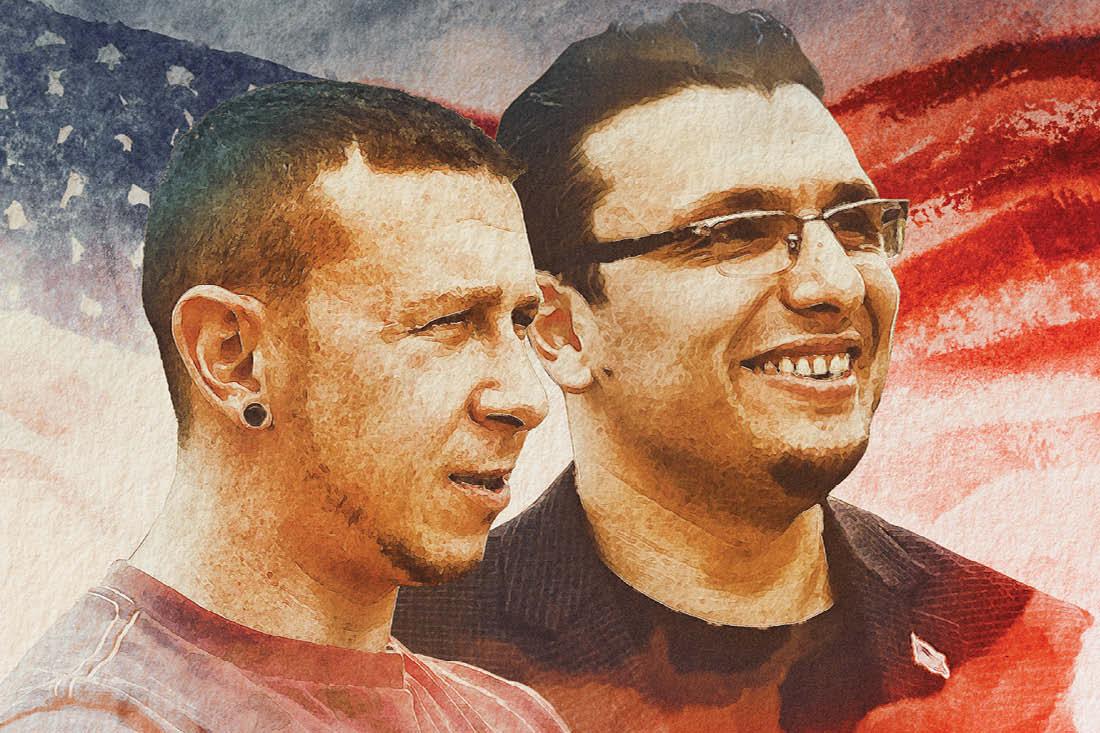
Heval Kelli, a Kurdish Syrian Muslim refugee living in Clarkston, just outside the Perimeter from here, exudes the kind of human empathy you can see in his very being. He listens quietly and attentively, and in responding to what even the most troubled or inarticulate person says, he seems to have just the right words. We saw this in the documentary “Refuge,” which five of us watched in a nearly empty Plaza theater Wednesday afternoon, the matinee (after we were turned away from the sold-out premiere on Sunday).

The man’s empathy, half saint-like, half bemused with irony, has three layers, I think. One is his experience as a refugee. His father was tortured. He spent his youth in a refugee camp. By the sheerest random luck, he got to America a few days after 9/11, and was sent to Clarkston, now called the most ethnically diverse square mile in America because of its welcoming structures for refugees from places like Syria and Somalia. A second layer is his quiet religious practice as a Muslim. He prays in the traditional way five times a day, and performs the duties of compassion and peace from the Koran. And finally, there’s the overlay of being an Emory cardiologist. He is trained well by the institution and Hippocratic oath to pay close attention to illness of body and soul in others, both meanings of the word “heart.”

We grow cynical about doctors, who seem to pursue specialties that separate them from the whole person, specialties that pay a lot more than general practice. But when I see Dr. Kelli, “call me Heval,” in the film, I think of Libby’s visit to a Hispanic cardiologist at Emory’s hospital on North Decatur Road, and my visit to a native Indian periodontist yesterday, Dr. Ash. They both exuded the same feeling of compassion as Dr. Kelli, which I now associate with a special gratitude and patriotism I sense in American immigrants who have achieved the height of success in the healing arts. Dr. Ash put his hand on my shoulder as he came from behind while I sat pitched back the dentist’s chair, and touched me the same way when he left. When I complained about my recent experience trying to get some reimbursement or explanation for the $1,042 I paid for getting a crown at this same big dentistry office, he agreed with me wholeheardedly about the shame of the U.S. not having universal healthcare. Even his native India, he said, has a more humane healthcare system. There are several doctors in his extended family, and all are for universal healthcare, he said. And he is horrified at the prevalence of guns here . .  He seemed to say without words, about guns: “Don’t get me started.”

Heval was an obvious protagonist for the two University of Virginia alumnae who decided to make this documentary, “Refuge,” after they were shocked by the Unite the Right rally in their beloved Charlottesville in 2017. There’s a scene in the movie where Heval welcomes a Republican Primary candidate for governor who arrives in Clarkston, by some miscalculation, on his “Deportation Bus” tour of Georgia. Heval offers him some good baklava, which Williams samples with the forced courtesy of the campaign trail. (Williams ended up with less than 5% of the primary vote, while Kemp, running ads of him hunting illegals with a shotgun, went on to barely beat Stacey Abrams that year.)

The heart of the documentary is about Heval’s relationship with another man, the extreme version of the type who would vote for a Williams or a Kemp. Chris Buckley is an Army veteran living in Lafayette, in the northwest corner of Georgia near the Tennessee and Alabama state lines. The relationship makes a powerful case for an answer to “hate groups” like those at the Charlottesville rally. The film shows the effectiveness of getting those who resent the Other to know one of them well. Chris, a heavily tattooed son of an abusive father, came back from traumatic experiences in Iraq and Afghanistan with an addiction to pain meds that evolved into a crystal meth habit that was tearing him away from a wife and son. He found his way clear of drugs with a 12-step program. But it goes further. A counselor with “Parents for Peace” introduces him to Heval, on the notion that a 12-step program to overcome a ritualized hatred of Muslims (Chris had joined the local Klan) required a relationship with a Muslim. It worked, creating a road show out of Heval and Chris with their message, and this powerful documentary under the Katie Couric brand. (Couric, who briefly replaced Dan Rather as anchor of CBS Evening News, also went to UVa.)

One scene that struck me powerfully was Heval first driving through Lafayette, Ga., in his late-model black Mercedes-Benz. He is shocked by the poverty, the hovels and trailers, the despair that makes such communities the ruined gardens of opioid addiction or make Trump’s gilt-edge delusions so appealing. I feel the heartbreak of this landscape. I have seen it in Rockbridge County, Va., and in Pickens County, Ga., so close to the bountiful nature and communities I have loved. From a purely compassionate vantage, without the politics or sociology, this glimpse of rural poverty, where mostly white Appalachian folks dwell in a forgotten or stereotyped America, floods me with love and sympathy. Yes, these folks are resentful. Why wouldn’t they be? I also understand a very different resentfulness – the bitter resentment of a young Black Lives Matters activist or some white allies who empathize with that Black experience. But to the forgotten or demeaned Appalachian folks, it must be appalling that the “resentment” of young BLM protestors is presented sympathetically by the “liberal media” while the culture calls their resentment “hate” and “racist.”

I shouldn’t judge like this. Heval doesn’t seem to judge. He merely utters the sounds of sorrow and shock, a compassionate refugee driving through a land like his own war-ravaged homeland, astonished that Americans could forget these children of their land and history.

Posted in Uncategorized | 1 Comment

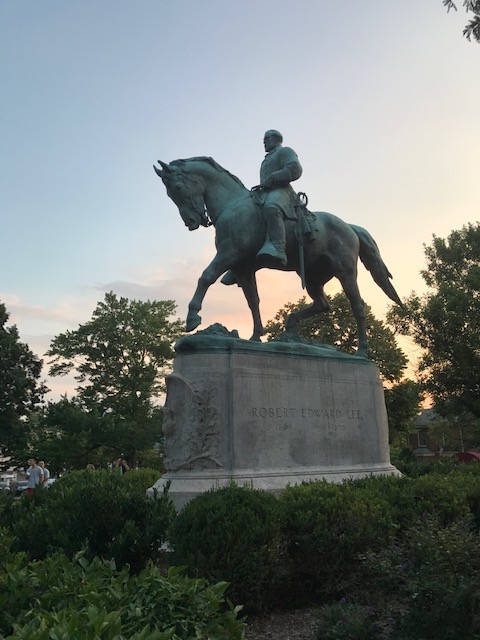
Robert E. Lee and Me

Changing names honoring Confederate generals and removing memorials, apart from a few practical challenges, is relatively easy. Monuments can be moved into museums, and names on street signs can be changed. (At W&L, the four-ton statue of Lee napping in battle dress with sword at hand is too much to move, but Lee Chapel was renamed University Chapel.)

But to get rid of the world’s largest Confederate monument at Stone Mountain? That’s hard to imagine. How much dynamite would it take, and what about the optics? “Erasing history” would come to mind unbidden. . .

For full story, go to Salvation South.

Posted in Uncategorized | Leave a comment

The Poetics of James Taylor

Moving in silent desperation
Keeping an eye on the Holy Land
A hypothetical destination
Say, who is this walking man?

The baritone of James Taylor bewitches with a melody that long ago wormed into my brain for keeps. It sleeps, then can’t you just feel the moonshine? It awakens, silent except in my head, a deep emotion of fall in the mountains on a gravel road. That’s James Taylor, like an older brother I never met.

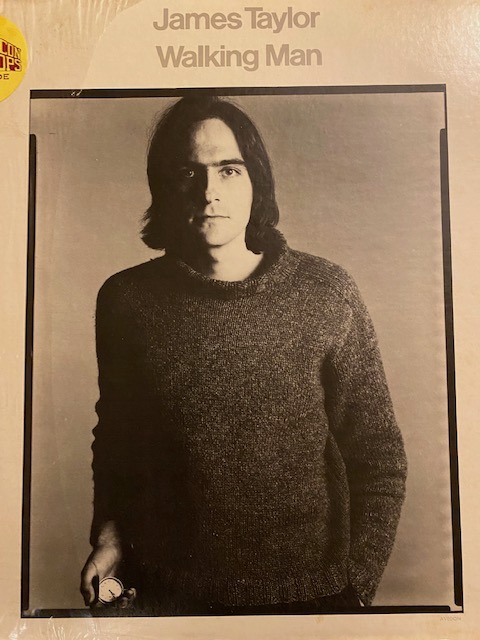
Now that we’ve settled into this condo, Libby lets me know that the sleek little Audio-Technico turntable she bought can also be used with the speaker system I’ve used for streaming Pandora and NPR. Out of the vinyl records we’ve saved, but haven’t played in an eternity, I pull out James Taylor’s 1974 “Walking Man.” It’s perfect, better than I remembered.

Every song on this album is a gem, the work of a craftsman at a good time in his long career, making these 10 songs that were not “hits” but perfect in their own way. Not only that. These are also poems. I declare that as one who has studied poetry, meter-scanned Virgil, and knows the bad from the decent and deep. These are fine and deep and mean a lot to me.

Take those first lines. “Silent desperation” is a riff on Thoreau’s “lives of quiet desperation,” of course, but maybe so is Holy Land, which Thoreau notes was the root of “saunter,” a le Sainte Terre, in his  essay on walking.

Who is this walking man? He’s the ghost spirit of American restlessness, Billy the Kid, whom Conrad Aiken associated with the solitary self-exile from the Puritan commonwealth, William Blackstone of Rhode Island, in a long poem, “The Kid.” It’s also a recurring figure in James Taylor songs, the country road wanderer abandoning home and farm, a bit of himself on heroin or in therapy between Stockbridge and Boston. Or sometimes it’s his father, imagined as a n’er-do-well who left home. “Pappy’s come to rambling on/ Stumbling around drunk/ Down on the farm.”

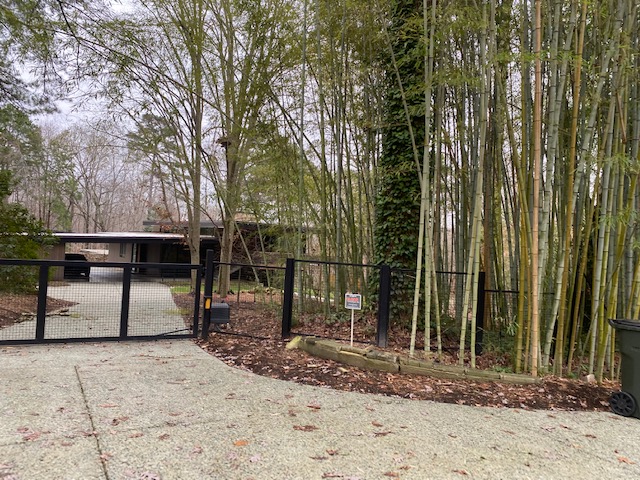
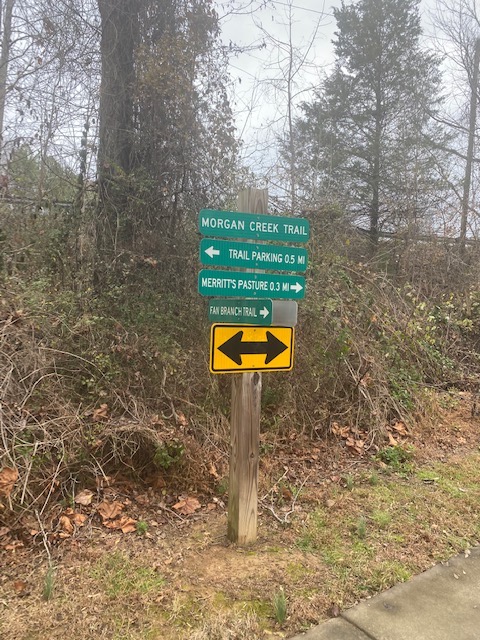
In fact, Dr. Isaac Montrose Taylor was the dean of the University of North Carolina Medical School. I recently went back to Carolina (not just in my mind) and walked Morgan Creek Trail, a city park along the creek where the Taylor boys used to play. The highway bridge over Morgan Creek has been named The James Taylor Bridge. The house where the boys grew up, worth well over a million now, is gated and behind a bamboo stand in a wooded neighborhood of modernist houses.

Country songs usually split open an adage or cliché for double entendre, “I’ve got friends in low places.” James Taylor does that a lot in the “Walking Man” album, but tightly and dinging with inner assonance.

Most everybody’s got seeds to sow
It ain’t always easy for a weed to grow, no
So he don’t hoe the row for no one
Oh for sure one’s always missing
And something’s never quite right
Ah, but who would want to listen to him
Kissing his existence good night.

His rhyme schemes are well-tooled, not just couplets or A-B, A-B, but sometimes A-B-C, A-B-C as in “Me and My Guitar.” “I hear horns/ I hear voices/ I hear strings/ Seems I was born/ with too many choices/ Now what am I going to do with all these extra things.” Even using the simple Shakespearean form of A-B, A-B, loosely, he upends the story of Odysseus being recognized by his dog’s sense of smell. From “Hello Old Friend,” about returning to the Taylor compound on Martha’s Vineyard:

Little dog David I must look like a fool
I should’ve remembered you’d be forgetting my smell, well
Give me a week or two to recapture my cool
I’ve got stories to tell
About how I snatched the devil’s catch
And outran the hounds of hell.

“Walking Man,” the album, has one pop song cover, “Ain’t No Song,” and one Chuck Berry cover, “The Promised Land.” These may be the least poetic, though the first one succeeds because it’s a riff on songwriting (“Not even this song’s gonna tell you the way that I feel”) and the other, to me, because it encodes the Black experience in America – the Great Migration and the Freedom Ride bus that “left us all stranded in downtown Birmingham.”

The other songs I would put into three categories, three dark lodes that James Taylor mines for verbal gold.

One is depression. A girl, I assume, is sinking into acute melancholy that only the singer can enter with her, because he’s been there. Or maybe he is the one who is sinking. Maybe the depression is not another person, but his interior “love.” The experience is like love because it binds the two, or maybe just the lonely self with itself, silent and secret. “Daddy’s Baby” begins: “Daddy’s baby what’s got you thinking/ What’s got you sinking so low/ Is there something I should know/ Something new to you.” And it ends, mysteriously: “So I called my love my home.” The same sweet sadness finds its end in “Fading Away”:

Well, it’s hard to find a label
For this feeling in my bones
That this is all a make-believe
But my cards are on the table
And their ain’t nothing up my sleeve
And here I thought I was a thinking man
But I’m a shrinking man, I’m sinking man
I’m fading, fading away

The second category is the seductive nature of rock. In “Me and My Guitar” he sings, “If he can’t go to heaven/ Maybe I don’t want to go, Lord.” Where does this beguiling music come from? Africa. “See the white man sailing his ship upon the sea/ Watch the white man shackle the black man to a tree/ To the invader go the fruits of war/ He misses home and his boots are sore/ He has not got no roots no more/ He comes for your gold/ Watch out for your soul” (“Rock ‘N’ Roll is Music Now”). This fruit of war – the rebellion of the post-war baby boom – becomes even more haunting in “Migration” with its slow Vox Humana.

Mystery muse, how I hunger for an answer
Unsung song, how I long to play the changes
Hidden rhythm haven’t I always been your dancer
Sacred secrets of the meaning to my dreaming. Migration.

The mysterious “slow vibration” of migration leads to the third theme – decline and fall. This is not just the singer “Fading Away” (“the circles in my mind/ They have been winding slowly down/ . . .I’m seizing up, I’m freezing up”). It’s the great collapse of the West, of our system of extraction and exploitation breaking down. “Let It All Fall Down” is a straight-forward prayer to admit we did this to ourselves and to be as gentle as we can be as we welcome the end.

. . at least we might show the good sense
To know when we’ve been wrong
And it’s already taken too long
So we bring it to a stop
Then we take it from the top
We let it settle on down softly
Like your gently falling snow
Or let it tumble down and topple
Like the temple long ago.

In the early 1970s, I was sure I had the good sense at 21 to know when we’ve been wrong. I wanted to see the machinery stop, let it all rest. Being strapped in an airliner seat during a landing, when it reverses its engines and roars and shakes to try to slow down from 200 to 20 mph, that’s what I thought it would feel like to get back to nature. This song contained a poem that said what I was feeling then. And as Robert Frost says of true poetry, like metal on the tongue, it never loses its freshness.

Posted in Uncategorized | Leave a comment

Energy is everything (almost)

“Energy” has many meanings. But there’s one way to see it as everything. Energy is Man’s discovery of fire, how civilizations ate (from hunter gathering to farming), the population-exploding Industrial Revolution, and the cause of Gulf Wars. It’s fossil fuels and solar power. It’s the photosynthesis of forests and flowers, as well as our daily energy and body temperature.

I see this big picture because I covered energy as a beat in Rhode Island in the early 80s, taking a course on it from a physics professor at Brown and reading experts like Daniel Yergin and Amory Lovins. I’m no expert, but I covered the problems of trying to build the Seabrook nuclear power plant – not just the protests but Wall Street shunning it due to problems of safety and security. I covered deregulation. It’s complicated. As I obsess now over the need for the world to deal with climate change, I admit it’s complicated and confusing, even to me.

So with some relief, I read an Ezra Klein column in the Times dividing the big picture into three parts, like Caesar did Gaul. He calls these three “goals society can have for its energy usage.”

The first is to use less. You can recycle, go vegetarian, and bike-ride to work. Or like me, you might drift into lifestyle changes based on tax credits (we bought an electric Nissan Leaf), and less income (with my retirement, we sold our big old house and moved into a condo).

The second type of energy goal, in Klein’s big picture, is doing the same things we do, but with less fossil fuel. De-carbonization. Wind, solar, maybe even small modular nuclear reactors (SMRs). That’s the goal of Biden’s successes and the latest climate summit in Egypt. The change is huge, but what we do with the energy is maintain the status quo.

And for the third and last energy goal. . .meet the Jetsons. It’s about entirely new sci-fi sources of “clean and abundant energy” that would supposedly open up whole new ways of living, the way coal, gas and oil improved everything (except maybe what we lost in our humanity).

A little understanding about energy seems pretty important, and generally lacking. For a little understanding, I have come to some basic principles about energy. One is that there’s no free lunch. Batteries in our Leaf are heavy as hell and take the extraction of all kinds of dirty chemicals from faraway places. And it’s hardly burning less fossil fuel if the power is from coal- or gas-burning power plants.

Decarbonization is incremental, always with downside costs. But let’s do it.

Another principle is that, paradoxically, energy isn’t everything. It’s “necessary but not sufficient” in defining human life, the great mystery that includes language, religion, meaning, insanity, love, baseball and so on.

And now I have one more simple principle. Of the three “energy aims” Klein outlines, none of the three is bad, unless it sees the other two as bad.  “Abundant, clean energy” would actually be a terrible thing because of human nature, but impossible because of the laws of physics. We need all three goals – using less, decarbonizing and big breakthroughs – and a better grasp of what we’re up against.

Posted in Uncategorized | Leave a comment

Political Pragmatism, 2022

Common Good Governing began in 2017 with a dream. That is, literally, “a dream,” a bad dream that Lester Levine woke up with about a week after Trump won the Election of 2016. It was also just after Levine’s first grandchild was born. Having a grandson put Levine in a dark mood of worry about the future of America. Trump’s election was, as for other intellectuals, a shock and dismay for him. Levine, a retired professional in organizational change (“I’m a behaviorist,” specializing in how social signals change people’s collective behavior) thought about that dream. It must have something to do with how Americans vote, and about the future world that his grandson would inherit.

In the dream, he was in a foreign land that had just overthrown decades of dictatorship. In the vacuum that followed, the people were desperately looking for a democratic system that might protect them from the next dictator to emerge. They studied democratic systems around the world, going back to the Greeks, and found the most interesting to be America’s. The principles of the Founding Fathers seemed to be good: freedom of expression, the rule of law not men, an ideal of individual rights and fairness. And the system seemed resilient and sustainable, surviving and strengthening through partisan battles and a Civil War. But then, they discovered, something went wrong. Around the year 2000, the nation became increasingly divided by its party loyalties. It seemed the system was breaking down, as it did for other humane systems in the past. Then he woke up.

Sitting with me at an outdoor Caribou Coffee table in Chapel Hill in the gloom of a late gray afternoon in December, Levine described how his quiet little movement developed from there. He learned that an organization had been started in 1948 that seemed to want what he wanted – elected representatives who worked for good governing (“Goo-Goos” was the dismissive name for such reformers in the Progressive Era) instead of hack politicians. The National Committee for an Effective Congress (NCEC) was started by Eleanor Roosevelt and some Democratic allies. Today, with an office in Washington DC, it makes available detailed analysis of voting behavior to promote election of progressive Democratic candidates. Levine drew on parts of this organization’s mission, but not the part favoring “progressive Democratic” candidates. He wanted an approach that favored pragmatic problem-solving candidates. Of course they were likely to belong to a party, and probably the Democratic Party. But Levine was looking for values and principles higher than party.

He began putting together CommonGoodGoverning (CGG). He avoided the internet, so you can’t Google it. (We began our talk over hot tea as a couple of over-70 geezers kvetching about how kids are being damaged by their social media trance; Levine’s now-7-year-old grandson is a particularly bitter case for him.) CGG has a PowerPoint (he calls it “our deck”) he’ll send you by email on request, and a newsletter he emails monthly to 1,610 interested subscribers. It’s the most non-aggressive political email I’ve ever seen, never asking for donations and happy to be unsubscribed-to. “Hopeful American Democracy Fixers,” he writes in each newsletter from the top. “If you don’t want any more monthly updates, just hit reply and say ‘no more.’” One of the striking tactics of CGG is how it operates below the radar.  Levine asked me not to use his name if I wrote something for a publication. (I don’t consider this measly blog a meaningful publication). Why? “I don’t have time” to be bothered by the attention. His secret goal is for CGG to be discovered in six or eight years when a few unlikely candidates explain their surprising wins to a Washington Post reporter by mentioning the support they got from CommonGoodGoverning. But he won’t seek that publicity.

Here’s what CGG has done for every two-year election, starting in 2018. First, it looked for fresh candidates running for open seats who met its criteria. According to the PowerPoint deck, they must be:

  • Anchored by principles that a majority of American voters agree on, not issues, policies or ideologies
  • Focused on problems that a majority of American voters, Republicans, Democrats and Independents, are concerned about (e.g. healthcare costs, veteran services, immigration, responding to climate change, etc.)
  • Seeking to replace politicians with public servants/servant leaders

CGG then narrowed the number of these candidates down to a few dozen, who were approached with offers to help (not endorse or donate to). Those who responded were interviewed and chosen for support.

Two years ago, Levine called me up when he read an op-ed I had in the Roanoke Times about my experience teaching for a term at a North Carolina community college. (I was a tenured associate professor at a top liberal arts college in Virginia on leave for the fall). I was intrigued by his project. This year, I volunteered to help. Here’s what CGG volunteers do:

  • Research on voter opportunities specific to their district
  • Research on “truthful” opposition research
  • Active brainstorming on specific campaign challenges
    • Ongoing sharing of lessons learned from past/current campaigns

They don’t donate money, and they don’t leave home. Levine said members of CGG from outside the Chapel Hill area have never come to meet him as I did, at least not since the pandemic.

My assignment for the ’22 campaign was to find minority “potential influencers” in certain small towns and counties. I sent the information to Levine to send to the campaigns for four of their seven chosen candidates for the general election. This was to operationalize Levine’s behaviorist theory that peer-to-peer networking is the most powerful way to win votes. Being a former journalist, I enjoyed the assignment, using the internet to compile names and contacts (emails or phone numbers) of up to a dozen locals (chairs of library boards, arts councils, Hispanic Chambers of Commerce and such) in targeted areas of four congressional districts: Colorado’s 3rd, Arizona’s 2nd, Iowa’s 2nd and New Jersey’s 2nd. This, after I had failed to be any help for CGG’s candidate Katie Dean, a working-class auto-repair owner in western North Carolina who lost the Democratic primary to a more liberal candidate. I also liked this other candidate, but as a Brown- and Harvard-educated minister in a same-sex marriage, Jasmine Beach-Farrara predictably lost to the Republican in Mark Meadow’s conservative district by 9.5 percentage points.

This year, CGG had fewer candidates than in the two previous elections. For the primary, it had a different group of seven candidates. All but one of those lost (including two Republicans). For the general election, all seven CGG candidates lost, some by a mile. But one came very close, and I was glad it was the one I helped on the western slope of the Rockies in Colorado. Gun-toting Republican Lauren Boebert of Rifle, Colorado, squeaked by with about a 500-vote margin.

In his after-action newsletter, Levin blamed gerrymandering and the fact that four of the seven CGG candidates were running against incumbents this year, the first time CGG had backed challengers to incumbents. That was discouraging, but he signed off as always on his newsletter, “Onward.”

Common Good Governing has already helped elect six members of Congress. Four of them joined a bipartisan Problem-Solvers Caucus that is evenly divided between Democrats and Republicans, co-chaired by a Democrat and a Republican.  

This goo-goo approach may seem naïve or over-matched by the grim options of mass violence or mass cynicism. But with a narrow Republican takeover in the House, and an equally narrow Democratic majority in the Senate, it’s a serious alternative to a serious problem. George Packer put it this way in his article in the Atlantic last December, “Are We Doomed?”

There is a third scenario, though, beyond mass violence or mass cynicism: a civic movement to save democracy. In an age of extreme polarization, it would take the form of a broad alliance of the left and the center-right. This democratic coalition would have to imagine America’s political suicide without distractions or illusions. And it would have to take precedence over everything else in politics.

Posted in Uncategorized | Leave a comment

On a Passenger Train to New Orleans

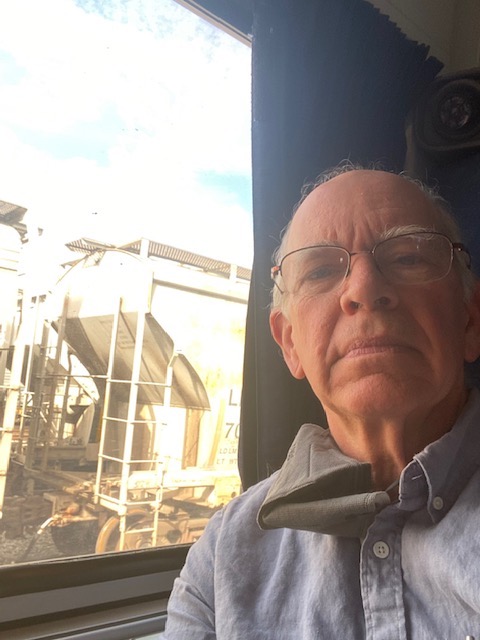
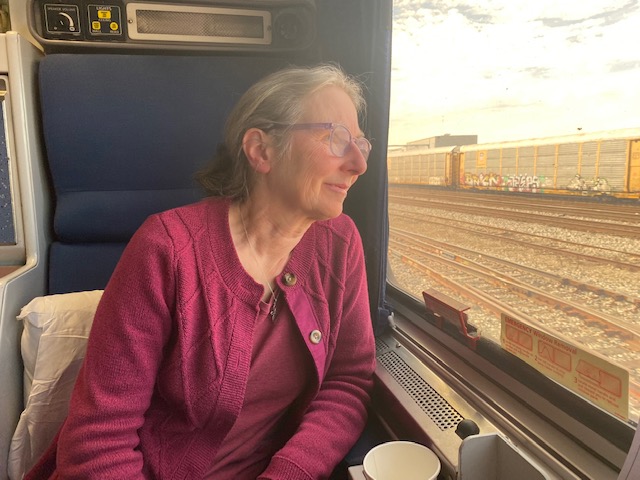
I am not a train nut. But riding in Amtrak’s private sleeper car for the daylong trip from Atlanta to New Orleans – the old Southern Crescent – has me in an unusual state of elation. The perfect tracks bend out away from the dense plumbing of Atlanta traffic. The city acquires a more likeable personality from this sound-buffering window. The whale-like power grants me a security, unbelted, that I never feel in a car. Gathering speed, the train seems almost magic in its defiance of the physical forces that bind a city to a killing routine. Curving through the disenchanted woods of Georgia’s countryside, Train 19 seems immune in this pace from the way time has frozen in the small towns, as if they were halted by the red-flashing gates. Whoever designed the universal train whistle was a musical genius. Or is it America’s train songs and childhood memories that make it such a tender call?

In the age of insomnia, I understand the NextDoor social-media app complaint I read from someone against that train whistle in downtown Decatur at 2 in the morning. Was this necessary, the person wondered. I don’t mind it. My subconscious is comforted by the sound. What is it that stirs me like this?

I remember an almost religious experience I had near Atlanta’s surviving train station – a little architectural jewel on Peachtree Street between Midtown and Buckhead that was recently renovated. Through a window at the station this morning as we waited for the delayed train, I could see the exact location: the bridge on Peachtree crossing over the eight lanes of Interstate 85. Although it’s now decorated with steel glitz from the 1996 Olympics, I recognized the spot. I was not yet 20, and had dropped out of college in Florida after five months studying in London. Back then, I was in that mood of anomie that makes young people know they are “lost” before they give themselves to Jesus or lifelong sobriety. But my identity crisis had a strong sense of place. Atlanta was where I grew up, so like Dickens in London, I was walking its streets when nobody walked them, at night. I walked all the way from my childhood home on a duck pond in Peachtree Heights (Buckhead) downtown and back. I stopped on the Peachtree bridge over the Interstate (a block north of where my mother had attended Washington Seminary) and stared down at the cars zipping by, north and south. Something was very wrong, I felt in that eternity of looking down over the bridge’s side. It wasn’t me that contemplated jumping. It was as if the city had already jumped, and had killed itself under that bridge. I wept.

This morning, I was remembering my bridge experience when a character with a gold front tooth and a saxophone necktie showed up to entertain us in the First Class sitting area. There was something magic about his showing up, like the conjured conductor Ringo Starr played in the TV show “Thomas the Train.” His name was Robert West. “I’m a little late, like the train,” he said, but he was going to fill the half hour with amazing facts about trains and about his life in their midst. He was a graphic designer for the GE contractor for Amtrak, drawing engineering for next-generation locomotives and doing PR on the side. He is also involved in something called Steel Rail Galleries in College Park and is an encyclopedia of train history. He is writing a book about trains and race he says he’s calling “From Chains to Trains to Change.” Both his grandfathers had belonged to the Pullman Porters, the legendary union of Black men who cooked for and served white First Class train passengers in the pride of their dark uniforms and cylindrical caps (still worn by Amtrak conductors), but who also won decent wages from the powerful train companies and quietly brought Black weekly newspapers South from cities like Chicago and Baltimore. Pullman Porters are said to have nourished the Great Migration and laid a foundation for the Civil Rights Movement. A. Phillip Randolph and Thurgood Marshall were both Pullman Porters. Mr. West said one of his grandfathers, in particular, taught him everything.

I asked him about how and why the great private railway companies of America had abandoned passenger rail service. I didn’t know this history, but suspected that they had stopped using their public-rights-of-way for a public good only to rake in more private profit. Mr. West said the private railroads had indeed abandoned passenger rail service, which is why the federal government created Amtrak in 1973. It was originally an emergency response to a crisis. That crisis – the near-death of passenger train service – was coming to a head around the time I stood on that Peachtree Street bridge. Maybe my despair over watching the endless flow of cars below me was a blind grief over what cars had finally done to my hometown. Atlanta had started as a railroad terminus and in the heyday of passenger trains had two huge stations downtown, Union and Terminus. Mr. West described the architectural features of those two stations as if they were the two cathedrals of this secular city, now gone. The private railroad companies like CSX and Norfolk Southern, he said, have made tons more money (though freight fell in the pandemic and is weak in the current economy). Why did they abandon passenger service? One word, he said: Greed. Not just the greed of the railroad companies, but the demand for the individual freedom of cars for everyone, for every need.

Amtrak survived the emergency and is looking even better today, Mr. West said. It has received $66 billion from the infrastructure law signed by “the current Administration.”

The private freight lines still have their dominance and lobbyists. We had to stop several times on our way to New Orleans so that freight trains could move first, even though Amtrak pays to use the rails that the private corporations have managed to secure for themselves over the decades. As I learned at a neighborhood hearing last week, Atlanta’s proposals for light rail rapid transit must play supplicant in a similar fashion to use CSX’s rights-of-way.

But the ride was an epiphany, a sacrament of transportation. I unfolded a hinged leaf on my little side table for a card game of solitaire, and admired its thick steel, like something out of the Bell Bomber Plant of the 1940s. To lock our sliding door, there was an ingenious double mechanism of steel, like nothing I’d ever seen in door locks. “I wonder if Mr. West drew a graphic design of that before it was put on all the latest sleeper cars,” my wife said. The last time we had the satisfaction of unlocking that device, we heard a conductor whoop it up, “We’re in New Orleans, hoo-ee, end of the line.”

Posted in Uncategorized | Tagged , , | 3 Comments

A way to read Hershel’s utterances

Regarding the two Black candidates in the looming Georgia runoff for the U.S. Senate, too much has been said and written already. But the insight I heard from a panelist at the Candler School of Theology two days after the Nov. 8 election seemed worthy of deeper thought. I’ve been thinking about her comments for a week now.

Professor Andra Gillespie’s insights may benefit from her unusual “intersectionality,” as academics like to say about overlapping identity categories. She is Black, an associate professor of political science, and media-savvy enough to be a frequent guest for Bill Nigut (moderator of the panel) on his Georgia public radio program, “Political Rewind.” But she is also an evangelical Christian. It was startling to hear her not only “self-identify” that way, but to explain more than once the position of evangelical Christians like herself: that Jesus Christ is Lord and that they are redeemed by faith in his death and Resurrection. Just like that, said not as preaching but just a fact articulated in rapid-fire on an academic panel at liberal-Methodist Emory University.

Prof. Andra Gillespie

So, her insight was this. When Hershel Walker uses the language of personal forgiveness and redemption, even if he gets the words wrong, evangelical Christians get it. He’s one of them, because he has enough of the right words: saved, redeemed, healed, pro-life. She didn’t mean this cynically. In fact, everybody on the panel agreed that Hershel Walker’s religious faith was sincere, not like his friend Trump’s. It was a diverse panel, politically and religiously: Nigut, Republican consultant Eric Tanenblatt (two who self-identified as Jewish), Gillespie and Michael Thurmond, the Black CEO of deep blue DeKalb County who was a civil rights activist and almost went into the ministry.

More devastatingly, when he accuses Warnock of being a fake pastor, Christian evangelicals get that, too, she said. Senator Warnock may be a “Reverend” and occupying the very pulpit that was Martin Luther King Jr.’s in Atlanta, but he’s that kind of Christian who, to evangelicals, has the education of a Pharisee, not the heart of Biblical Christianity. He’s pro-abortion, they say.

For example, take Walker-supporter Johanna Hollis, one of a balance-scale of six voters the Atlanta Journal-Constitution recently profiled from Milledgeville, Ga. “I’d rather take someone who is a redeemed sinner, is self-aware, who is willing to admit” mistakes in life, Hollis said. She’s seen Walker up close in his campaign. “He is one of the most kind, gentle giants I have ever seen.”

I don’t know if right-wing media is accurate in its drum-beat about Warnock being the most extreme advocate in the Senate for “abortion on demand” at any time of pregnancy up to birth. Warnock doesn’t address the attack, as far as I can tell.

I am fed up with the political captivity of the abortion “issue.” For years and years, as a journalist and an Episcopalian, I explored the nuances of this as a religious, moral and Constitutional issue. But no one talks about it as a moral issue anymore (even if moral language is used). No one wants to revive Roe v. Wade (with adjustments like the Casey decision as time and science advance), because those were messy compromises. (Sorry, but I am persuaded that only compromise between “state interest” and “privacy” – in the fuzzy middle where most Americans poll – can shield this moral issue from being a toxic political “Murder vs. Women” issue.) On the right of this compromise, you have the Babylonian captivity for Evangelical Christians, and on the left, a shibboleth for Democrats (“my body, my choice,” which has become a code for a Democratic voting coalition, a cause without a rebel).

A brief aside on this as a moral and religious issue. The philosopher Alastair MacIntyre’s book After Virtue makes an elaborate case that moral arguments such as pro-life and pro-choice are interminable today because we’ve lost the original classical Greek basis for moral discourse – the virtues. It’s like the situation in the sci-fi novel A Canticle for Leibowitz, he says, in which fragments of science and Judeo-Christian faith are recovered and revered in 2600 A.D., but without a Church or the scientific method. In short, he says, our moral arguments today are not only unpersuasive and interminable. They’re incoherent.

“We are witnessing two dimensions of Christian faith, both the justice dimension and the mercy dimension,” the Rev. Dr. Robert M. Franklin Jr. told the New York Times. Franklin is a professor in moral leadership at Candler who was in the audience for the panel, along with many of his students.

Something else makes the Warnock-Walker runoff a mess, besides religion. It’s race. One of Franklin’s Black theology students at the Candler panel asked why the church, meaning liberal Black pastors, couldn’t do more to expose Walker’s hypocrisy and the racism of his white supporters. He cited the viral YouTube sermon of the Rev. Jamal Bryant, pastor of a predominantly Black megachurch in DeKalb County, New Birth Missionary Baptist Church.

Bryant’s “We Don’t Need a Walker” sermonette was both political (pro-Warnock, anti-Walker) and revivalist. It worked up the worshippers to lifting hands toward heaven and praising God. He began with a sneer at the Georgia Republican Party for moving Walker from Texas to Georgia “because change was taking place too fast in the post-antebellum South.” He used Biblical codes for the victory of two Democrats for Senate on Jan. 5, 2021: There were “principalities” not prepared to send a Black man (Warnock) and a Jewish man (Jon Ossoff) to represent the state in the Senate (which, of course, must approve justices for the U.S. Supreme Court). So they picked another Black man “to delude us.” They thought a football would represent “us” better than a degree in philosophy. “They thought we were so. . .stupid that we would elect the caricature of a stereotypical broken Black man as opposed to someone who was educated and erudite and focused.” The emotion rose from there. “Yall aren’t ready for me today,” he said hoarsely, just warming up.

Oh, Lord. The lofty education of Warnock can play both ways – Pharisee or WEB DuBois? I saw Warnock’s one debate with Walker, and I saw Warnock at a rally with Ossoff by his side. I have to admit, I was disappointed in Warnock. It’s not fair to compare him with King, of course. But it does seem that, for all the strength in his position and education, there’s an odd weakness in the man. I couldn’t admit that to myself – for clearly he is a much better Senator than Walker could ever be. But when Prof. Gillespie explained how evangelicals could de-code Walker’s odd ramblings to match their worldview identity, I could see it. But here’s my thought on that. They seem to want to short-cut a moral revolution that awaits the Coming of the Kingdom, or at least something like the centuries it took for humanity to reject human sacrifice or African slavery.

But Gillespie was not as gullible as many of her fellow evangelicals, white or Black. She called out Walker for his showing no real evidence of repentance, or even acknowledging that his admitted relationships with many women have been sins of fornication and adultery (“Let’s call that out,” she said.) Meanwhile, some of what Walker (and Ron DeSantis, etc.) say in the name of Christian faith, she said, is just plain wrong. They must’ve missed their Sunday school lessons, she said, and should be taken off and taught some basics of Christianity.

Posted in Uncategorized | Tagged , , | Leave a comment

Atlanta’s Charlie Loudermilk

You could say Buckhead has changed. The place where there used to be a humble diner and neon Coca Cola sign at the intersection of Peachtree and Roswell roads is now Charlie Loudermilk Park. Metro Music is gone, but the Buckhead Theater has been twinklingly renovated (with a donation from Charlie Loudermilk) next to the luxury high-rise Hanover Buckhead Village, where you can rent a penthouse apartment for $8,096 a month.

Today, Sept. 8, topping the marquee of the Buckhead Theater is a gigantic megapixel portrait of Charlie Loudermilk, doubled, with the legend “R.I.P. Charlie Loudermilk, 1927-2022.” Across the street in the grass lawn park, about a dozen men and women dressed for the funeral are posing, smiling for an iPhone snapshot around the slightly larger-than-life-sized bronze statue of R. Charles Loudermilk Jr. They are a diverse group, including a man who says Charlie helped him immigrate from Mumbai to run an Aaron Rents franchise in Pennsylvania.

Charlie, who built Aaron Rents from its humble start two blocks away, helped transform Buckhead.

But in a way, Buckhead hasn’t changed. It survives and prospers, as always, with a particular spirit of leadership called the Atlanta Way. In a word, it’s a spirit of compromise, of closed-door public agreement between white and black rainmakers to avoid “bad publicity.” A Wall Street Journal feature on Charlie Loudermilk’s 4,500-acre quail-hunting plantation, furniture factories and recreational facilities in far South Georgia calls his way “benign capitalism.” In the article, Charlie calls himself a “conservative white Republican.” But that was only a guise, or at least only one ingredient of his makeup.

You needed to attend the grandiose funeral, as I did, to begin to understand the alloy that was Charlie Loudermilk. Understand that, and you begin to understand Buckhead, and Atlanta.

The service (he died Aug. 3) was in the palatial New Sanctuary of Peachtree Road Methodist Church (founded, 1925), with gleaming organ pipes (half underwritten by Charlie Loudermilk) that looked to me like a gothic dream of Atlanta’s latest skyline.

The vast black-robed choir filled the ranked steps in front on the left and right, women and men, young and old, black and white. Their bouncy conductor in prim bowtie and crewcut, Trey Clegg, is known around Atlanta for his musical mission of “Reconciliation, Equity, and Healing.” Powerful solo singers lifted the somewhat formal crowd to stand, sing, clap on the upbeat, and even applaud. The Dixieland jazz band that would lead the congregation afterwards to Charlie Loudermilk Park and the Buckhead Theater was one I could’ve joined with clarinet: “Bo Emerson and Brasstown Tonic.” Walter, my brother, was on trombone. The songs were tricky arrangements, but encoded in our local genetics: “God Bless America,” “There is a Balm in Gilead,” “Will the Circle Be Unbroken,” “O Happy Day,” and the sentimental favorite, “Georgia on My Mind.”

On one level, it looked like the greatest memorial service money could buy.

But deeper than Charlie’s money was his poverty. He grew up poor, and that gave him sympathy with just about everybody he met. This was the message given at the funeral by Charlie’s close life-long friend, Andy Young.

Andrew Young, the former Atlanta mayor, Congressman and U.N. Ambassador, described how he and Charlie, along with three other powerful Atlanta figures, would get together whenever there was trouble, another crisis. The other three figures were Herman Russell, the black head of a construction firm who used his position to advance Civil Rights in Atlanta; Jesse Hill Jr., a black insurance company magnate who used his influence similarly, and John Portman, the white architect-developer who pioneered the futuristic style of jewel-lighted atriums that began in Atlanta.

“Every time there was trouble,” Young said, “we got together, we got together and would talk and we felt better.”

Maybe it was the trouble, the crisis, that reminded these men that they emerged from struggle. They would argue about who grew up poorest. Once, they decided that the winner of that game would be the one who grew up without indoor plumbing. Herman Russell was in a poor black area of Atlanta that got sewer lines early. Charlie grew up in a poor white section off Howell Mill Road, also with plumbing. It turned out, Young said, that the winner of the most-poor game, by that measure, was John Portman.

(John Portman and Charlie Loudermilk are said to be the two models Tom Wolfe embellished to create his character Charlie Croker in his novel A Man in Full, though Charlie Loudermilk’s part was probably merely to provide the quail-hunting plantation for research, not the brash personality of Wolfe’s protagonist.)

Young, a middle-class son of a teacher and dentist in New Orleans, came to Atlanta because Martin Luther King Jr. dragged and dropped him here as one of King’s lieutenants in the Civil Rights Movement. In their march from Selma to Montgomery for voting rights in 1965, it was Aaron Rents that provided the tents and trucks, he said. “I don’t know if we ever paid for that,” he said. “But we got a bill for it.”

Charlie was that way. He counted dollars, like the Scottish-stingy mascot of Aaron Rents, but was quietly unstinting in his generosity. I’d heard the story of his donating tents to the Selma March, but I’d also heard that he kept it secret so that the white Atlanta business community wouldn’t find out. His all-out support for Young as Atlanta mayor in 1980 let everybody know what kind of a “conservative white Republican” he was.

Andy Young has always been a believer in free-enterprise as a driver of social and racial progress. He was the Civil Rights veteran who served on corporate boards. Now he is 90, moves bow-legged and unsteady. But his message for those remembering Charlie Loudermilk was clear and radiant. Overcoming poverty was not just a black thing, he said. It was something every human being has inside, somewhere.

And here is where Andy’s preacher role showed itself. Growing up poor gave Charlie Loudermilk a heart not just for the poor, but for everybody he met, all over the world. He loved people. In his final years, he “adopted” the Zambian family that helped take care of him.

Andy Young suggested this came from recognizing that everybody has some inner poverty, and that there is, sure enough, a balm in Gilead.

“The hand of God has moved through the streets of Atlanta,” he testified.

A loud drum kicked off a happy rhythm and the Dixieland band led the people out onto a Peachtree Road sidewalk with “When the Saints Go Marching In.”

Posted in Uncategorized | Tagged , , , , | Leave a comment

Cherokee Footprints

When I’m in these soft green hills, around a high lake impounded around 1930 in North Georgia, I wake to an awareness of the Cherokee. By their absence, in this silence with the occasional hoot of a barred owl, I feel their presence. I should pray a land-acknowledgement at the dawn of each day here.

What European settlement did to the early dwellers across the continent was, and is, a monstrous violation of the very rule of law that the Europeans brought. But we sometimes generalize and romanticize the larger, and miss the local history. The Cherokee had a unique history. They adapted, and adopted many European ways. They created a written alphabet and published a newspaper. They built log cabins based on the models that the Scots-Irish and German immigrants brought into Appalachia. Some of the natives and invaders intermarried.

Bone to Bone, by Douglas B. Wright

But treaties were trashed, over and over, for 100 years. The Cherokee were pushed north by northwest, to Standing Peachtree north of present-day Atlanta, to the hills of North Georgia, then to the Trail of Tears out of Georgia in the 1830s.

A washroom of the house I’m in is wallpapered, as a kind of joking nod to mountain culture, in pages of the weekly Pickens County Progress from the 1970s. One article is headlined “Cherokee Footprints.” It is “Part II of No. 7,” apparently a newspaper series based on the local writer digging up county records. The article simply lists 16 lots from “District 11, Section 2, Gilmer County” from “The Cherokee Land Lottery Book.” The land lots were “drawn” (i.e. won for free by lottery) by individuals with Anglo names from counties all over lowland Georgia. Each lot was titled “Indian improvement,” not to say “stolen from. . .” Probably from the 1830s, they were awarded after the discovery of gold in North Georgia. For example: Lot 99: Indian improvement, 50 acres, Coosawattee River, South of Ellijay (you may know this river from the novel “Deliverance”), Drawn by Samuel Barksdale, soldier, Johnson’s, Warren County. Lot 120: Indian improvement, 5 acres on Yukon Road south of East Ellijay. Drawn by George Gambell, Kendrick’s, Monroe County. And so on.

Margaret Mitchell, the writer, was interested enough in Cherokee history to have participated in a hike to Standing Peachtree in the 1930s. Sponsored by the Atlanta Historical Society, the excursion also included my grandfather, Douglas Wright; his artist friend Athos Menaboni; his friend “Peggy” Mitchell’s brother Stephens, and a Civil War historian named Wilbur Kurtz (who specialized in the Battle of Atlanta).

Sometime later, after Margaret Mitchell had finished writing “Gone with the Wind” but before any publishers knew about it, she wrote a letter to Wilbur Kurtz, introducing herself by reminding him of when they had met.

During the excursion to Standing Peachtree, she reminded Kurtz, “we tried to palm off on Stephens as genuine Cherokee, an idol manufactured by Douglas Wright and Athos Menaboni. . .”

First edition

A cousin of mine just sent me a reference to this letter from the Atlanta History Center. Imagine my grandfather, a man of intimidating formality when I knew him, sculpting a fake Cherokee relic for the fun of it, and attempting a straight-faced hoax on his other best friend, Stephens Mitchell! This was a whimsical side of him and his buddy Menaboni (whose bird paintings today are as treasured locally as original Audubons).

I can see this whimsical side of Douglas Wright – reclusive artist, engineer and mathematician – in two bizarre sculptures in the woods near this house in the mountains. Another cousin saved these two pieces of art he made in his later years, not unlike fake cartoonish idols of a pre-literate culture. One is an abstract assemblage of what could be leg bones. The other is a totem post with an encircling repetition of a face that could be a Polynesian chieftain. As Henry Ford once said, history is bunk.

“Gone with the Wind,” which won a Pulitzer Prize in 1938 and became the most successful historical novel in English literature (not to compare it to a certain Russian novel), has been criticized for its history. But the reason Margaret Mitchell wrote that letter to the historian Wilbur Kurtz (who was also a local artist) was that she wanted him to verify her references to Civil War and Reconstruction history.

“In a weak moment,” she wrote in the letter, “I have written a book and the background of the book is Atlanta between 1859 and 1872.” She says her manuscript is in no way a historical novel. “The story is more the effect war and reconstruction had on the characters than on the historical happenings themselves.”

Margaret Mitchell was merely a feature writer for the Atlanta Journal, trying to break into fiction.

Posted in Georgia history, Uncategorized | Tagged , | Leave a comment