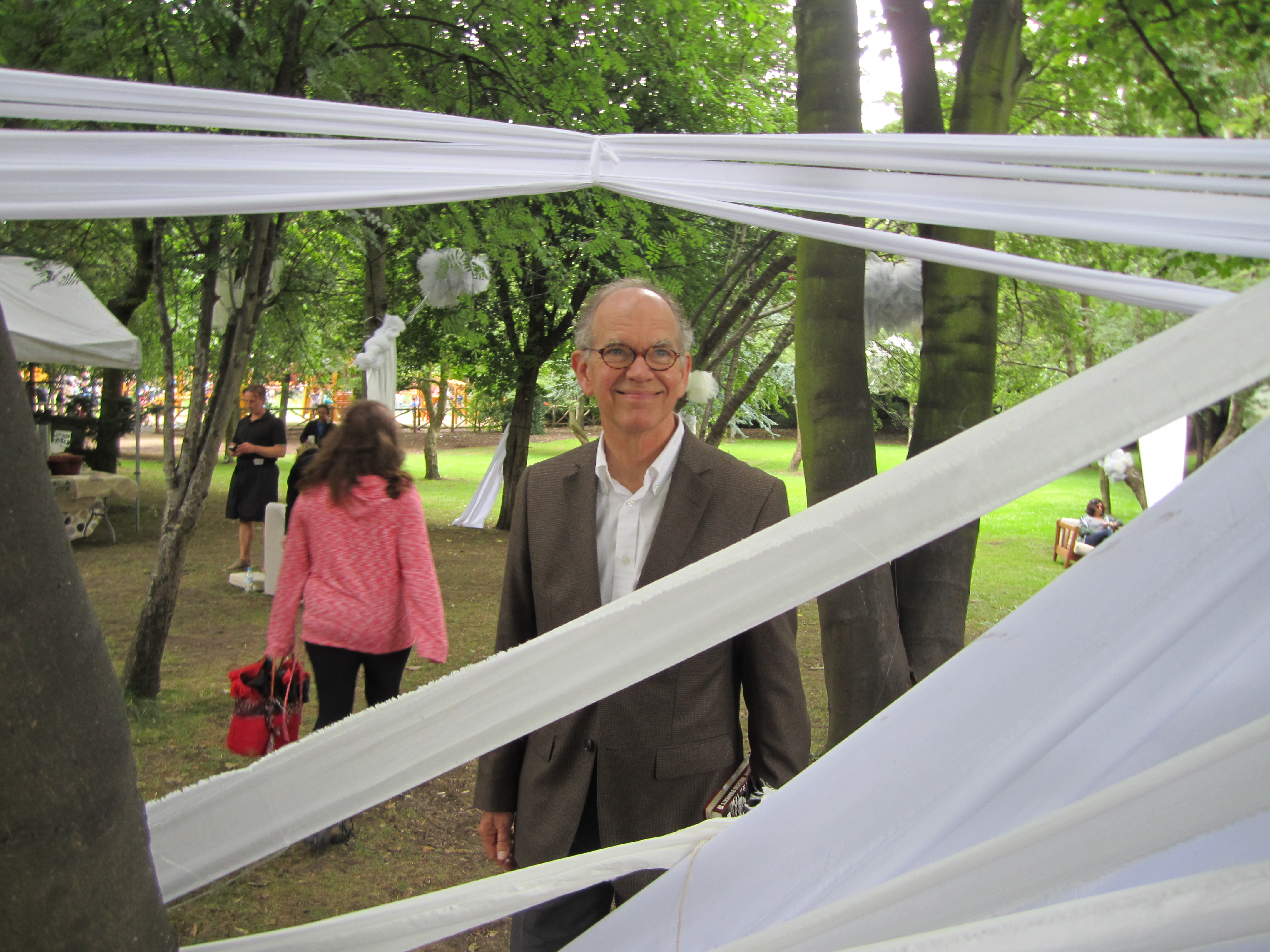
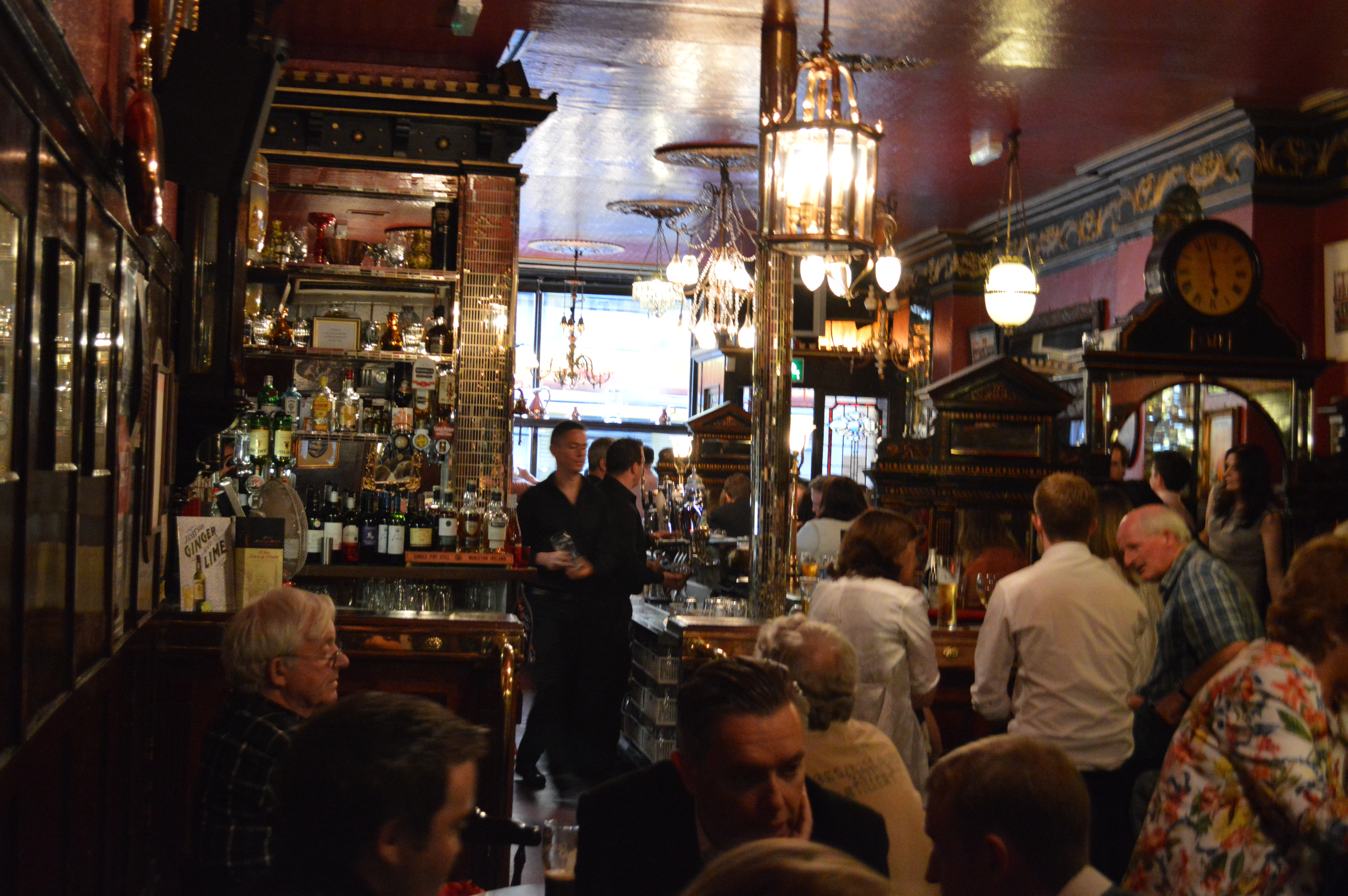
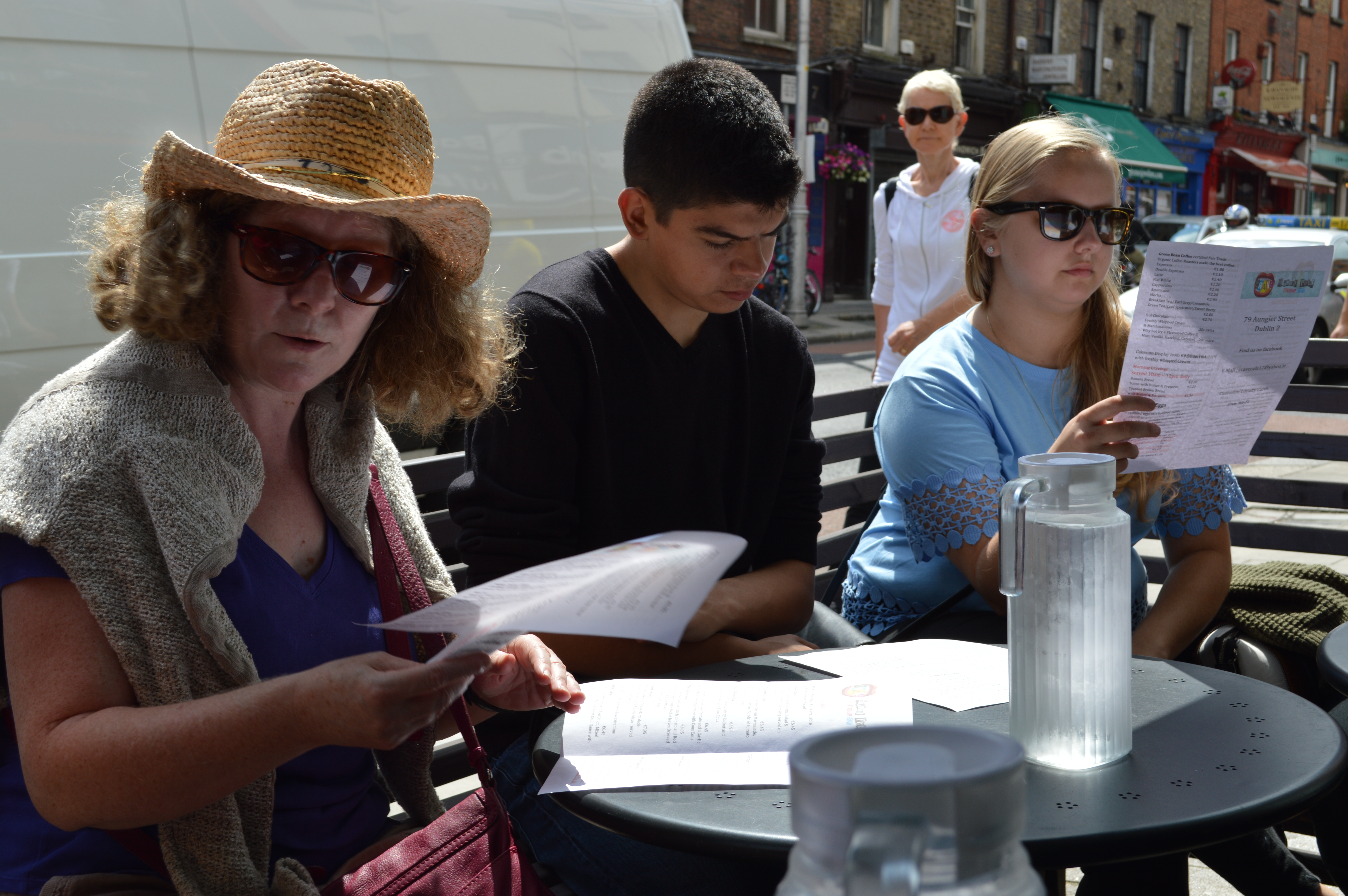
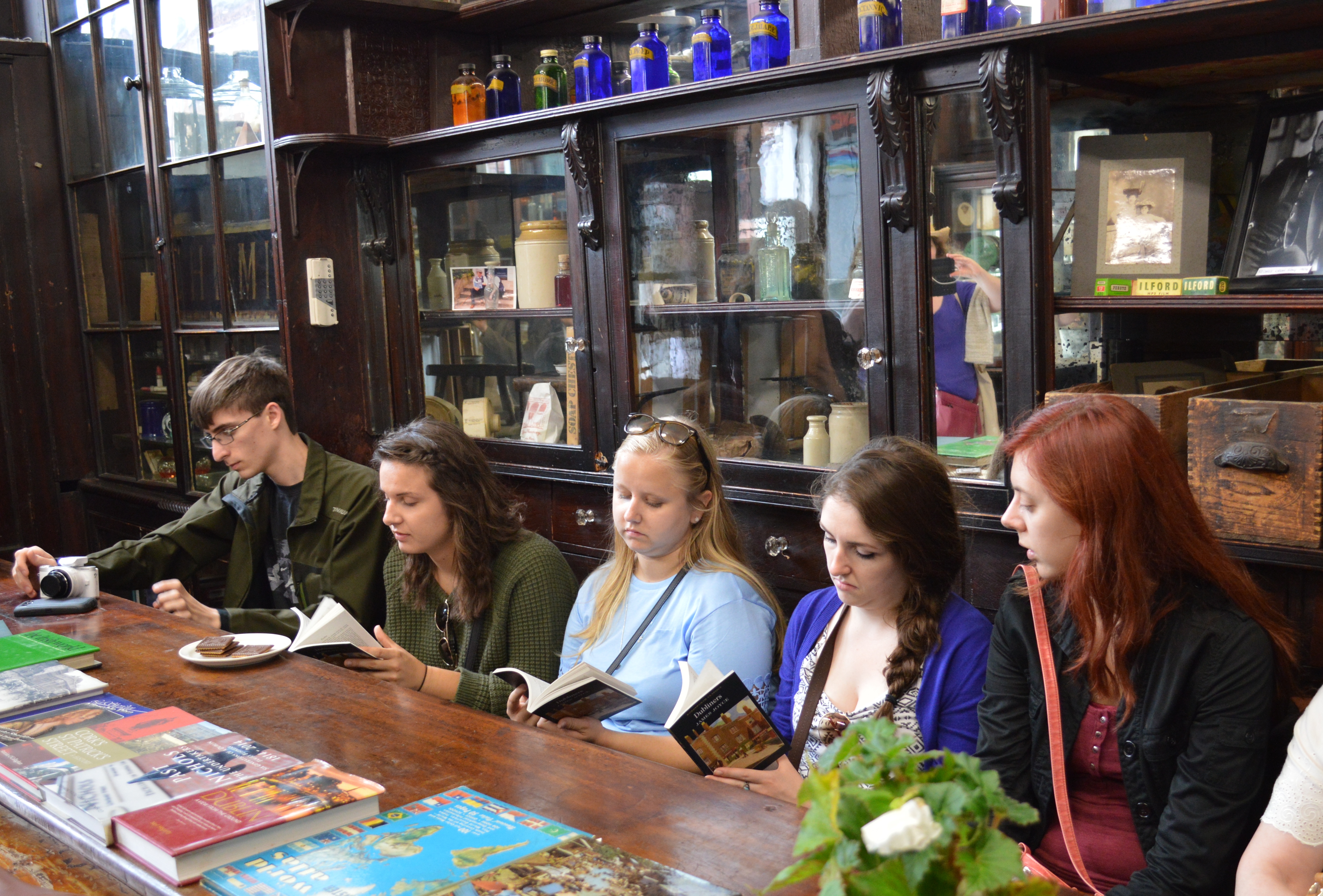
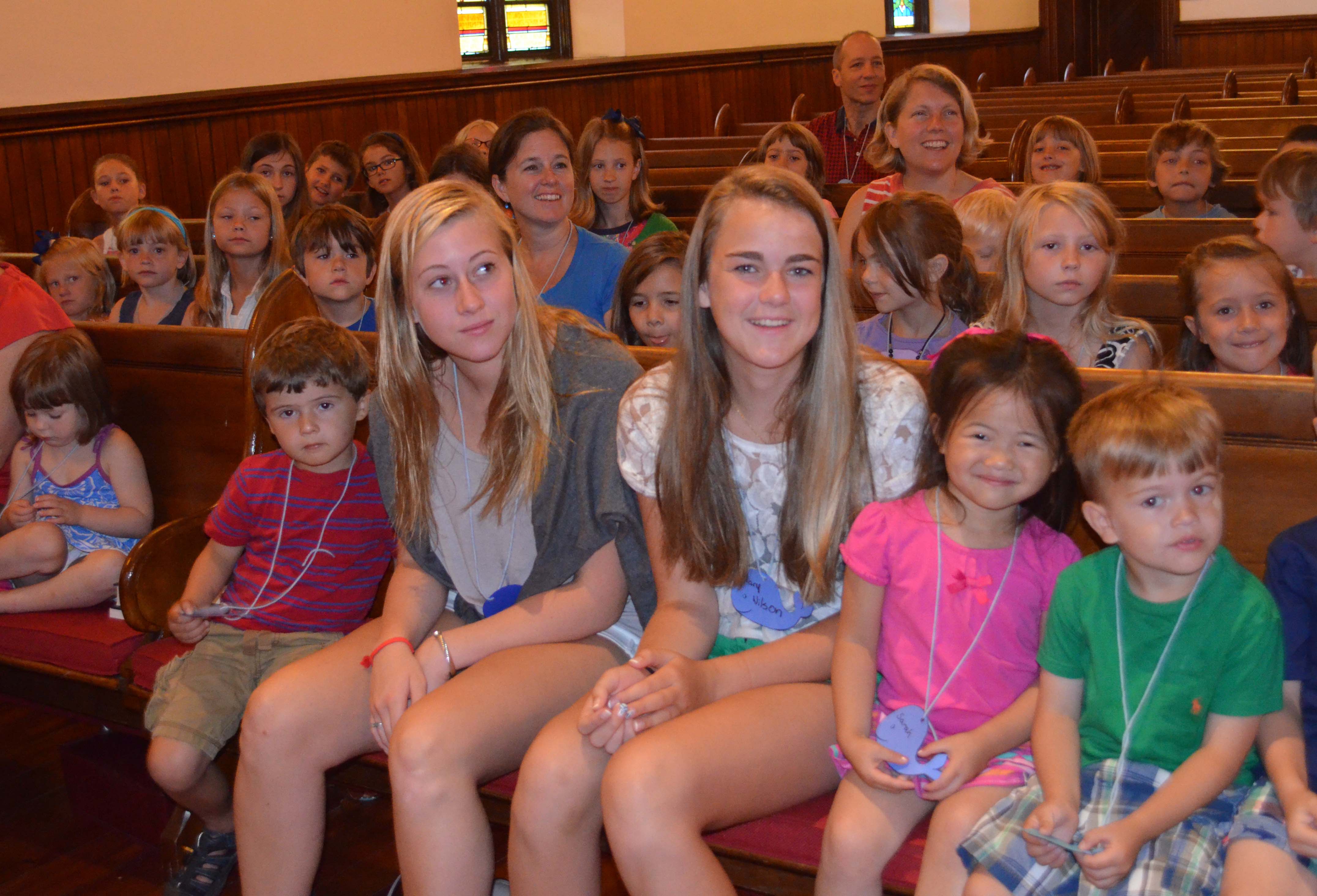
In Merrion Square, Dublin, during City Spectacular. The Georgian row houses surrounding the square included homes of Oscar Wilde and W.B. Yeats.
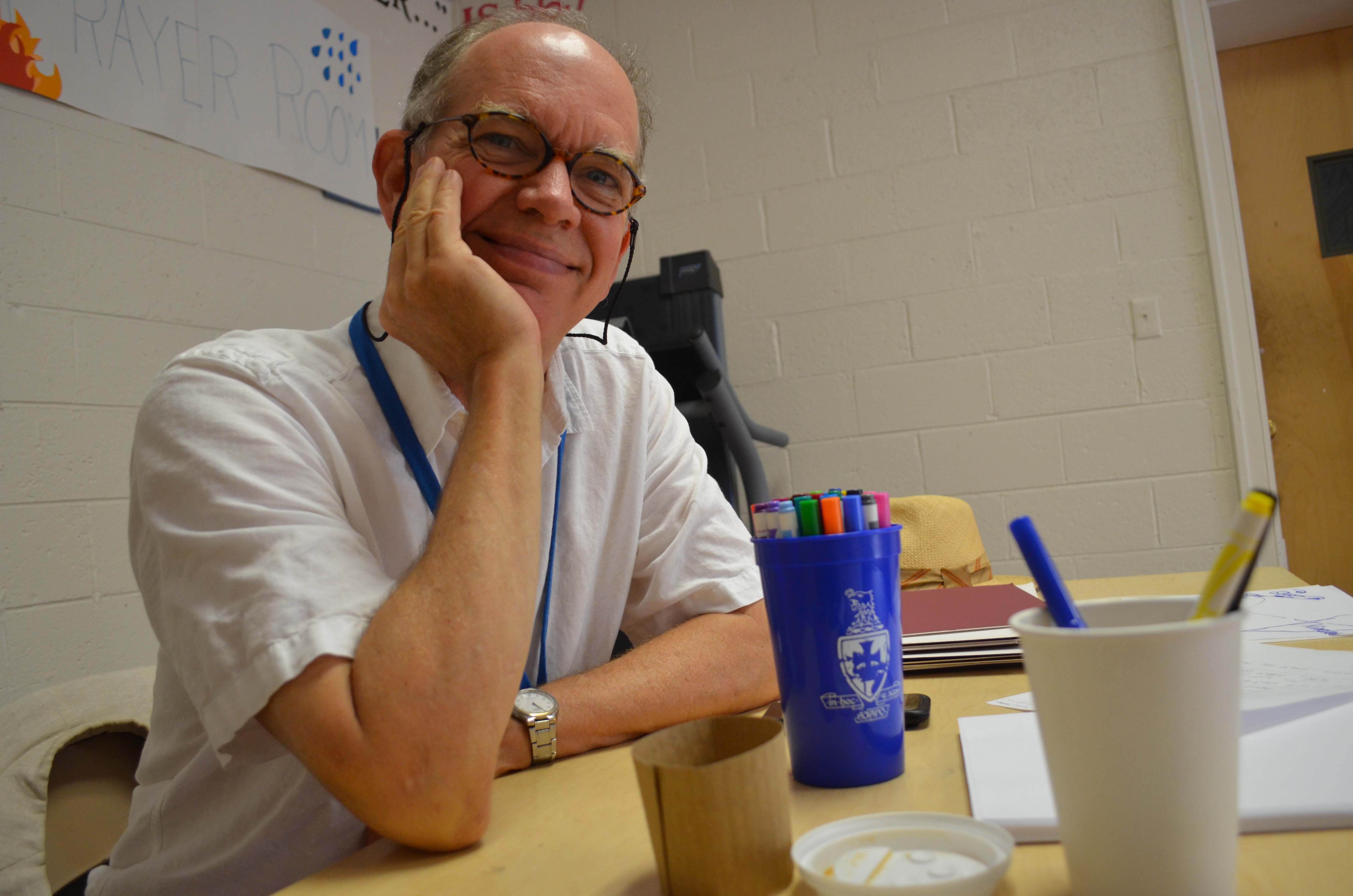
Teaching for the month of July in Northern Ireland city of Amagh. I highly recommend this course for journalism majors. I’ll be teaching it again next year, I’m sure. It’s with ieiMedia. http://ieimedia.com/
Here are the posts I’ve contributed so far to the blog we’re all contributing to, students and faculty. Check out the other posts as well.
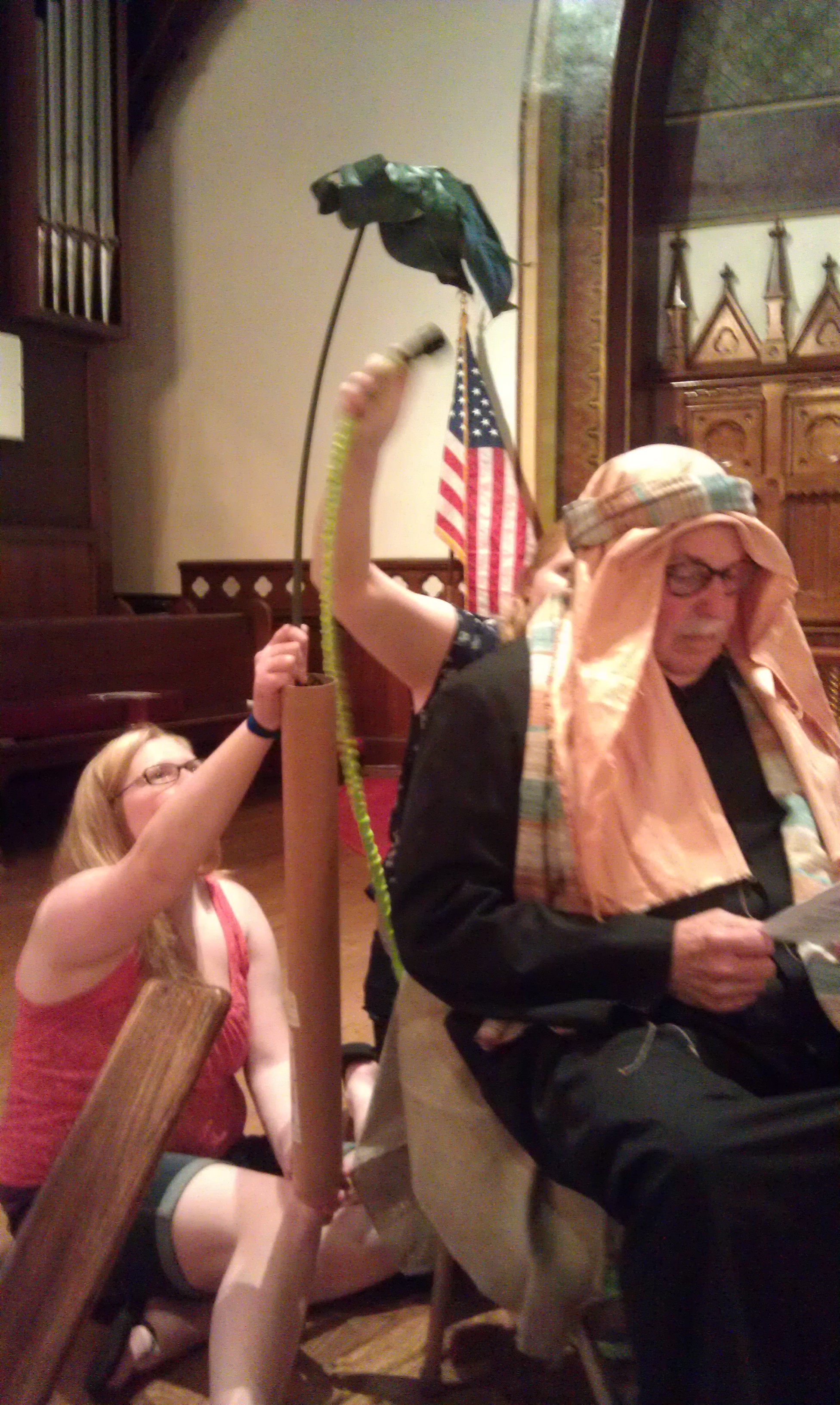
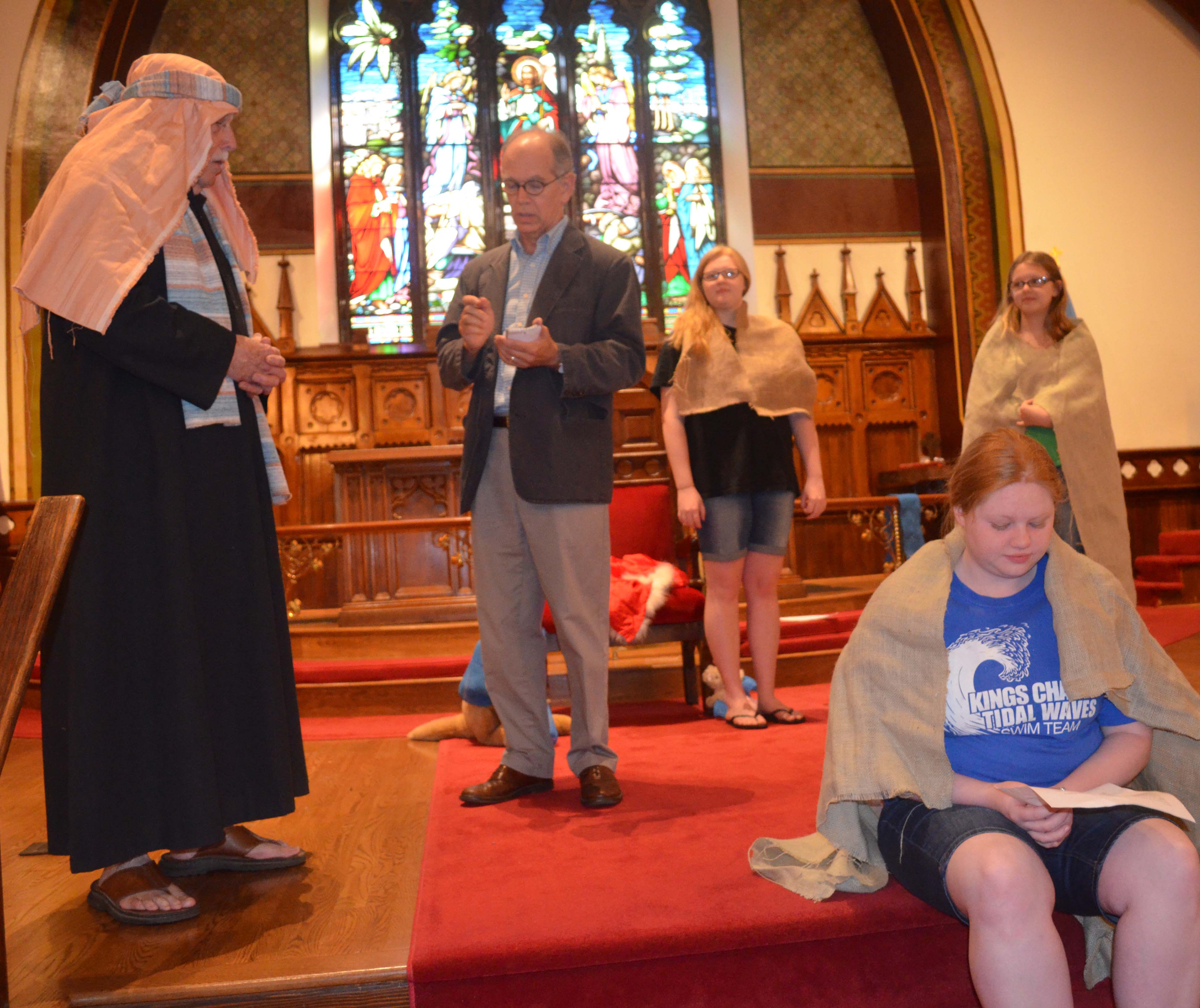
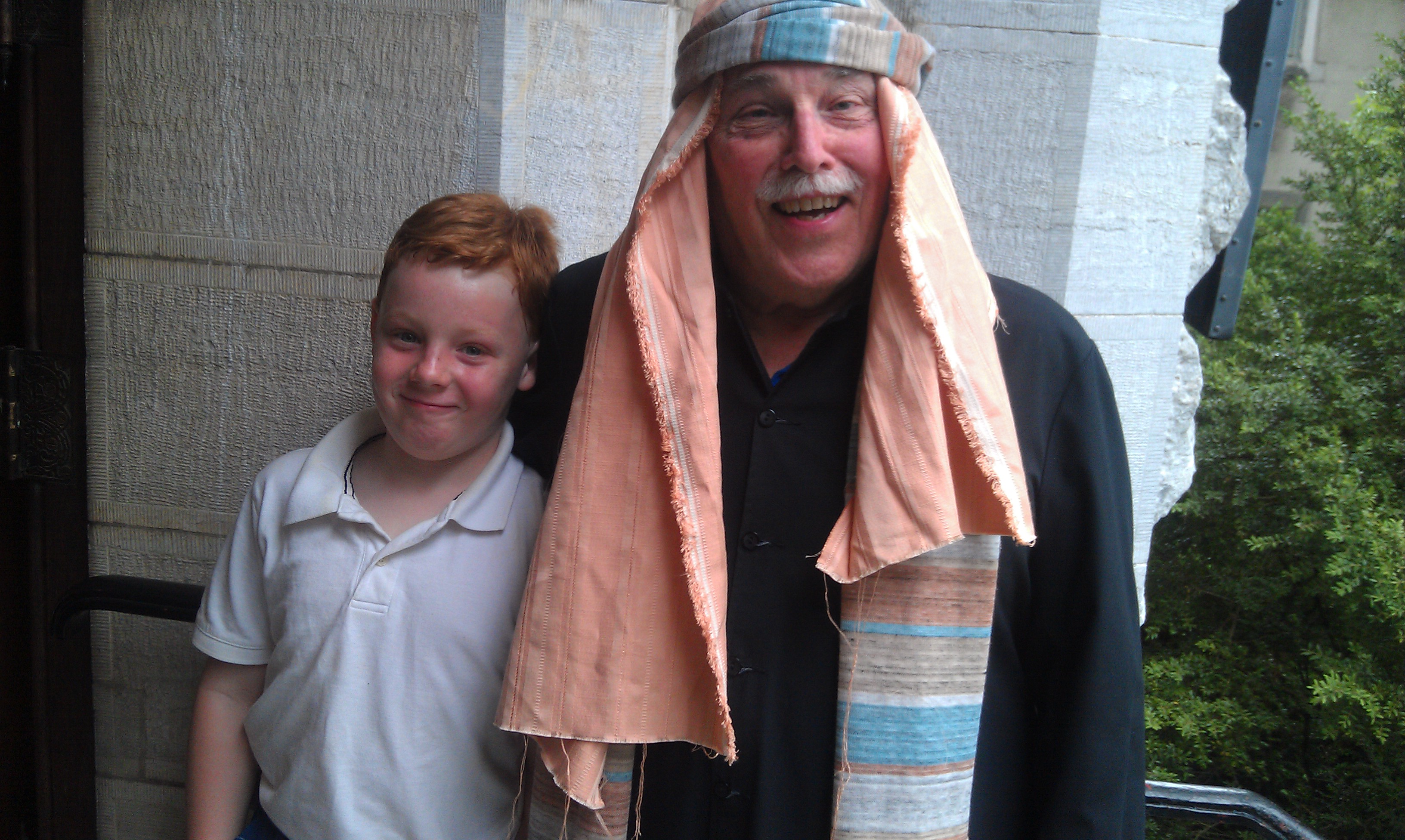
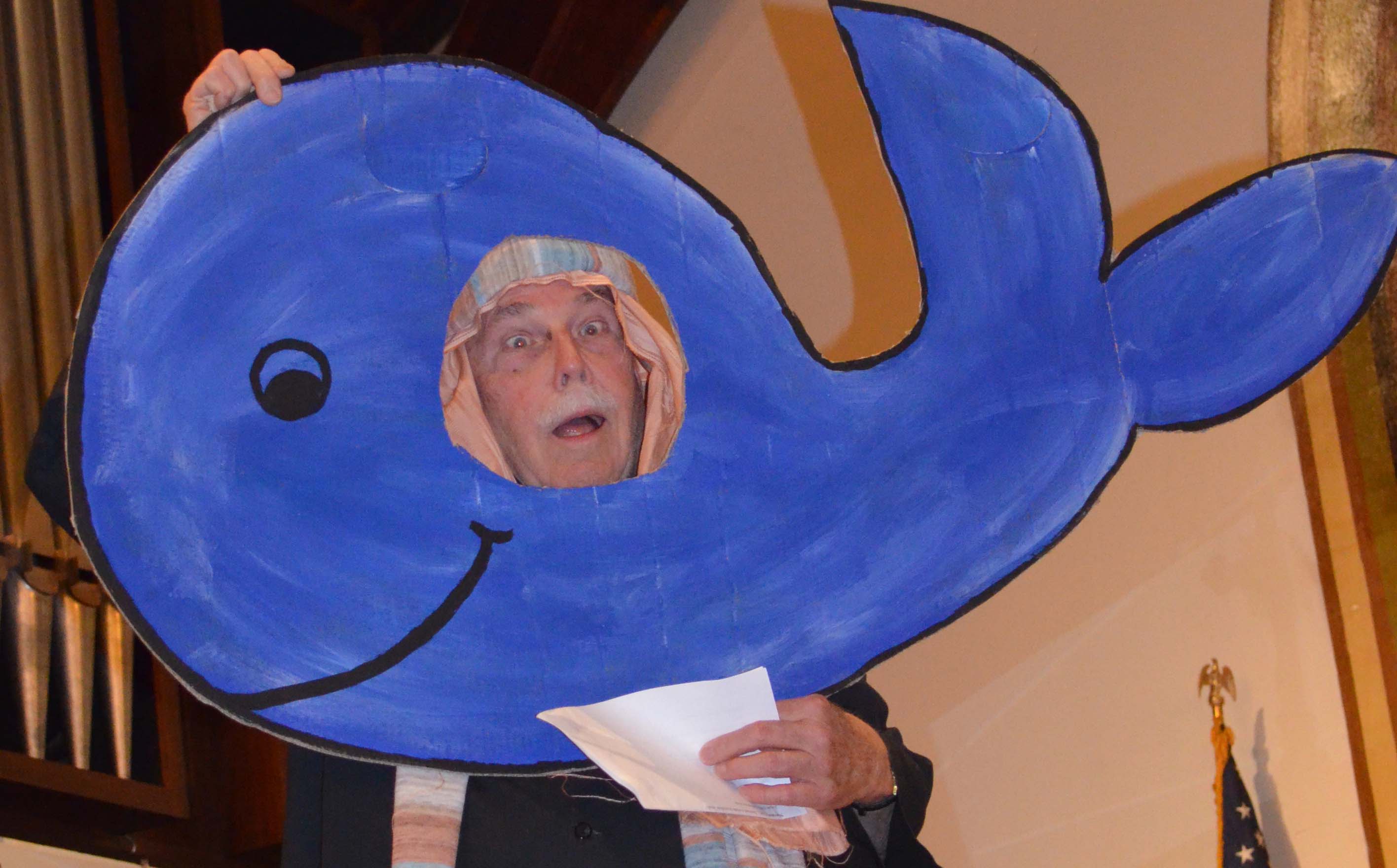
DAY FIVE – The prophet Jonah, after his remarkable success at converting Nineveh, spent two days outside the city thinking things over under a tree.
Shade tree under attack, Jonah loses his cool.
On the first day he stayed cool in his hut and under the shade of the tree, which apparently popped up in a jiffy. He seemed happy. But the next day, a worm ate the leaves, the day was hot, and Jonah turned bitter.
“I’m better off dead!” he was heard to yell skyward.
Apparently, the story ends abruptly with Nineveh filled with people “and many animals.”
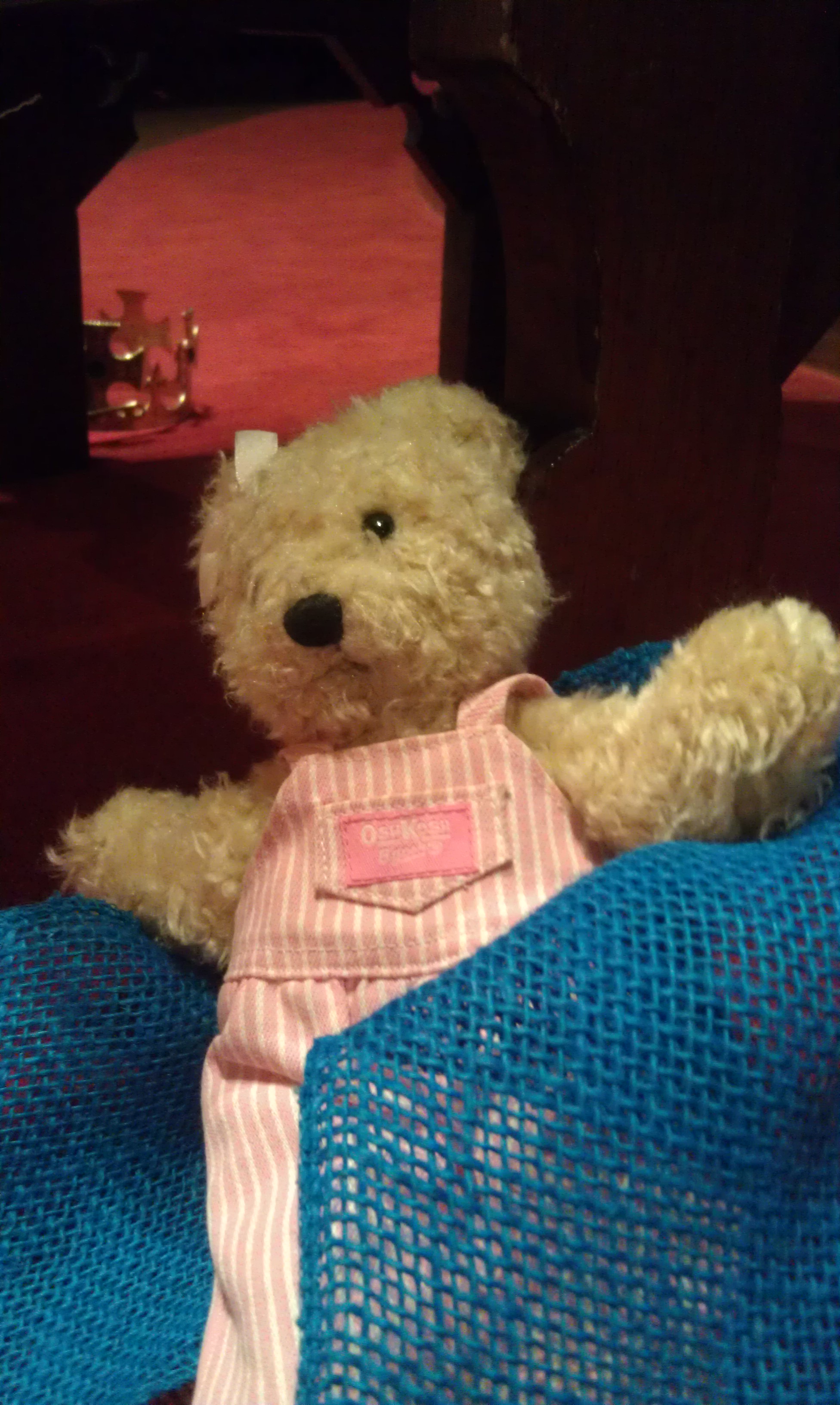
One of Nineveh’s many animals, by the King’s throne.
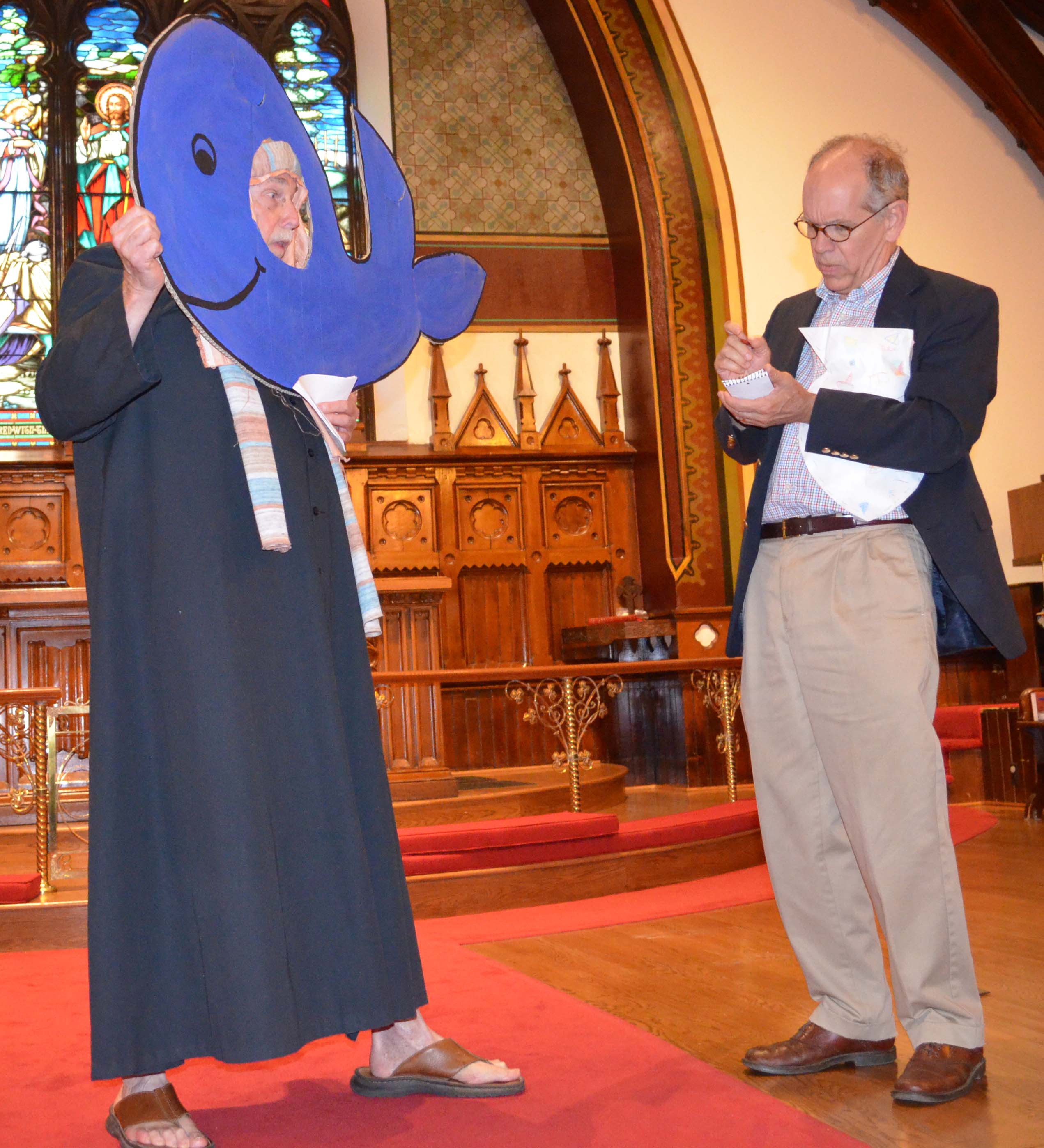
But the Journal got an exclusive interview with Jonah after his meditation under the tree. He seems to have learned a lot from his experience. So we asked him some Questions about the Meaning of Life. Here is a transcript of the interview.
Question: Is life good or is life bad?
Jonah: Sometimes life is good, sometimes life is bad. Sometimes we forget the goodness of God and we think it’s bad, but I’d say basically life is good. I ought to get a t-shirt.
Q: Is it better to live in a big city or to wander in the desert by yourself?
Jonah: Oh my goodness. As difficult as it is sometimes getting along with people, it’s better to be among God’s children.
Q: Even a big city like Nineveh?
Jonah: Or Roanoke. . .or Lexington.
Q: What is a prophet?
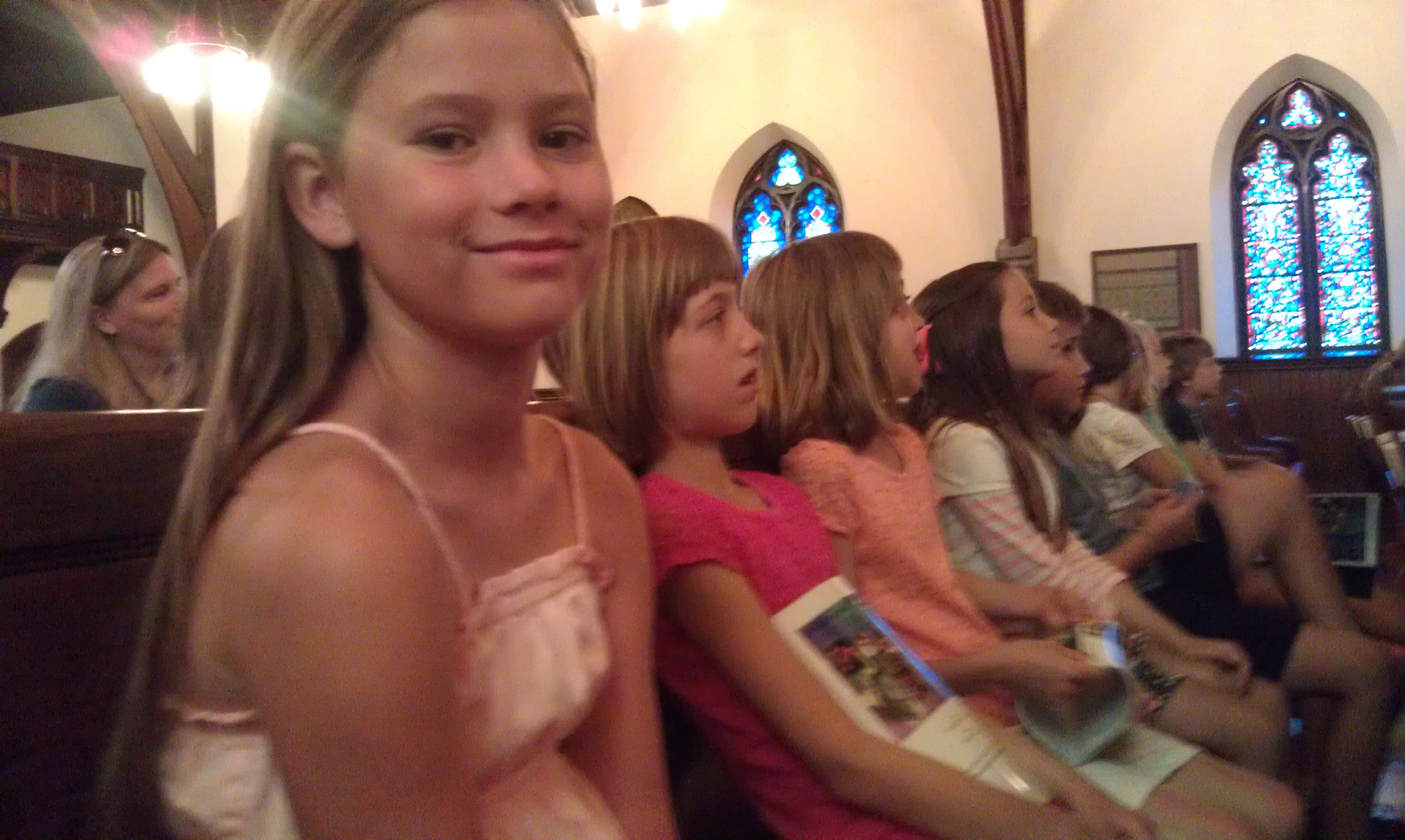
Regan and friends.
Jonah: Oh. A prophet is a person that appears wise and has a message to deliver. But I’ll tell you the secret. A prophet is merely a spokesperson for God, Who sends the message. And the prophet wanders around and says good things and appears to be a wonderful person, but it’s really You Know Who [pointing upward] talking.
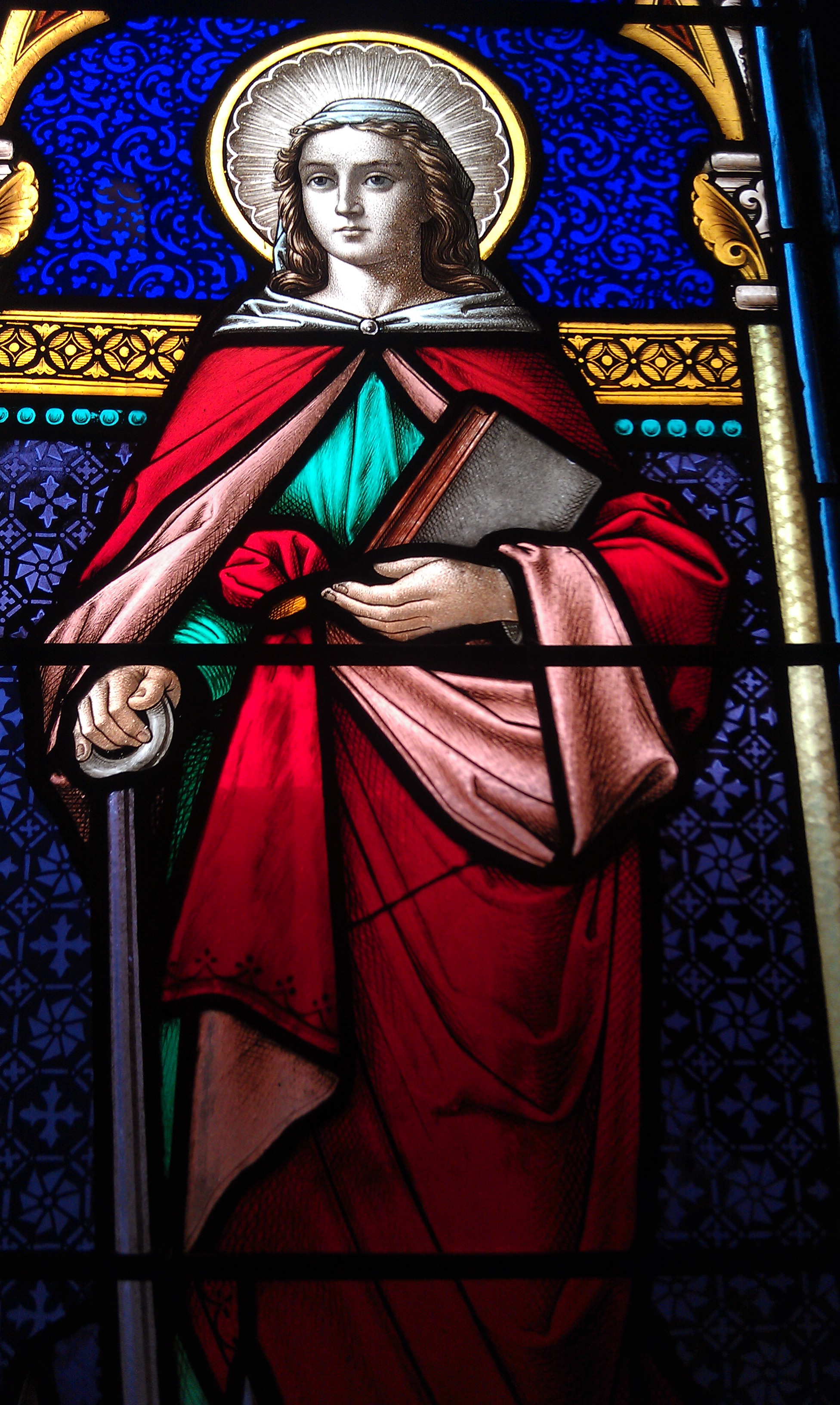
A saint
——————
A New Day Dawns in Nineveh
DAY FOUR – It was as if somebody had pulled the plug on Nineveh’s nasty party.
Everything went quiet. No meanness. No cussing. No bullies coming down the street.
And there on Babel Avenue, a ragged figure sat in the dirt wearing burlap.
Reporter on the scene in Nineveh. King in lower right, in sackcloth, ashes and humility.
“I was scared,” the figure said. “I didn’t want my kingdom to be smashed.”
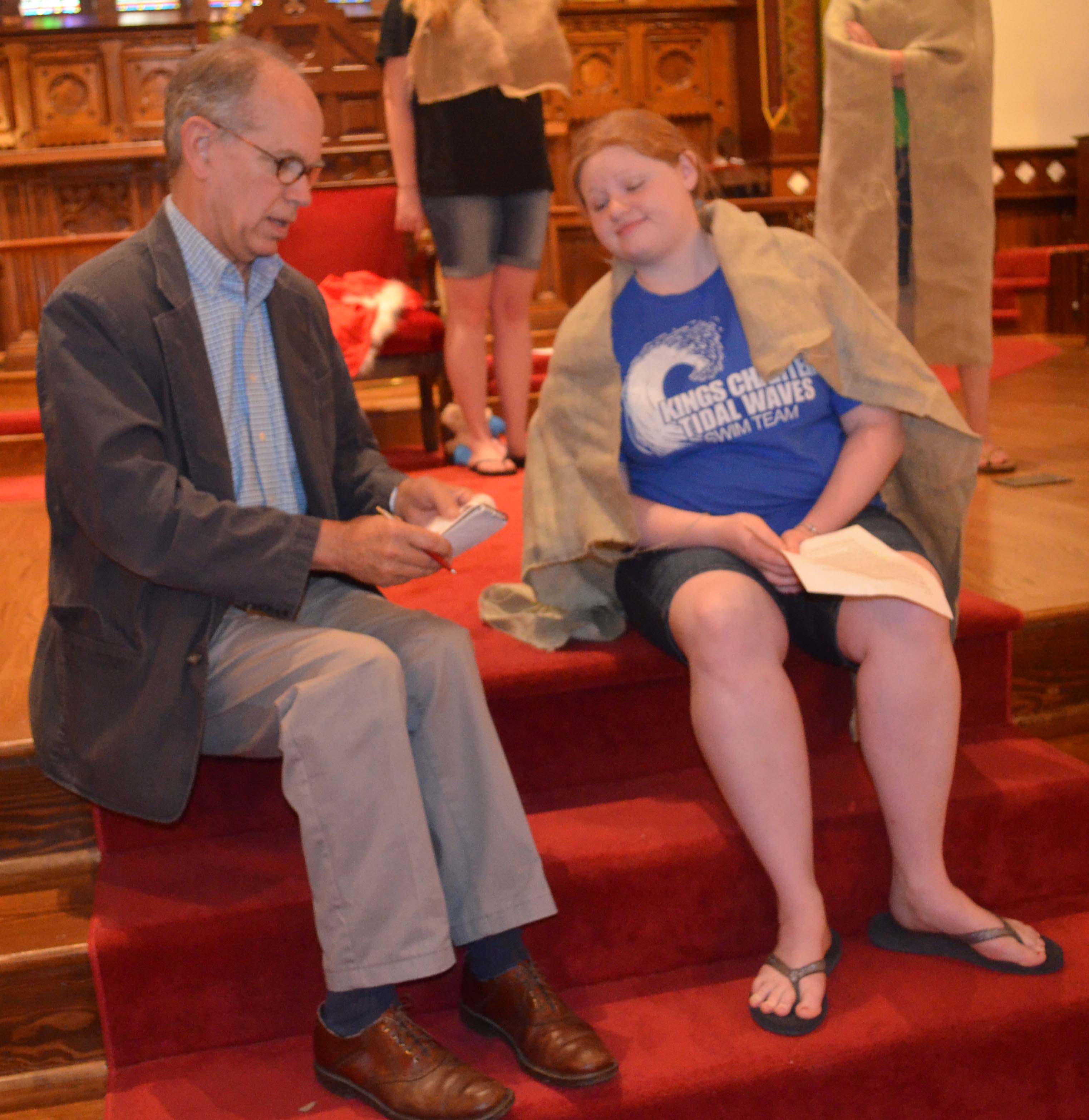
My kingdom? Yes, this was the King of Nineveh, bearing a striking resemblance to the young lady Taylor Fitzgerald. The King and all the people of Nineveh had listened to the words of the prophet Jonah when he told them of God’s displeasure with their bad manners and bad morals.
They all – “a lot of them,” was the King’s estimate of Nineveh’s population – adopted a brand new attitude. They humbled themselves, begged for forgiveness, and resolved to honor God and each other.
“God’s changed his mind,” Jonah said.
Jonah look a little tired. “I don’t know what’s next,” he said.
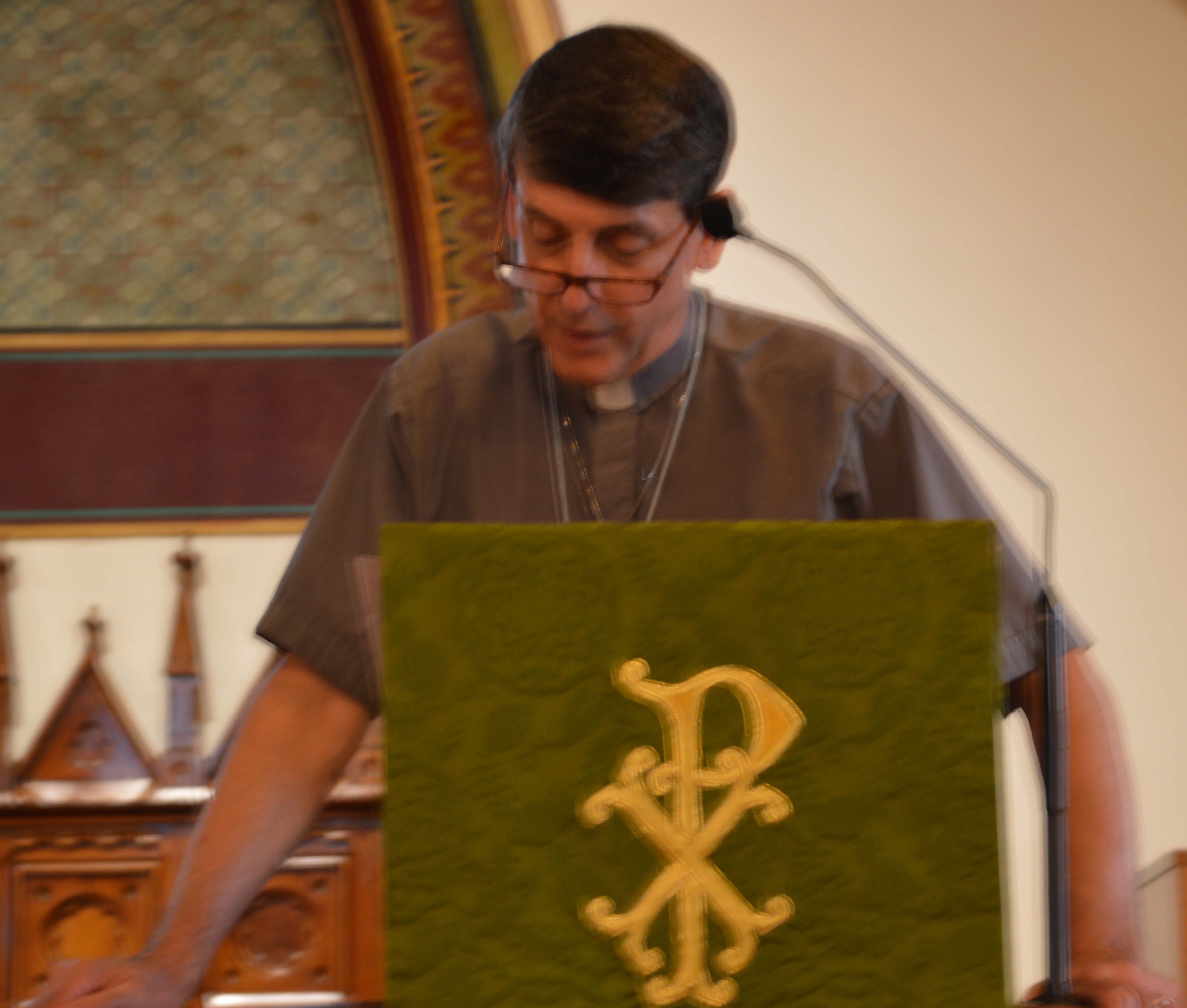
The narrator of this story, bearing a striking resemblance to the Rev. Tom Crittenden,
Father Tom narrates the story on Day Four.
said Nineveh was so big it took three days to walk across it – which would seem about right at the pace Jonah was walking. Getting there by horse would have taken at least three days as well.
At the story’s conclusion on Friday June 27, at 5 p.m., the youth of the Vacation Bible School will perform a musical rendition of these amazing events. The public is invited to come to “Oh, Jonah” in the sanctuary of R.E. Lee Memorial Episcopal Church. It’s free.
King on the street being interviewed.
—————–
Disgorged by Whale, Jonah Sets Sights on Nineveh
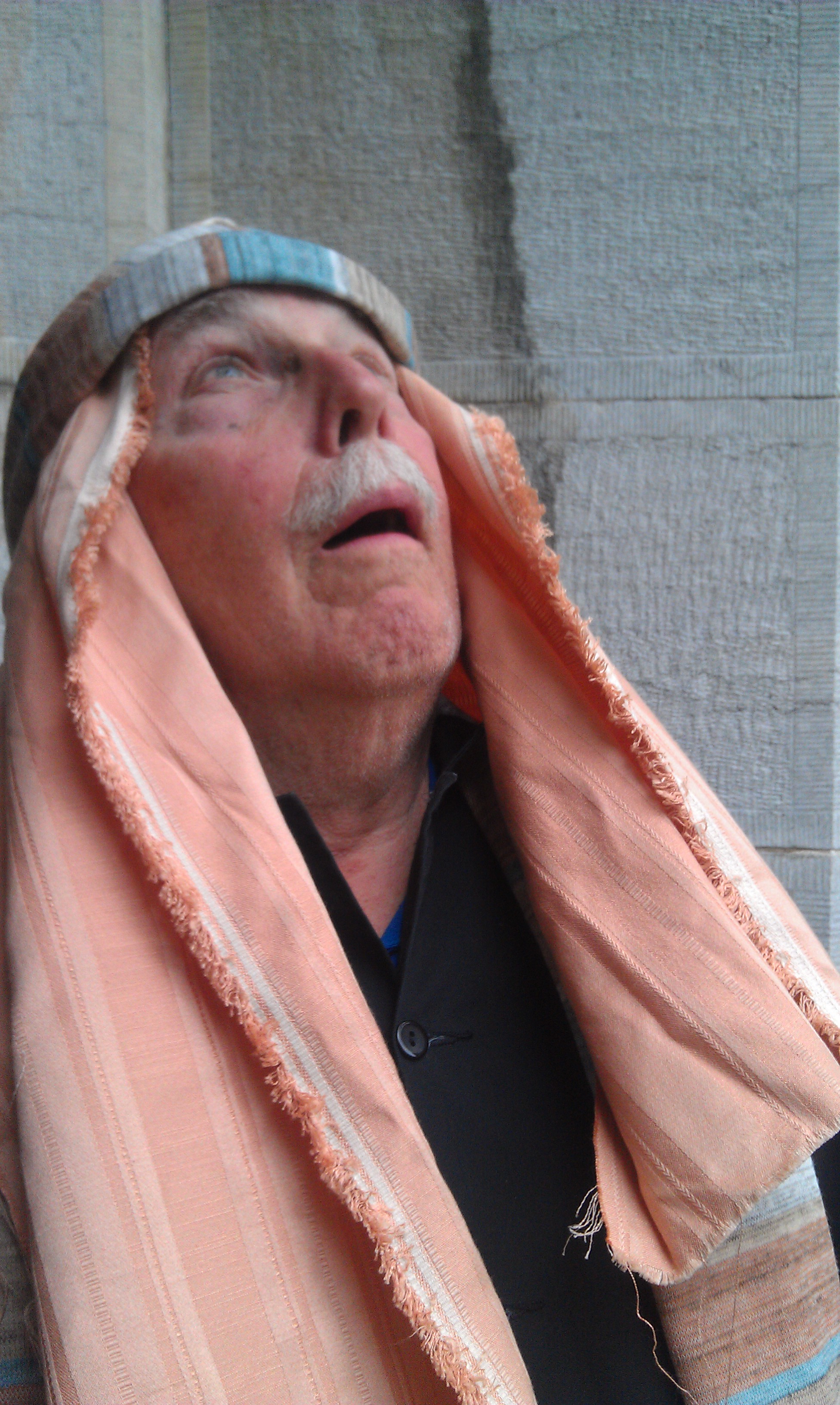
DAY THREE – A seaweed-draped Jonah was seen staggering ashore yesterday, lifting his arms toward the sky. He appeared to be in good health.
Jonah looks heavenward after three days inside a whale.
In a recorded interview, he told the Journal that the whale spit him out and he swam to shore. A host of young onlookers suggested he might consider taking a camel or horse to Nineveh, since Nineveh is apparently where he means to go now.
Avery Hess: “I think he was pretty brave to actually not panic too much in the whale. . . I bet he was really relieved to get out of the whale.”
One of the witnesses, Avery Hess, offered her own observations about this dramatic turn in this news story.
Trey Lewis and his granddaddy Buster.
——————————-
‘Bad Luck’ Prophet Thrown Overboard, Believed Still Alive inside Whale
DAY TWO – Scared to death by a sudden storm at sea, the crew of a ship bound for Tarshish heaved minor prophet Jonah overboard yesterday, according to crew members who asked not to be identified.
This was followed by two extraordinary events:
A large whale swallowed Jonah whole.
And the storm ceased.
Our fearless reporter and photographer tracked down the whale for an interview with the enclosed prophet.
Jonah being interview underwater by Jehovah Journal
“When I told them I caused all this trouble,” Jonah said from deep inside his captivity, “they threw me into the water.” Jonah had been napping below deck during most of the storm.
He described his new circumstances as “dark and scary and lonely.”
Before heaving Jonah into the sea, the crew tried to lighten the ship by tossing non-human materials. That didn’t work. Then they drew straws to see who would get the short one, expecting that would tell them who was causing the storm.
Jonah drew the short end. He was hoping to escape God’s demand that he go to Nineveh to cry out against the meanness there. But his attempt to flee “didn’t work,” he said.
Group A with their drawings of Jonah in the whale.
Reflecting on these latest developments, youth at our Vacation Bible School have experienced being inside a whale – by walking through the dark passage and hearing the underwater sound-effects on the bridge between the church and Parish House. They have been given strips of paper to see who got the short one, like Jonah. And they have told about their own exciting journeys.
Helen and Grace
Summer H and Ava C
Avery, for example, went to China last year, when she was six, and walked on the Great Wall. Noah went to a Magic Mountain water park in Canada.
Meanwhile, back to our running news story, Jonah was scared but he seemed resigned to doing his job as a prophet. He said he thinks God sent the whale to swallow him. “God’s very powerful,” he said.
Clara, Graham and Gabi, in Group C
—————–
FRIGHTENED PROPHET JOINS JOPPA SHIP
DAY ONE – Local minor prophet Jonah ben Amittai got a command from God yesterday, according to numerous witnesses.
Jonah, in an exclusive interview with the Journal, acknowledged that an angel spoke to him. He said the angel told him to go east to the city of Nineveh and cry out against the residents there for not being very nice. He apparently didn’t like the sound of that.
Nineveh is some 800 miles outside our circulation area here in Judah. It is not known whether the citizens there have heard of the God who created the heavens and earth and seas and gave us the Law. It is believed that they entertain many smaller godlets and demi-gods there.
Jonah, who declined to give his age, said he didn’t understand why he should be attracted to Nineveh. Instead, he was boarding a ship in Joppa that was bound for Tarshish, far to the western edge of the Great Sea.
“I hope it’ll be a sunny, pleasant trip, like a cruise in the Caribbean,” he said. “I’ll preach to them.”
He said he expected to preach good news where he was going.
Students and staff of the R.E. Lee Memorial Church Vacation Bible School, 58 individuals in all, witnessed the conversation between the angel and Jonah.
Regan
“He didn’t want to get involved,” said Regan B., age 10.
Ginny
“He might think he’d be famous, or he might be embarrassed – like I am sometimes,” added Ginny P.
Gabi
Or maybe he just didn’t want to travel that far, suggested Gabi E., adding that it’s sometimes awkward to talk to people about religious beliefs that are different from yours.
The weather forecast calls for sunny pleasant sailing, so Jonah may have made the right choice. Check this space tomorrow. We’ll be following his journey.
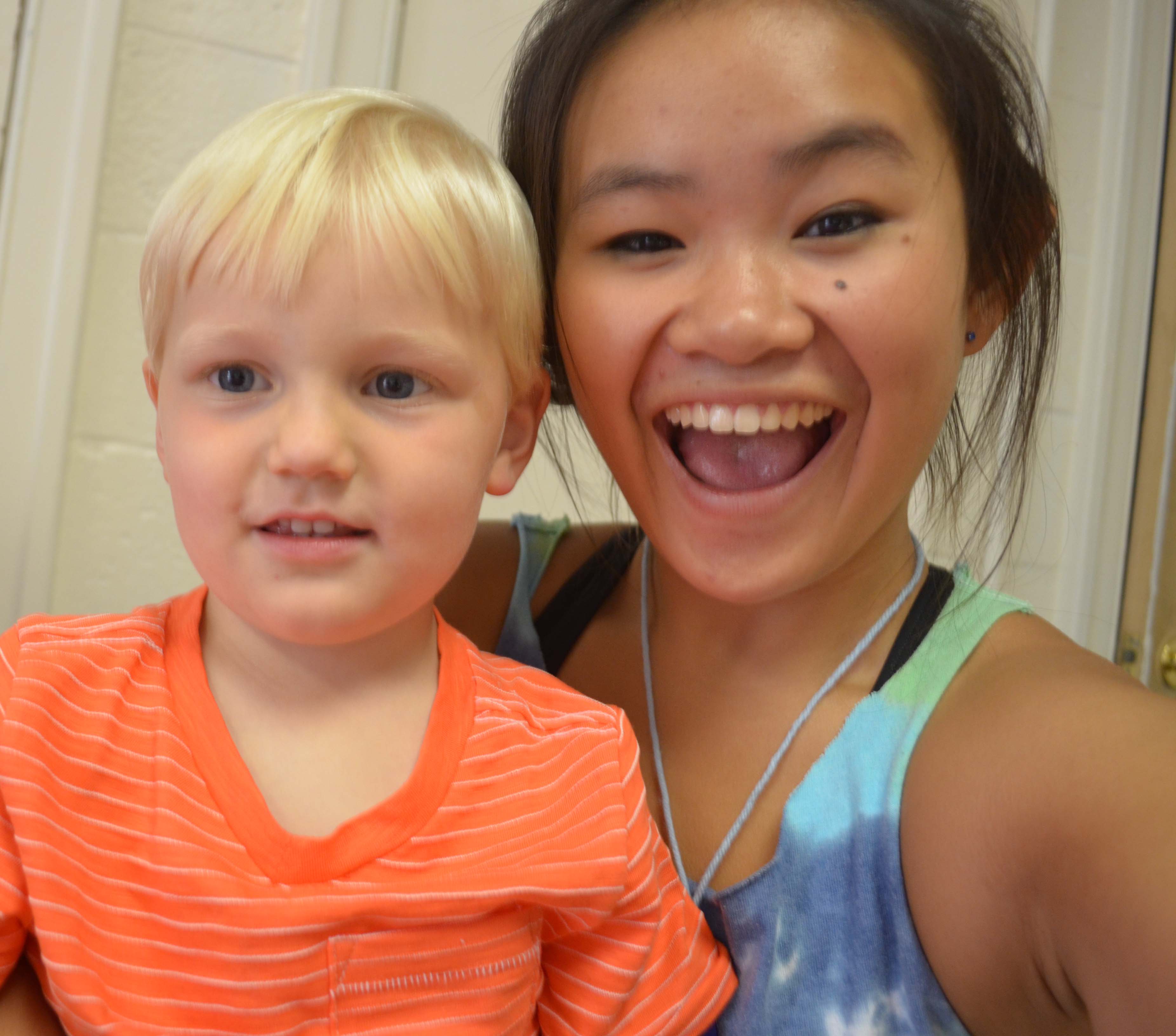
Foster P. and photographer Lyndia Orr, in a selfie
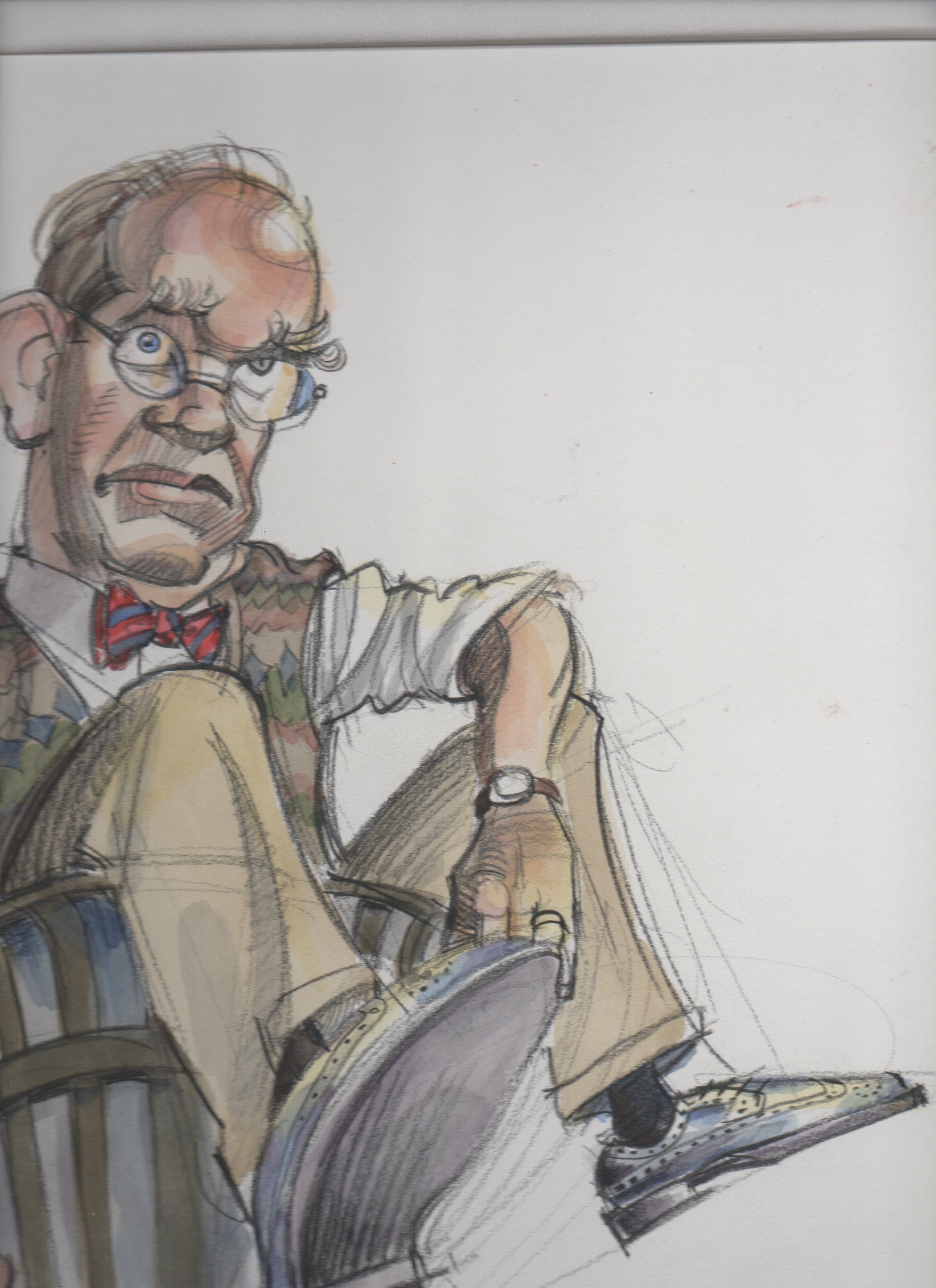
Time spent with my childhood family draws me back into that cartoon simplicity, the way my younger brother Walter’s caricatures draw people into their absurd (but all too true) versions. Mama takes the measure of my face, standing in the kitchen of our Tate house, and laughs. “I’m so mad at Walter for a drawing he did of you,” she says, jiving. Now, she says, she can’t look at me without seeing that face.
I know the one – I have the original: I posed as a model for the illustration he did for a Journal-Constitution feature story on older executives who get laid off in favor of younger, lower-paid professionals. The illustration had this old man, balding, bow-tied, and butt-folded into a trashcan. Walter is a genius at capturing the surface reality.
Why doesn’t a poem do the same at capturing the inner reality of a person? Like this one I wrote about Walter years ago, “Suspended,” when he was staying in the Tate house over the winter, enjoying the solitude and the bare trees in a kind of seasonal inversion of the leafy, family-full summers of his childhood.
SUSPENDED
Your Mad River canoe floats
in mid-air athwart
the carport
Of our parents’ weekend mountain
house, cleated high
by bowlines,
Carabiners, and screwhooks to hold
against the flow of things
to ruin.
The whorls of elevation lines in topo
maps of ridges mark, like
fingerprints,
The runs you take when you have time.
Not much time left, city work
a long commute
And only six weeks before foliage closes
the vision, the fine-tuned knowing
of these ragged hills
Lived in at last for yourself — suspended
in magnificent shape like that
unhousebroken hull
Eyeing through windows over bookshelves
how it will run the currents
within.
My latest column in Clio Among the Media, the newsletter of the history division of AEJMC.
We have a relatively small journalism program here at Washington & Lee University, without grad students or professors of public relations, advertising or anything that is primarily theoretical. Yet we feel confident in our academic status. The history books say journalism education started here, although it’s a stretch to equate the scholarships that Washington College President Robert E. Lee started offering to printer’s apprentices in 1870 with the sort of journalism-school education that began in 1908 at the University of Missouri. We hold to the idea that a good liberal arts education is fundamental for journalists – or for anyone called to contribute to a democratic society through communication. We also believe in the value of Ph.D.s and ACEJMC accreditation and all that. So our website says with pride, we are “the nation’s only accredited journalism and mass communications program in a highly competitive liberal arts university.”
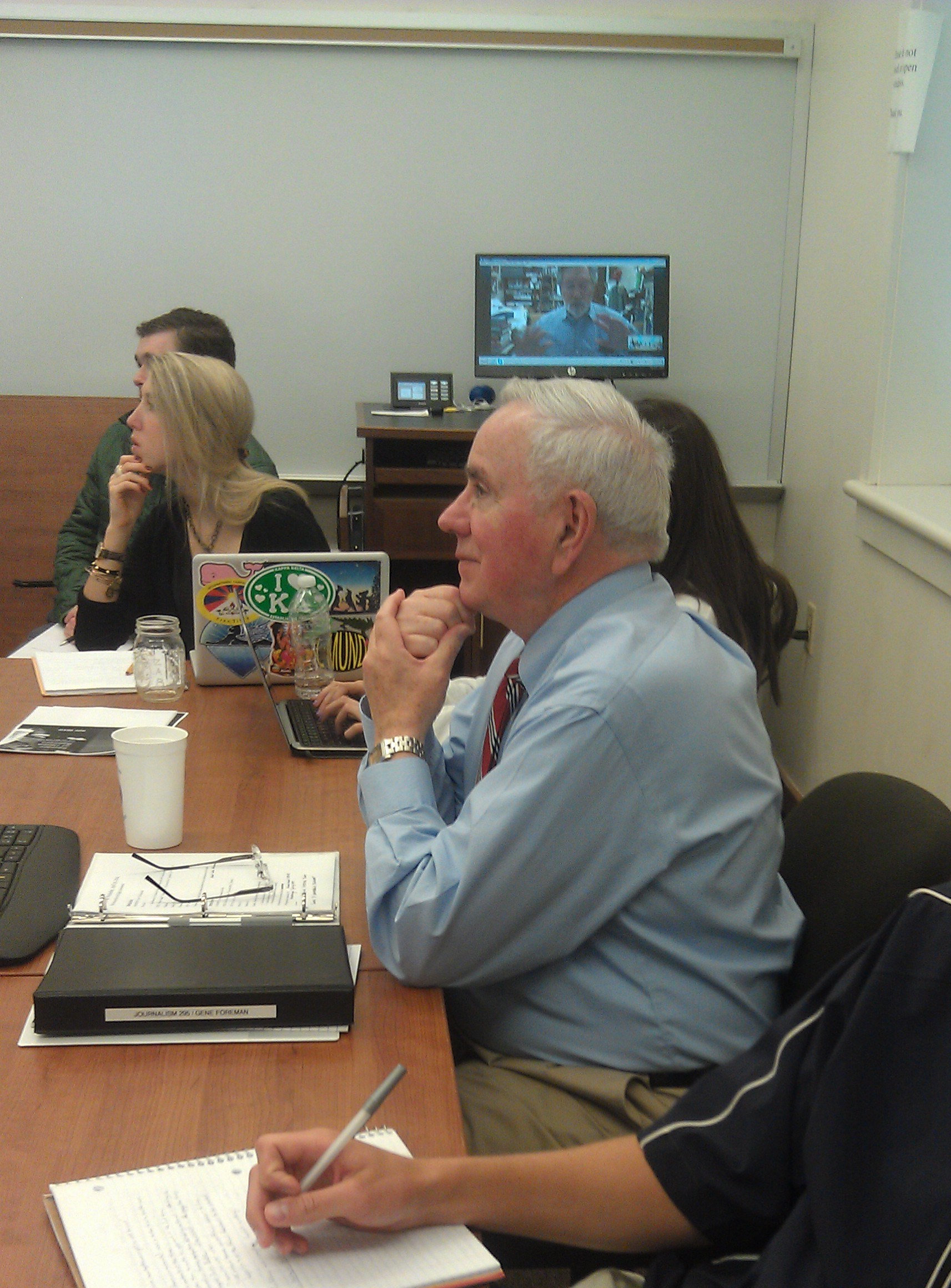
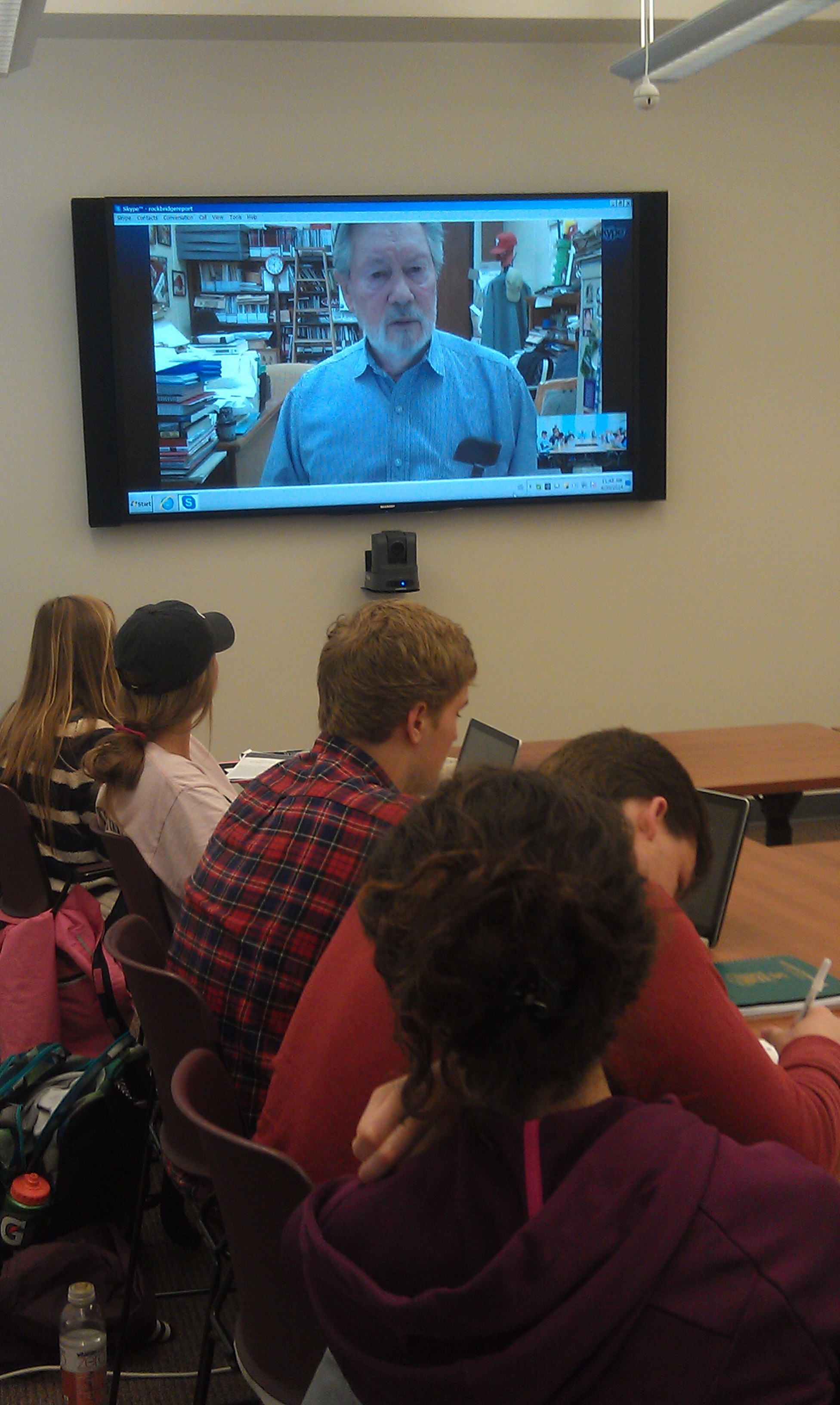
Gene Foreman, former Philadelphia Inquirer m.e., Skype-ing with former NYTimes reporter Roy Reed (on monitor in the background)
But it can be an uneasy mix – the best journalism as it is actually practiced and the culture of the ivory tower.
Not that these can’t reinforce each other. I see the two worlds blend well where faculty members had highly successful newsroom careers twinkling with Pulitzers, Murrows, SPJ awards or Nieman fellowships before coming to their advanced degrees and classroom teaching. When colleagues have had more than 25 good years in the news business, they have connections that remain.
The best moments are when these connections reach students. I recently dropped in on the final presentations of our journalism majors’ in-depth, multi-media capstone reporting projects. The professor, Brian Richardson, was himself a Phi Beta Kappa W&L journalism major, ’73, who reported and edited for the Tallahassee Democrat and Miami Herald for a decade before getting a Ph.D. at the University of Florida. He had taught this in-depth reporting course for more than a decade. He also worked many summers on the Philadelphia Inquirer copy desk between academic years of teaching.
As it happened, Gene Foreman, the long-time managing editor of Philadelphia Inquirer during those halcyon years of Pulitzers, was a visiting
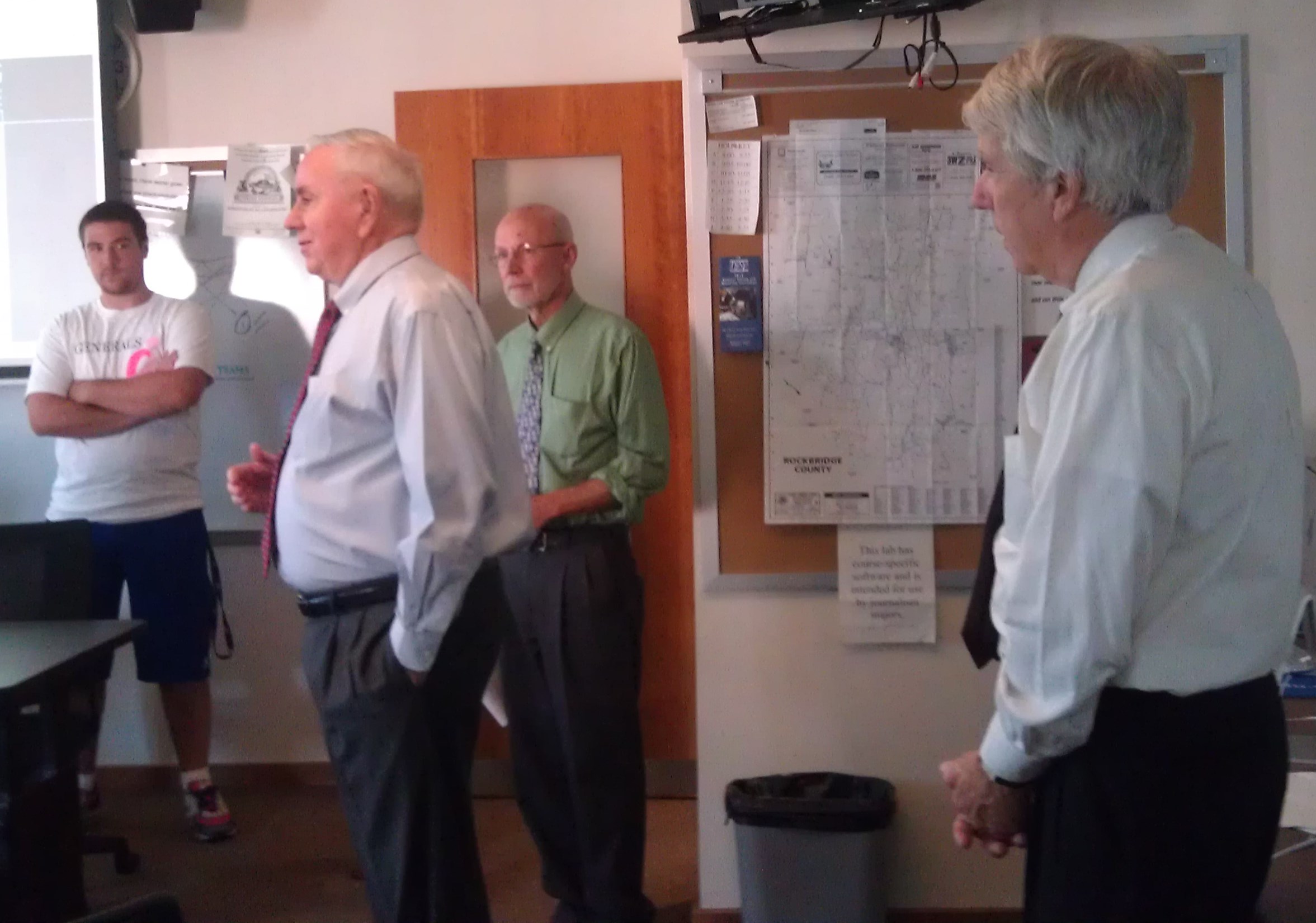
Critique session: l-r, student Cory Smith, Gene Foreman, Brian Richardson and Jim Steele
professor here who was just finishing up teaching a spring term course he called “Journalism that Changes the World.” (During one class, he brought in by Skype former New York Times reporter Roy Reed, who had been with Foreman at the Arkansas Gazette when that paper was doing its legendary coverage of the Little Rock Crisis of 1957. Enjoying Reed’s great Southern gift for storytelling there on the big screen, I was reminded of the way Shelby Foote stole the show in Ken Burns’ “Civil War” series.) Foreman came to the In-Depth student presentations. And on that particular day, he had brought in one of his former star reporters, Jim Steele, of the famed Bartlett & Steele team of investigative reporters, now at Vanity Fair. So the students got a critique from Richardson, Foreman and Steele. They were tough critics, but honestly, were wowed by the students’ work.
The best of the newsroom culture, that rakish tribe of well-seasoned news gatherers, has an uneasy relationship with the good university culture in which journalism programs and schools are embedded.
This is not that old chestnut, Those who can’t do, teach. I am grateful for the good theoretical models, historiography and sociology that created the groundwork for this generation of journalism professors. The work continues. As our chair Kathy Forde pointed out in her previous Clio column, sociology has played a key role in our understanding of media history, and provides useful tools for us to continue the work.
But journalism is not just a craft or trade that we are preparing some of our undergraduates to enter. It is also a mode of knowing, worthy of a respected place in a liberal arts education. I was struck by a recent David Brooks column (“Stairway To Wisdom,” New York Times, May 16) in which he hinted at this. In order to understand a social problem in depth, he said, you start with the data, then move on to the academic literature – the theory and sociology of it. But life experience tells us that individuals, you and I, for example, aren’t entirely generalizable in the way of groups and categories. To get at the deeper meaning of a social problem, you need individual cases, and for that, nothing can match the journalistic practice of skillful listening, writing with style and a gut sense for the story.
“My academic colleagues sometimes disparage journalism,” Brooks wrote, “but, when done right, if offers a higher form of knowing than social science research.”
The Freedom Forum, formerly the Gannett Foundation, wanted to help bring more award-winning seasoned journalists into the academic fold to teach the next generation of reporters. So it created a fast-track, two-and-a-half year Ph.D. program at UNC-Chapel Hill, offering $50,000 a year, free tuition and research money. The program accepted three fellows a year for nearly a decade, then shut down. I was in the last group; we turned off the lights.
I had always been drawn to universities, their deeper draughts of thought and longer time-horizons. But leaping into the world of the Mass Comm terminal degree, especially my first AEJMC convention, was painfully disorienting. After writing for multitudes on daily deadlines and editing magazines, I was getting hazed into this other world of blind review fixations and formulaic research papers. I felt, at first, that I had left a reality of consequence for one of weightlessness and non-importance. My colleague Brian Richardson recalled his experience of that transition as well. His reporter instincts kicked in, and he sensed the whole university system lacked outside accountability. So he grilled administrators with basic reporter questions, and that was apparently a startling experience for them.
But having endured the hazing, we now enjoy the benefits, not only in lifestyle but in intellectual payback. The best of it is achieving some kind of synthesis of journalism, as a way of questioning the world and relating to readers, and the art of teaching it.
Roy Reed, Skype-ing from Arkansas into W&L journalism classroom
Pass me the can, lad; there’s an end of May. – A.E. Housman
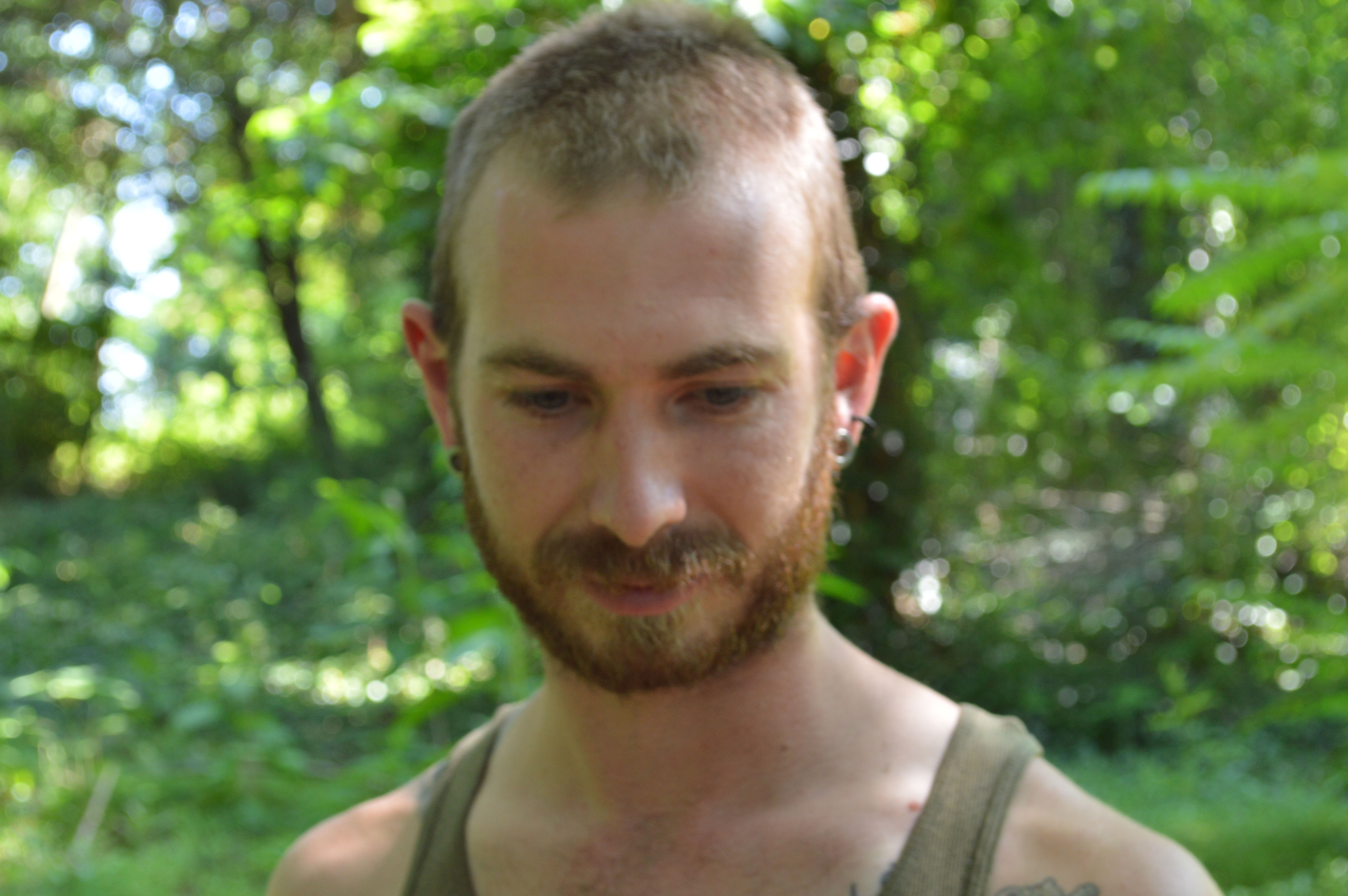
William knows traveling, so I let him be my teacher on how to spend the 300 miles of interstate from Knoxville on the last day of May. There’s nothing wrong with silence, my son tells me, and that turned out to be a fine way to go. But when I took my turn driving, I exercised my privilege to play a CD of James Taylor called “Covers.” Songs like “Why, Baby, Why,” and “The Wichita Lineman” turned into earworms in the silence. Between silences, we held good talk.
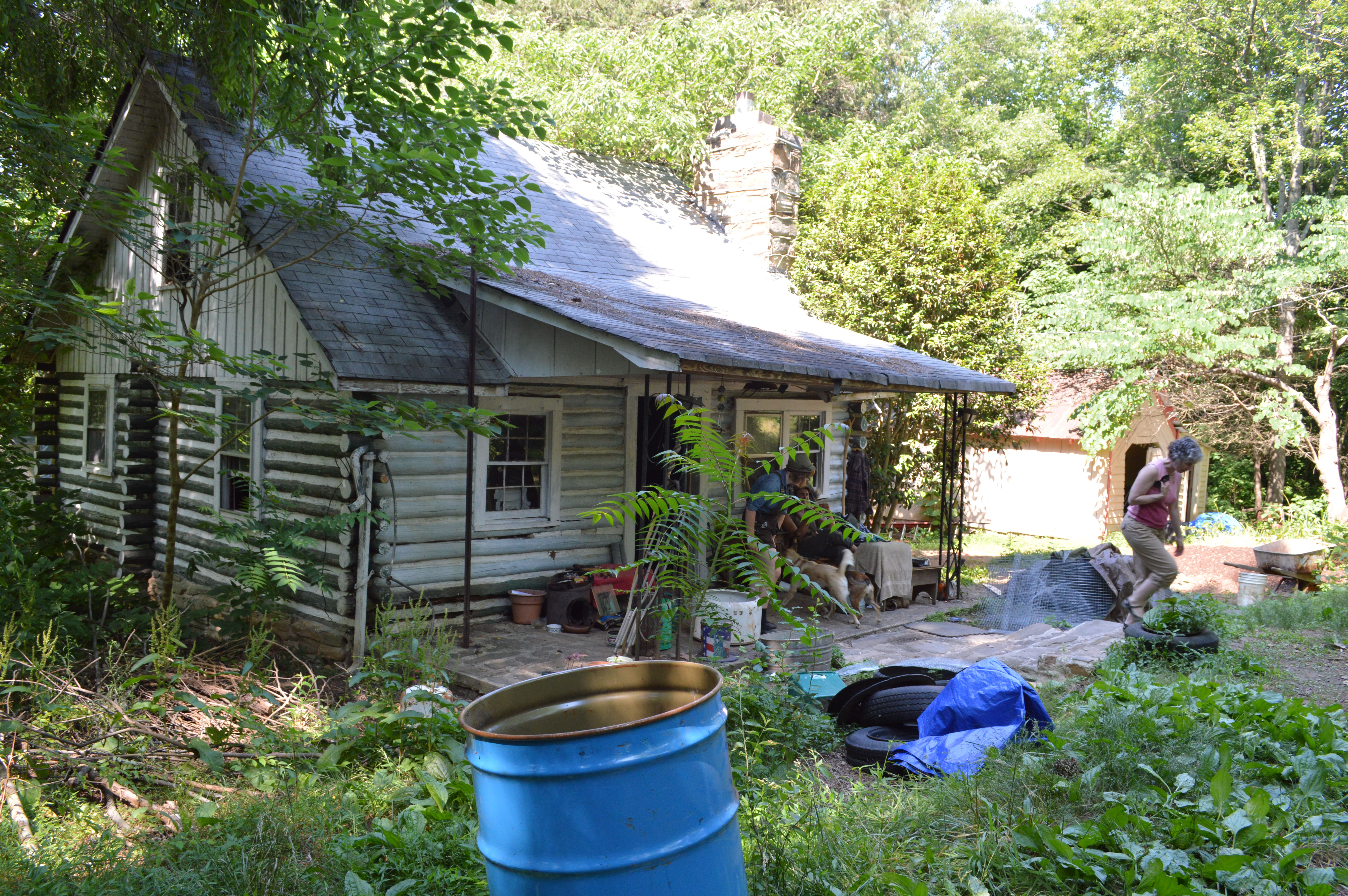
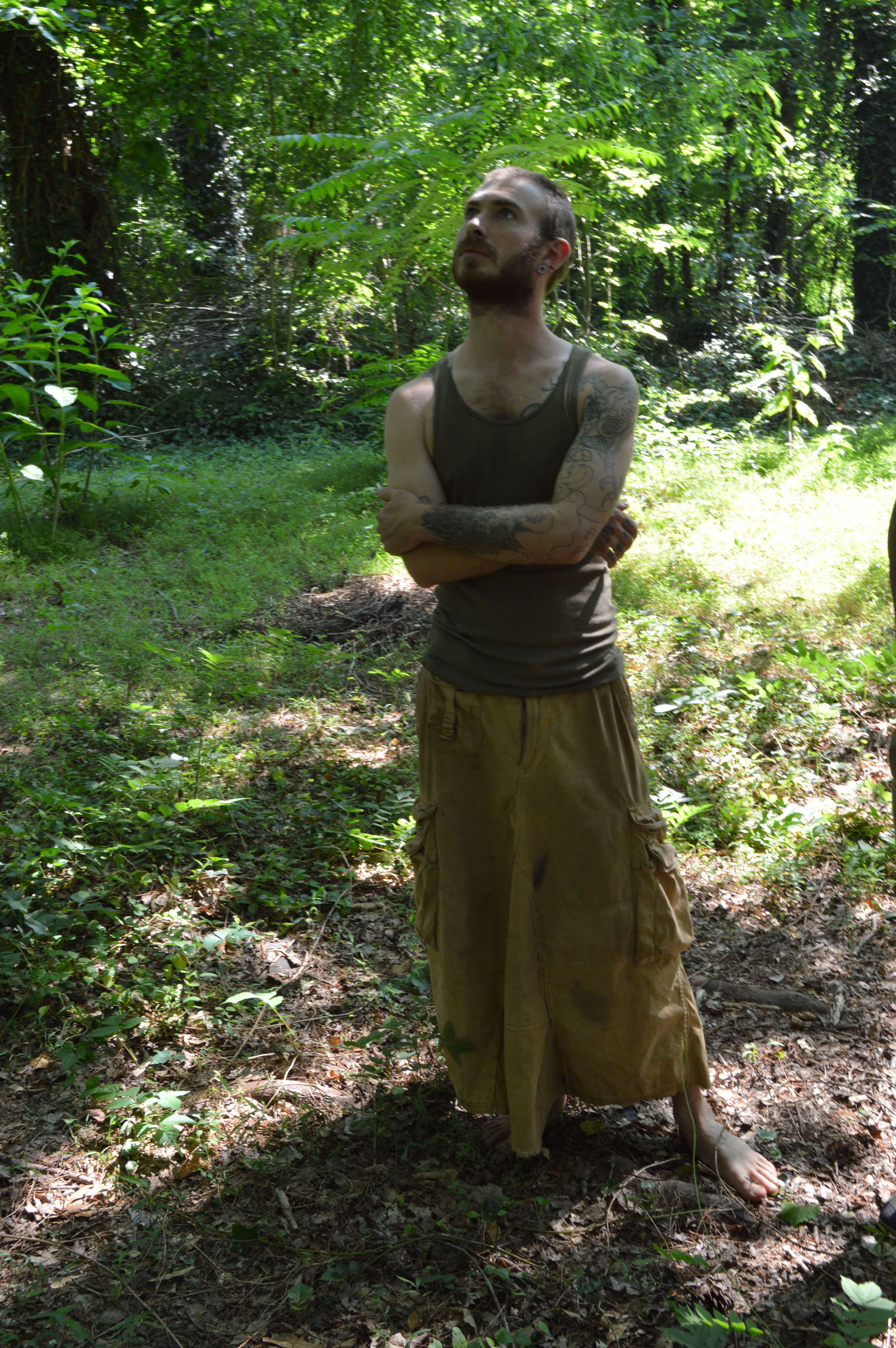
In his log cabin in Dobson, N.C., William is an experiment in self-sufficiency.
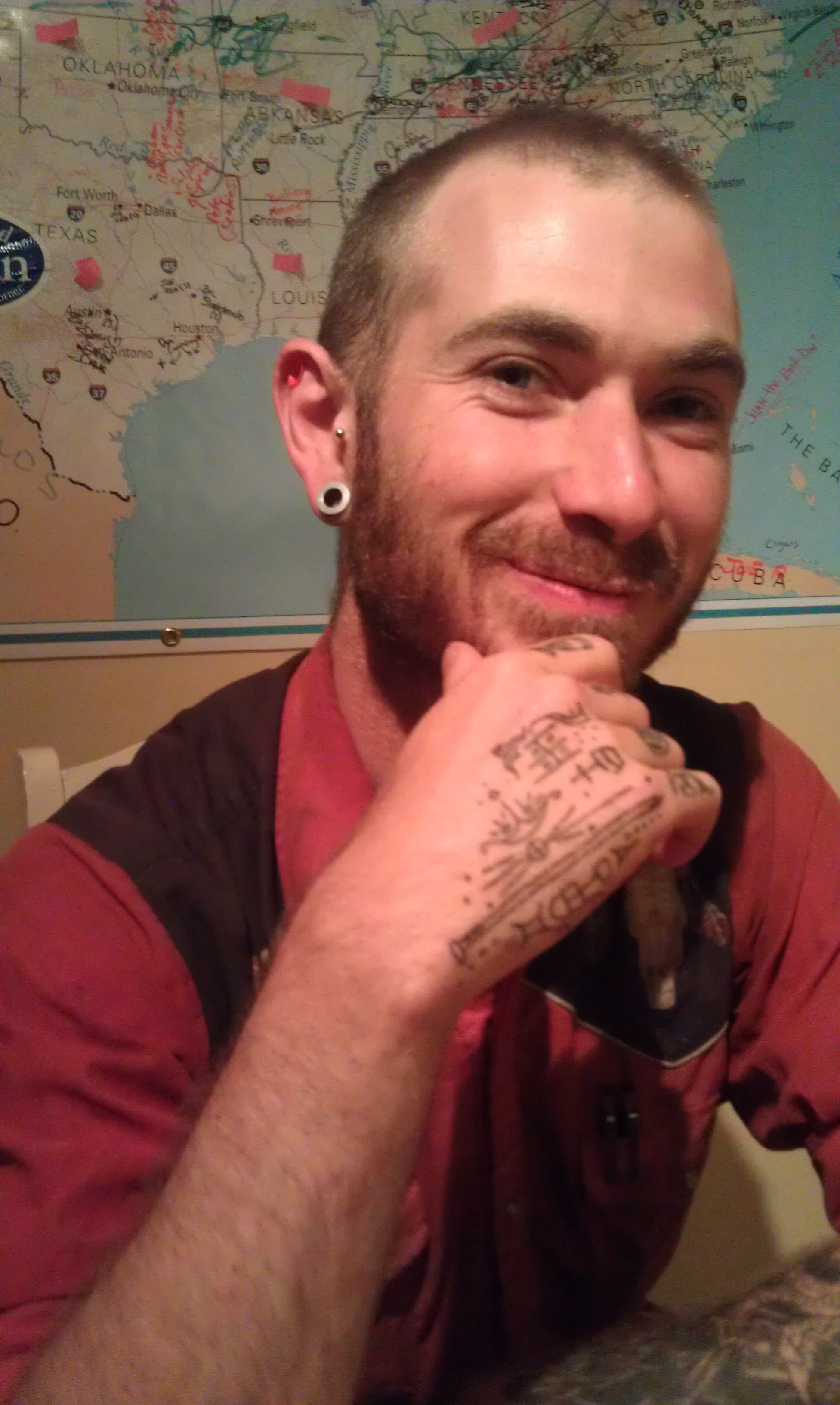
Will in Knoxville, just passing through
He welcomes the snakes into his new home to keep the mice in check. He shelters buddies from his Travelers Tribe who drop in. He’s foraging plantain and sorrel, and planting in small squares of sunlight on raised beds of rotting logs. He cut his own hair close to the skull, leaving a few uneven patches. His brother says it makes him look like an escapee from an insane asylum. He does look a bit like Van Gogh in the Charity Hospital in Arles. “I was thinking about that,” he says with that droll smile, “and I like the idea that I’m escaped from an insane asylum.” The whole world has turned into an asylum, a godawful people-choked, carbon-fueled, job-enslaved asylum, and he’s breaking out.
His view turns the world upside down, like a soft version of a Jeremiah or a Jesus. “Get a job,” he gets told, and wonders why the rebuke comes from a man who hates his own job. “Don’t litter,” they say, when he tosses the fragment of one of his hand-rolled cigarettes on a city sidewalk. But to him, the cigarette butt will biodegrade a lot sooner than the litter of the sidewalk itself, and the road, which turns into this eight-lane interstate leaving Knoxville, a strait-jacket over earth, the thick long-lasting oily garbage of the Dump. The City Dump for him is the city itself, although they try to remove the more obvious garbage out to the country. William says he wouldn’t toss a cigarette butt in the country; he’d put it in his pocket.
We got home to Virginia in time for the gathering to remember Hunter, aka “Tugboat,” William’s best friend. Hunter was of the Travelers Tribe, train-hopping and Dumpster-diving, learning old-time fiddle to William’s old-time banjo. Hunter was the previous occupant of that Dobson log cabin,
Will and Libby at his cabin in Dobson.
which his father bought him. But he died of a drug overdose in New Orleans after Mardi Gras. William owns the place now.
We found the party following a narrow winding road up and down hills, over the Maury, under I-64, to a hidden, sparse settlement called Alone Mill. It was a tender slow-moving occasion to share solace, mostly with Hunter’s mom, Elizabeth, who seemed so profoundly touched by everyone and everything that I think her gratitude will get her through these days. (She also lost a brother in England recently, and is having to leave her apartment by Monday; we’re on tap to help her move and store things that won’t fit in the smaller place Freddie Goodhart was fixing up for her in the middle of town.)
I met Hunter’s father, Elizabeth’s ex, a big man with a rugged whiskered face, sizeable girth and yellowish white hair spilling over his shoulders. Later, he played old-time banjo here with his fiddle player from down in Surry County, N.C., Joe, and Andy from Natural Bridge on guitar, and many others, playing or just listening in the dark. Also drifting into this glade around the 1840s farmhouse were the young
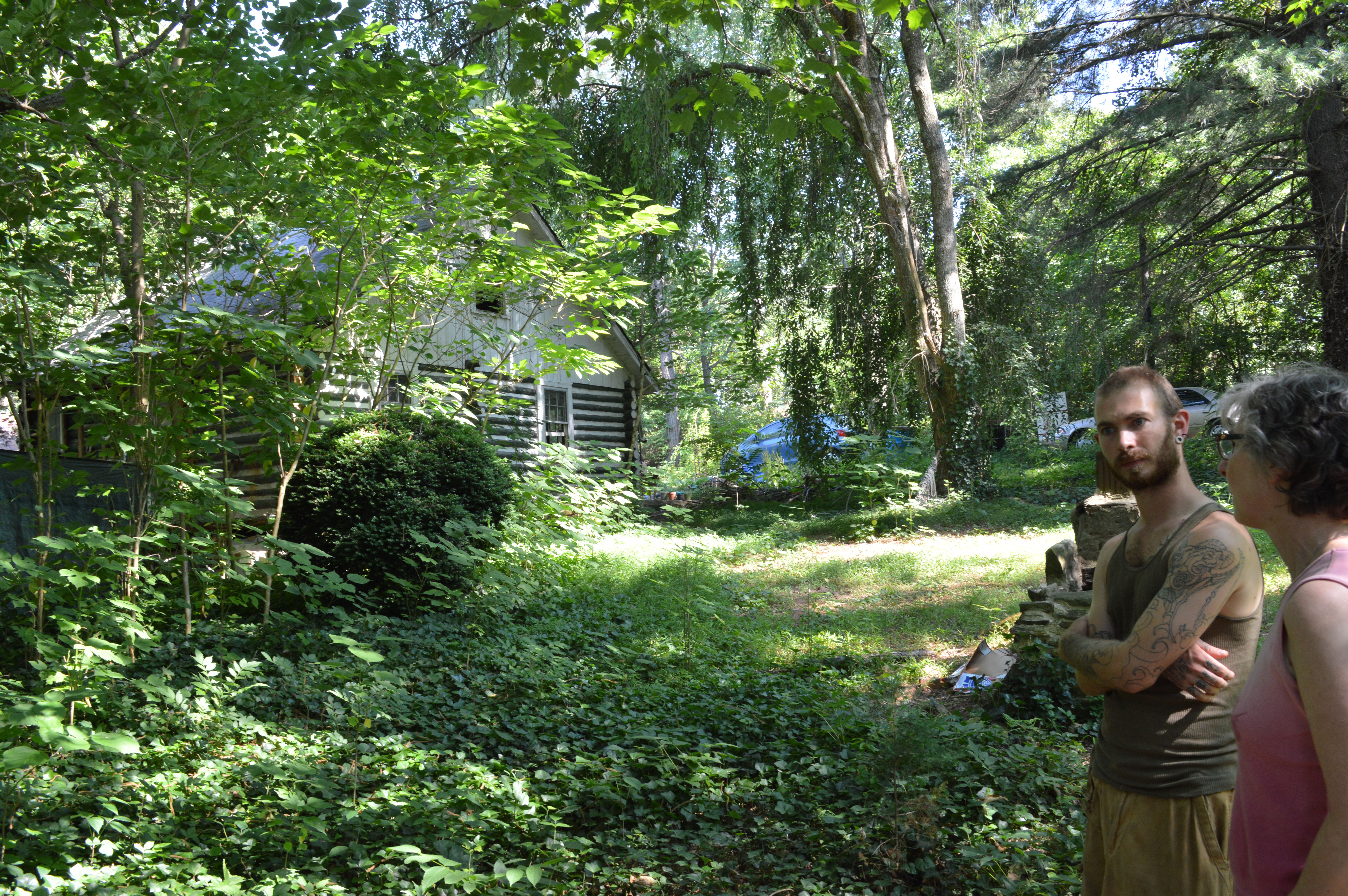
William’s little cabin in the woods
Travelers, Ruby and Ace and others with their fiddles and banjos and beer, holding back out of respect for their elders. The eating and the music came after nearly three hours of drifting around the lovely old estate with its giant trees, garden and lawns bordered by Alone Mill Creek. That was nearly three hours of consoling talk and drinking beer and wine. Shoulder the sky, my lad, and drink your ale.
One of the elders was James Leva, who fascinated me a few weeks ago when I stopped to hear the student group he was leading in old-time traditional sacred singing. It turned out, he’s a W&L English major from ’80, a Ph.D. from UVa., and was a French professor at VMI until he was laid off and had to go teach at places like the community college. Seems his life has been an honorable slow landing ever since those four Moveable Feast years when a Fulbright brought him to a life in the center of Paris, where he met Samuel Becket and taught a French distiller the secrets of Virginia moonshine-making.
James recognized William. He had taught him French at Dabney Lancaster Community College (William had dropped out of high school, and needed the college credits to get into the Marines).
“Really?” I said, turning to William. “I never heard you speak French.”
“I didn’t either,” James said.
The flesh will grieve on other bones than ours
Soon, and the soul will mourn in other breasts.
The troubles of our proud and angry dust
Are from eternity, and shall not fail.
A tornado can be a surgical scalpel. When a particularly ferocious one of these deadly blades sliced through downtown Tuscaloosa, Ala., on April 27, 2011, University of Alabama freshman Ashton Greer wondered at the injustice of it.
Ashton Greer, 23, of Kingsport, Tenn.
Her building was unscathed, yet a quarter mile away, apartments and houses were flattened. The university cancelled the rest of the semester, so Ashton drove back home to Kingsport, Tenn.
“Going home after that, it was a really weird feeling,” she recalled. “All those homes were destroyed, and I felt like . . . it was almost unfair.”
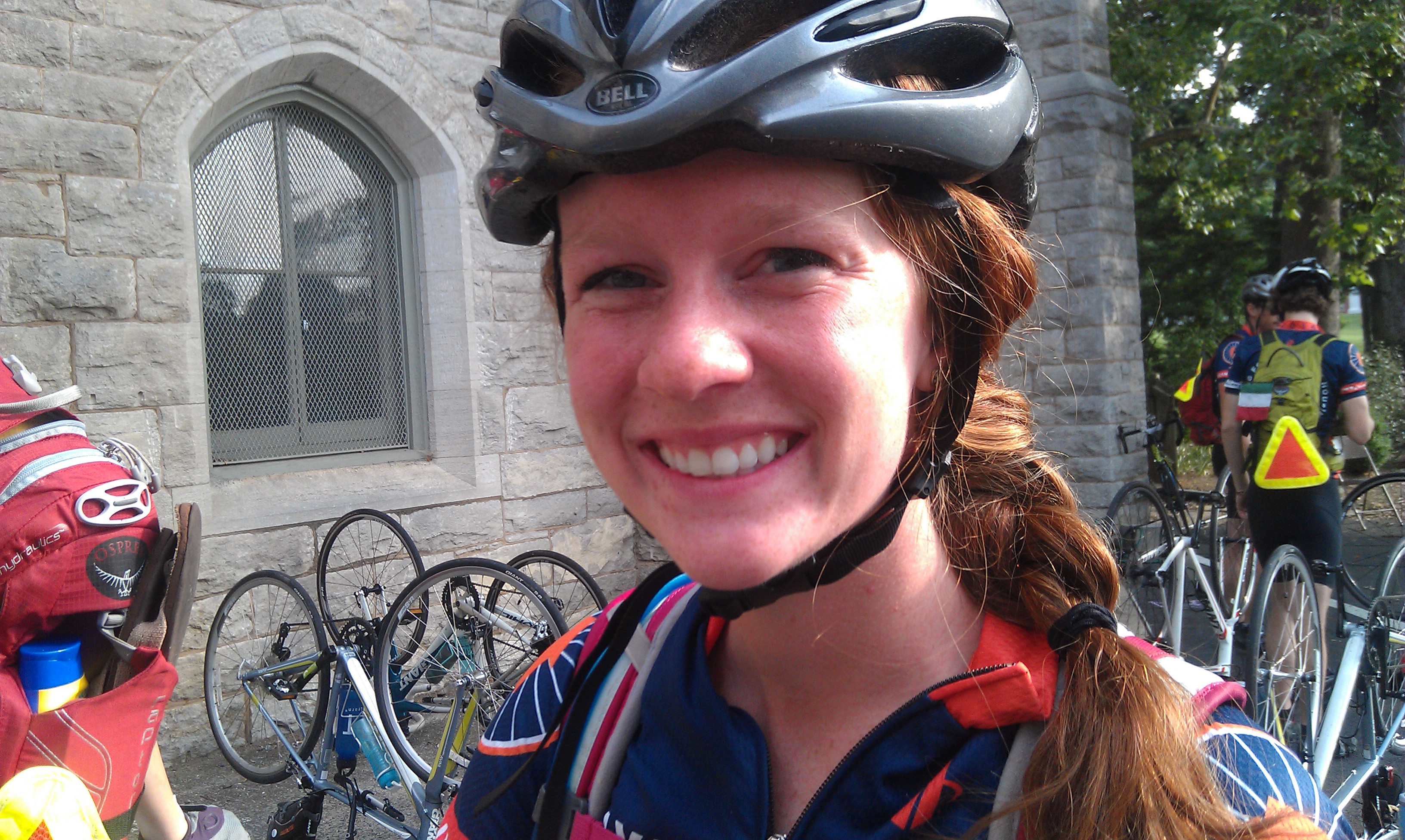
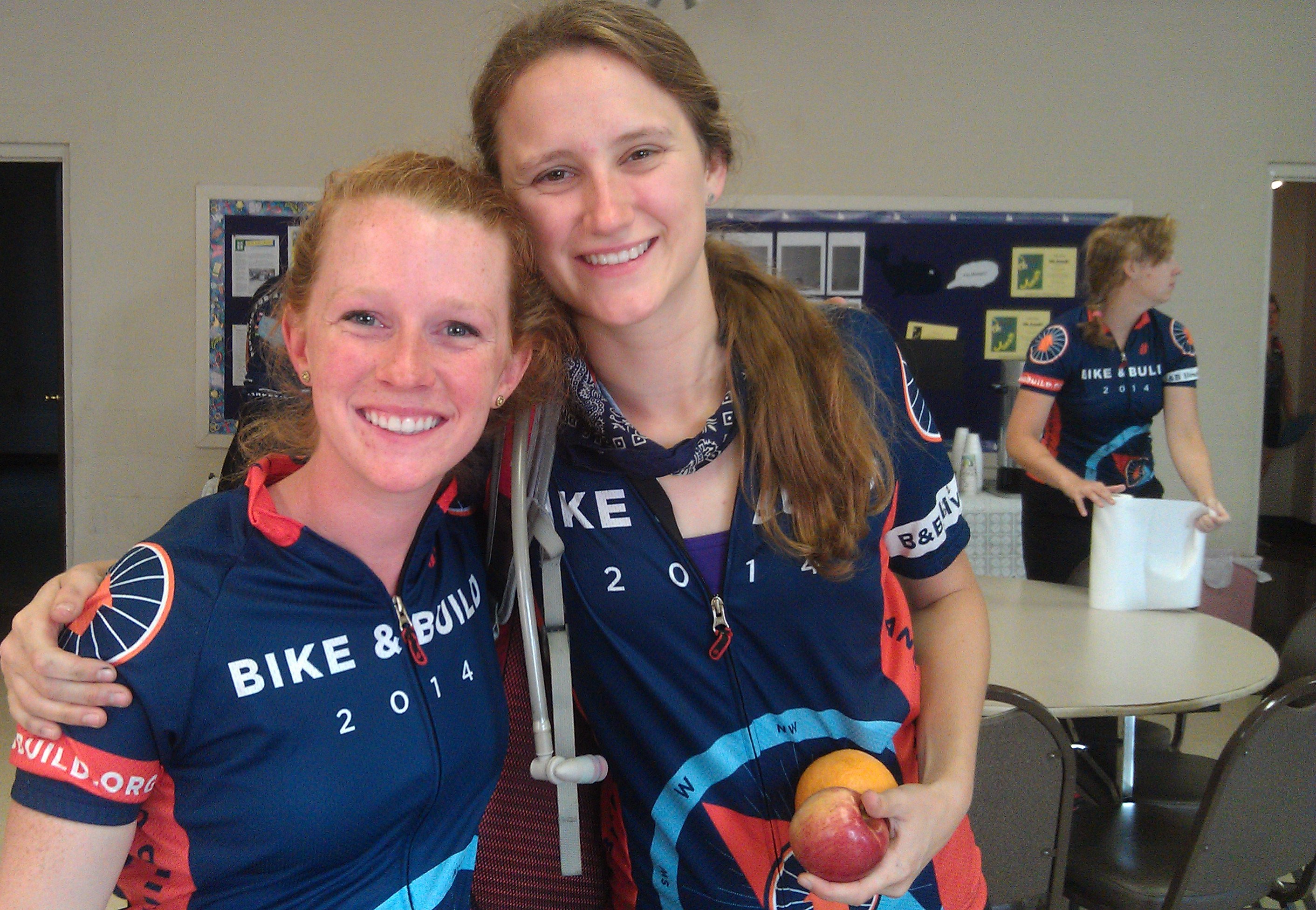
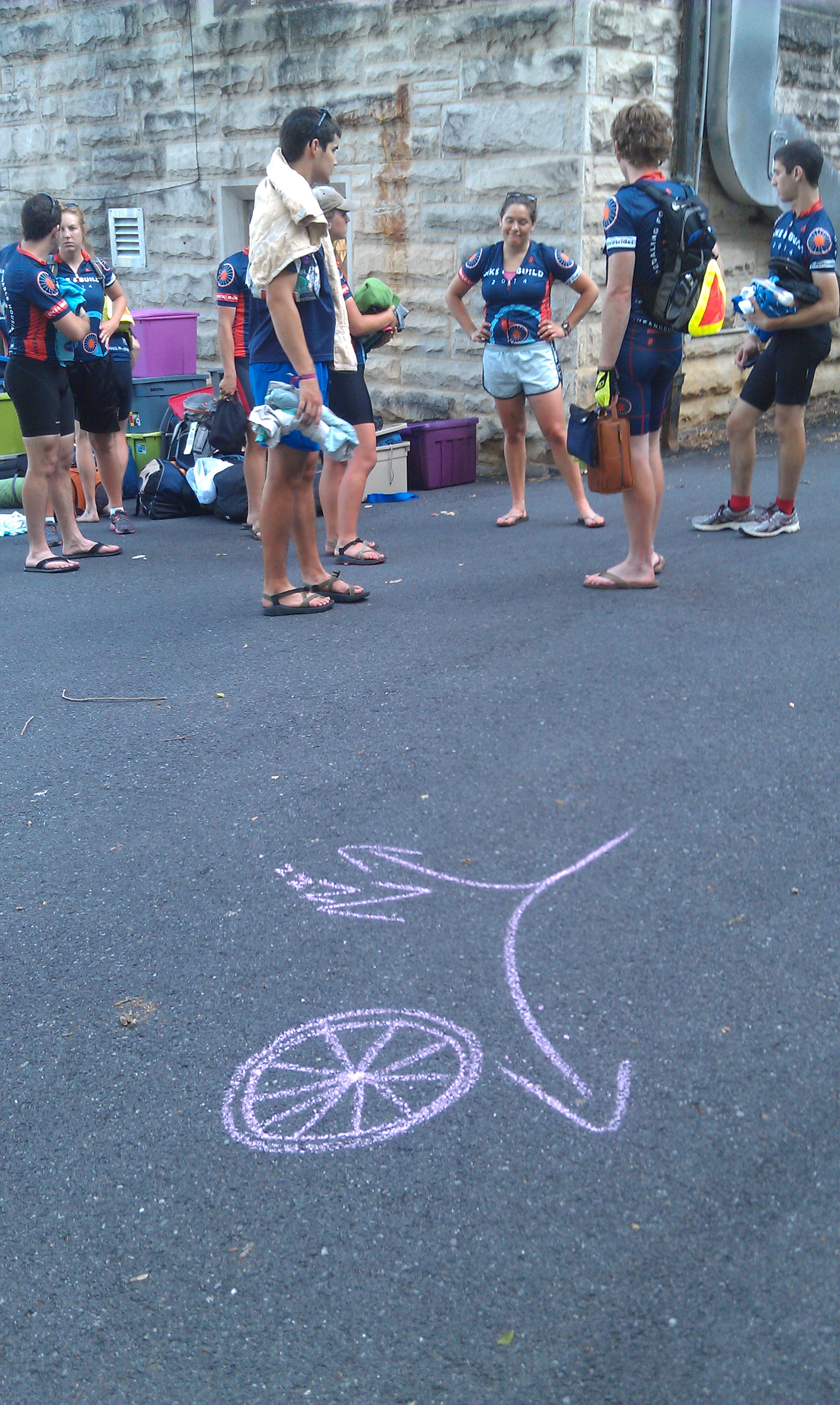
Ashton, who just graduated from Alabama as a civil engineering major, was one of 33 young bicyclists who stayed overnight at R. E. Lee Memorial Episcopal Church in Lexington on Tuesday, June 3, on a long journey to spar against all manifestations of that seeming unfairness in America.
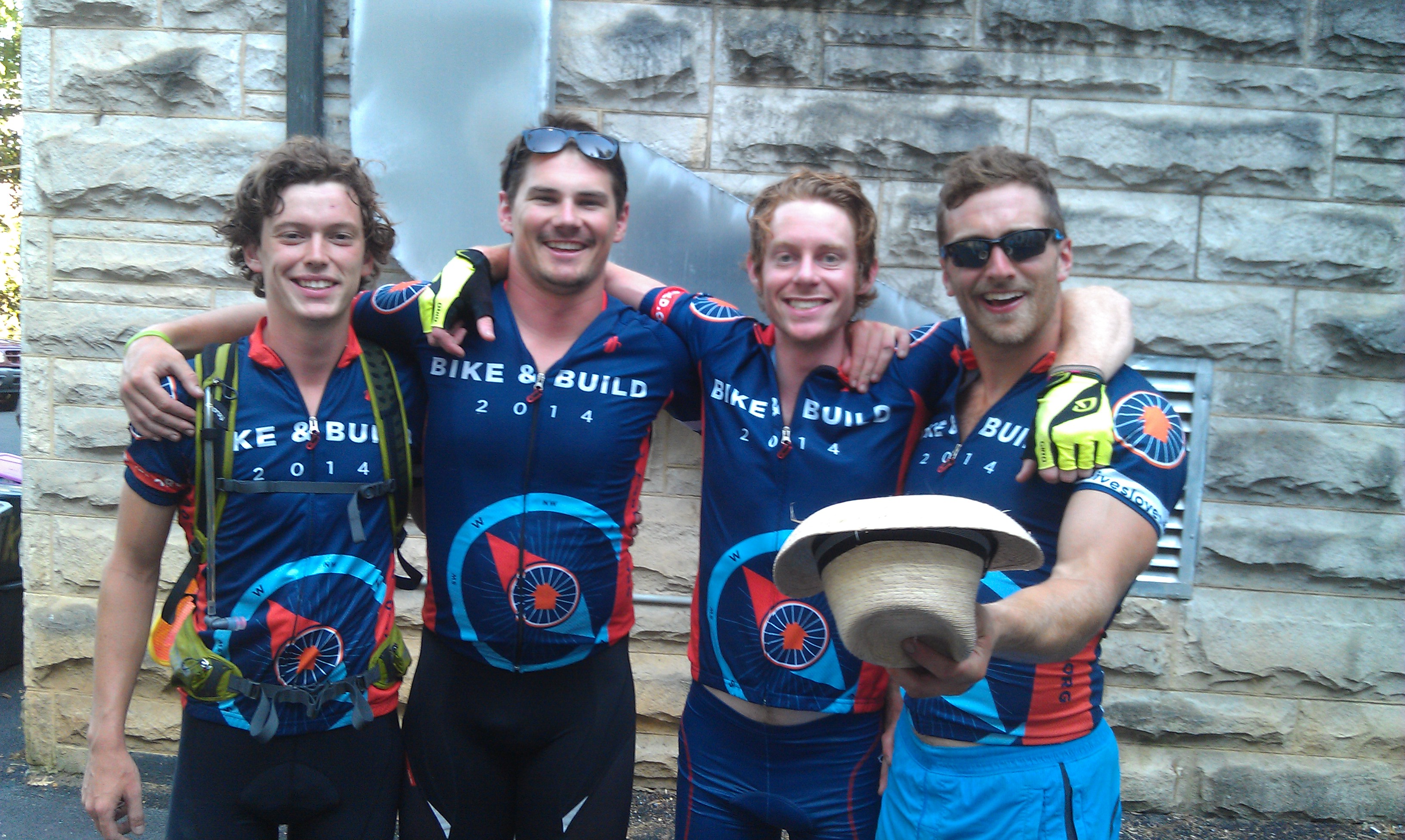
They were passing through town, all wearing the same sponsor-decorated blue spandex uniforms with “Bike & Build – 2014”
Cyclists (l-r) Andrew Byrum, Aaron Handely, Michael Prechter and Dan McMahon
across the front zipper, on a 3,800-mile crusade for affordable housing. Their route, from Virginia Beach to Cannon Beach, Ore., was painted on the side of the trailer hauled behind their support van – a route that looked a lot like the old Oregon Trail of the 1840s.
The trailer’s side maps the route.
Their team, like their route, was only one of eight with a similar number of cyclists, ages 18-25, pedaling from sea to shining sea for Bike & Build. Each individual had raised $4,500, half of that to pay for the trip and their Giant 10-speed road bikes, the other half to go to affordable housing projects along the way. They also are stopping about once a week for a Build Day, putting sweat equity into such projects.
If you do the math, that’s quite a haul, in miles and money. Let’s see – about 275 bikers would’ve raised $1.23 million this year. The Bike & Build website says in 11 seasons, the volunteer cyclists have contributed more than $5 million to housing groups across the country.
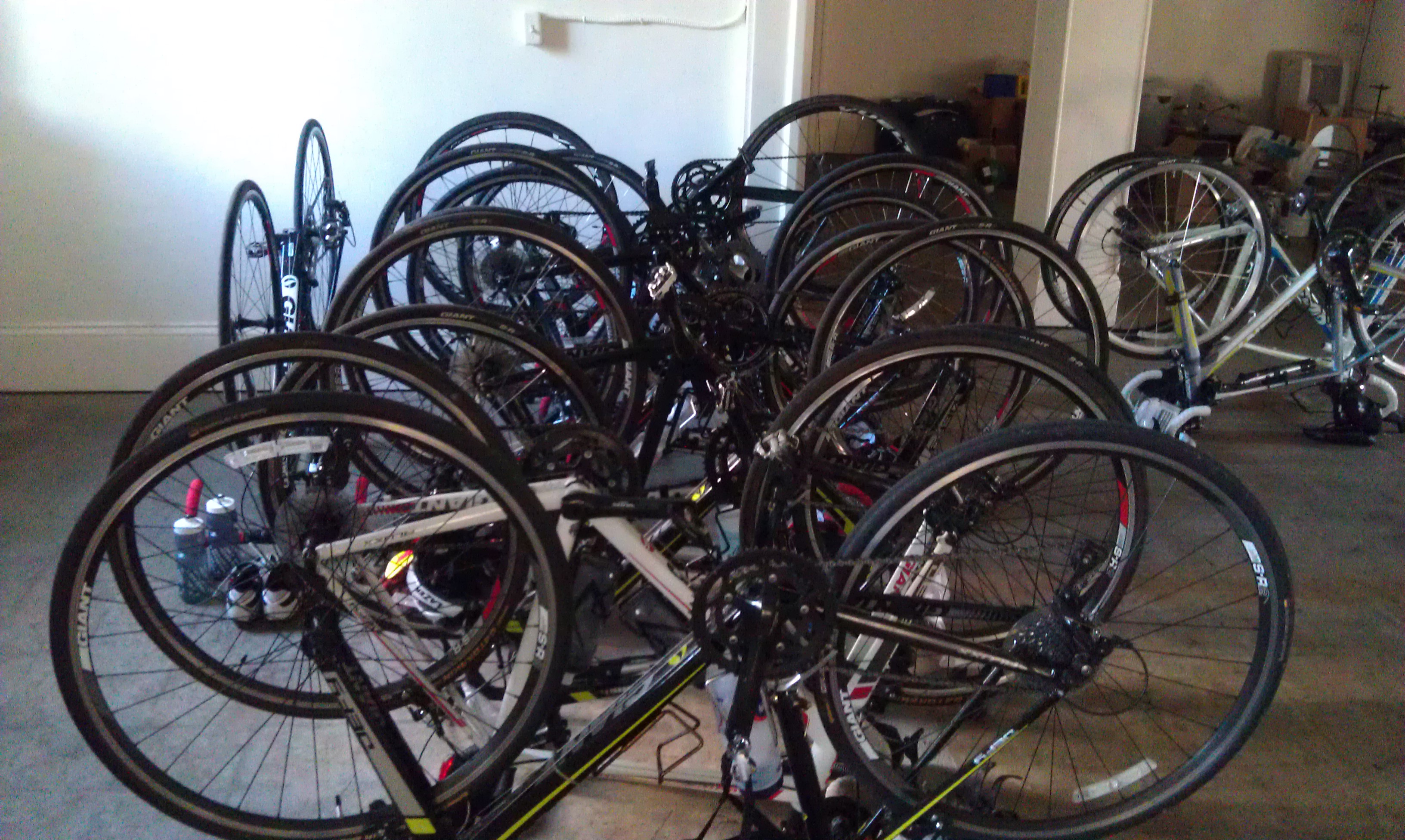
Bikes in the Undercroft
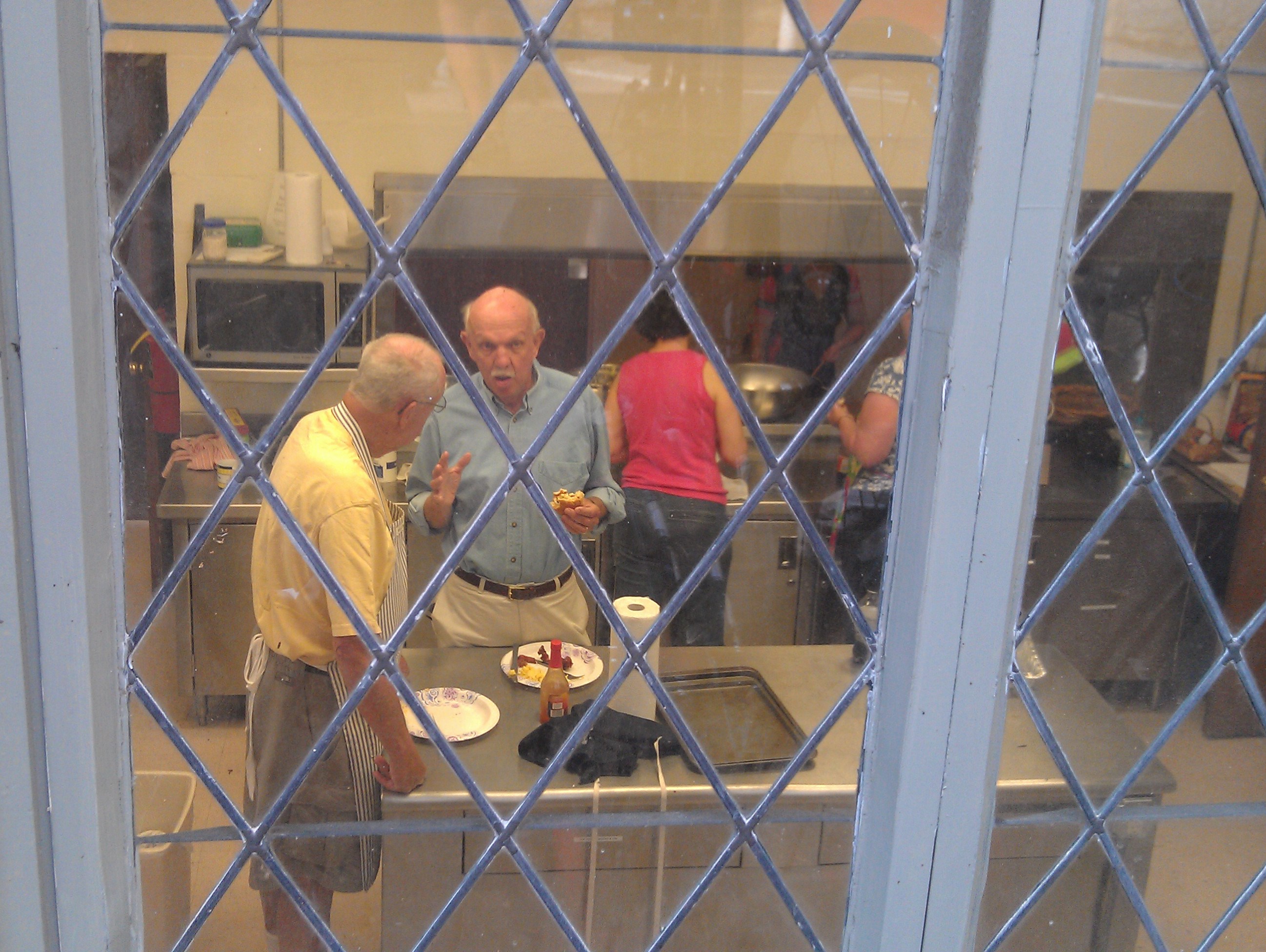
The parish’s contribution to this Central United States (CUS) route team was a place to leave their bikes in the Undercroft, directions to showers in the Washington & Lee gym, a lasagna dinner, the Parish Hall floor for their sleeping bags and pads, and a breakfast. It was the second year Bike & Build has stayed at the church. Their “thank you”s to the church volunteers were many and heartfelt.
Church volunteers Bob Glidden, Frank Settle and Libby Cumming prepare breakfast
Program director Sharon Massie said there had been a plan for a Build Day in our little town. But somehow, in the planning, someone mixed up Lexington, Va., with Lexington, Ky., which isn’t on the CUS route. So they had their first Build Day in Charlottesville.
Too bad. Rockbridge County has a huge need for affordable housing. (“Affordable housing” varies with income. The federal government says paying more than 30 percent of income on monthly rent or mortgage payment plus utilities is a cost burden; the county’s rental assistance looks for housing below 40 percent of income for its clients.) In 2010, 385 families were on the county’s waiting list for federal Section 8 housing vouchers, and many are still on that list, according to Rockbridge County’s director of rental assistance, Vicky Agnor.
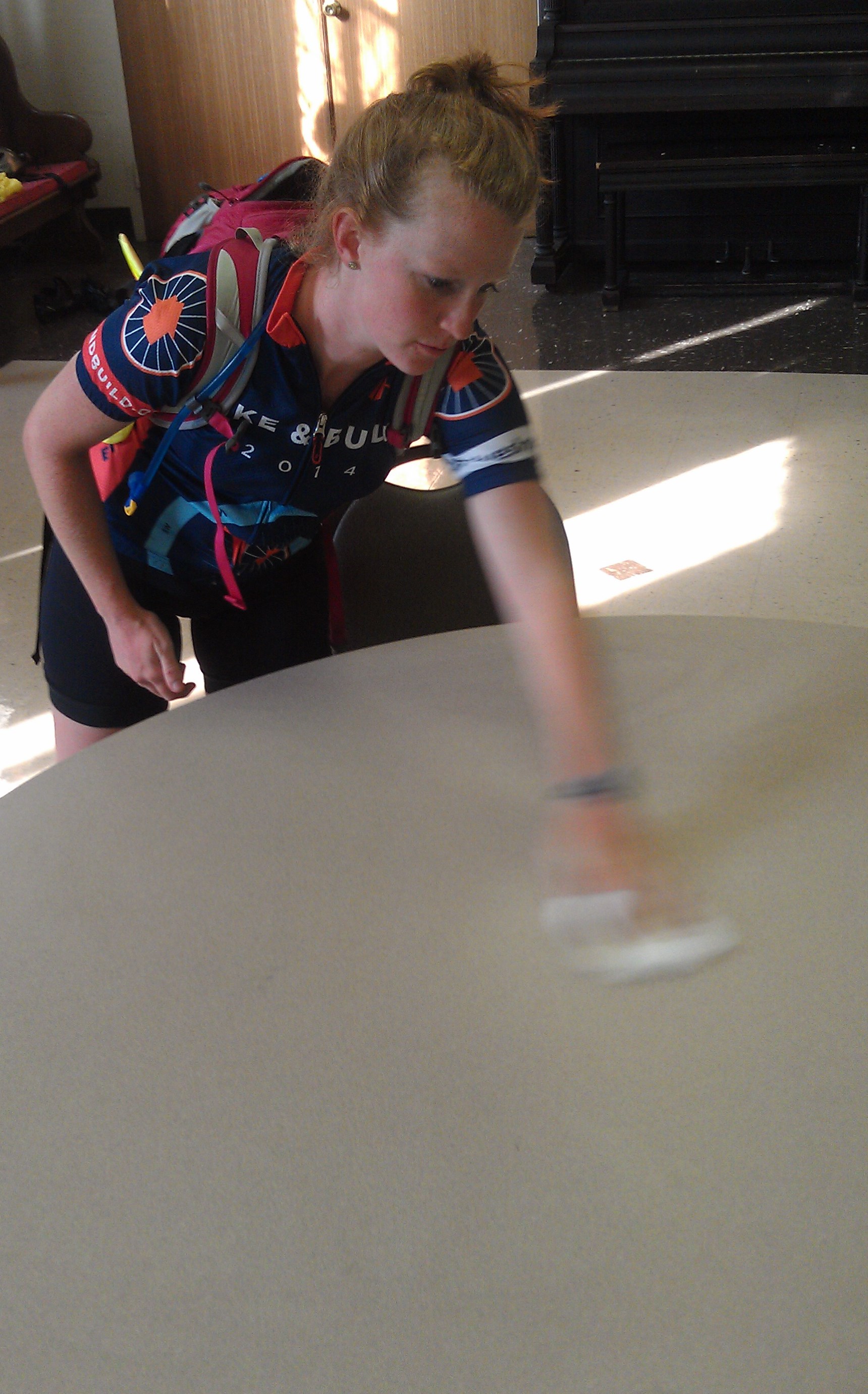
As a civil engineer graduate, Ashton Greer
Ashton wiping down a breakfast table
is interested in how engineering can provide infrastructure for all kinds of different people, whether it’s affordable housing, clean water, or other structures. As a member of the Colonial Heights Christian Church of Kingsport, she’s aware of a social responsibility to serve those who are less fortunate, “and hopefully share some of that love,” she says.
The idea of serving on a bike didn’t occur to her until recently. In fact, she had never ridden a good road bike before this year. During her senior year in college, she began riding her mom’s cheap Walmart mountain bike around Tuscaloosa. Then she heard about Bike & Build through a friend, and found it on the Internet.
Ashton and Blythe Carter, 21, of Chapel Hill
Thinking of the tornado of 2011 and the need for affordable housing, it seemed natural to jump into the challenge. She did the necessary miles of training, the required 10 hours of volunteer house building and set up a website for donations from friends and family.
Chalk directions: store or snore
By the time she reached Lexington, she had pedaled about 430 miles from the coast, crossed the Blue Ridge and was looking forward to the next 3,400, a number she knew without hesitation. Asked how many gears her Giant Avail bike has, she paused. “I’m not sure.”
The theater long ago was laid waste by the gods of big entertainment. Now, when we think of acting, we think Hollywood, celebrities, an HBO series. When we think of the stage, it’s Broadway musicals, or if “serious” theater, it’s usually the work of famous dead playwrights being produced for the umpteenth time for high-priced tickets that put you in the upper seats.
Kerri Koczen and Danielle Roos had another idea. Both women had graduated from their colleges a few years earlier as theater majors. They met through mutual friends involved with Southwestern, a Nashville-based company that recruits undergraduates for door-to-door book sales as a summer job.
Kerri Koczen and Danielle Roos
They had a dream of doing real theater, the dark transformation of human bodies into the fancies of a live audience’s imagination. Real theater: small black spaces with gel lighting that blots out all but the first row of an audience you can feel holding its breath, fully absorbed. The magic of the human voice; the smile and frown of the old Greek masks on our human condition.
But they wanted to use the power of the theater not for mere entertainment. They wanted to do good. Danielle had already created Yellow Rose Productions and produced one show. When Kerri joined her about six months ago in Knoxville, they decided to move in the direction of addressing issues of social justice. Knoxville seemed like a good place to start, without much competition. It needed them.
“Princess Cut” was their first production together. It had one showing, a riveting experience for a full house of more than 200 people. It played last Friday, May 30, in The Square Room, a venue behind a curtained glass wall at the back of Cafe4, a cool restaurant on Market Square in downtown Knoxville. Kerri and Danielle had apparently done good preliminary work contacting church groups and agencies that deal with the particular social issue that “Princess Cut” tackles: sex trafficking.
You might call it prostitution, or in updated terms, sex work. But what Kerri and Danielle uncovered was that sex work could be actual slavery and trafficking as much as what takes those terms in news stories from Africa and Southeast Asia. Through a fellow writer, they found a woman in her 20s who had been recruited into this subculture at age 5 by a teenage cousin. Her parents both worked, so they never suspected that the cousin was a link to a man, “The Head,” who so terrified the little girl that she lived a double life, at home and in the sex house, until she was 14 – old enough for “the street.”
The two dramaturgists decided to transform this singular story of “Sarah” into art, believing that one real story would spark an interest in the broader issue. Hours of interviews, some recorded and transposed, were turned into a script. The play had seven other actors besides Kerri, who played Sarah; Danielle directed. Reading the script, one actor told me, made her cry. I saw audience members wiping tears in the dark. Kerri, transmuted in the way of live theater into her character, seemed to move from innocent confusion to terror to deadened emptiness and finally, to a glistening brim of tears. How do you end such a grim play, after you’ve used the other actors as a kind of Greek chorus of sadness and terror? “I’m lucky,” says Sarah at the end, recognizing that unlike some others still captive, she has escaped to tell her story.
But that wasn’t the end. After a 15-minute intermission, to help us come back to ourselves from that abyss, three chairs were set up on stage for a panel of experts on sex trafficking in Tennessee: a man and a female “mental health specialist” from Second Life, a Chattanooga agency serving those recovering from prostitution, and a female FBI victim-witness specialist. The discussion proceeded with questions from the audience.
Kerri found out later something I had suspected: Yes, “Sarah” was in the audience, watching her story acted out in public.
The idea of live theater engaging the public on an issue of social justice is familiar to me. In 1971, the Academy Theater in Atlanta received a federal grant to create a play about the tensions and misunderstandings among black and white students who were being forced by court order into newly desegregated high schools in Georgia. The Academy Theater’s director, a brooding Jewish iconoclast named Frank Wittow, had grown impatient with theater as an entertaining social adornment. If theater in Atlanta didn’t address contemporary reality and stir audiences to action, he would say, it deserved its slow death. He recruited a black theater troupe from the Atlanta University community to work with his company to create, through research and improvisation, a play to take to high schools in places like Savannah, Dublin and Rome, Ga.
I was lucky to join the Georgia Tour Play project just as it was getting started, as its writer-in-residence. I had come back to my Florida college from a semester of independent study in London as a sophomore, and felt too restless to return to the classroom. So I dropped out – not the last time I would drop in or out of college. As “writer,” my job was not to write a script but to record the process. This was, in a way, my first journalism job. But the project itself was also a lot like journalism, in the best sense.
To me, “Princess Cut” is the soul of journalism in the same way. Kerri and Danielle looked out and found an issue, found sources, interviewed one in depth, protected her identity, and told her story artfully to an attentive audience. That’s literary journalism. It doesn’t seem to generate enough revenue for newspapers and magazines these days. And it isn’t generating any immediate revenue for Kerri and Danielle. I’d like to see them take this play, with a localized panel discussion, to other cities around the South. But that would require some grant money from the government (like the Georgia Tour Play), a foundation, churches, or enlightened investors.
Sitting next to me at the play was the chairman and CEO of Southwestern, Henry Bedford, who had come from Nashville on his Harley-Davidson. The 160-year-old company, Southwestern, does not just send college kids around the country to sell education books door-to-door. It also tries to teach entrepreneurial values and business discipline through these demanding summer jobs – which the kids do entirely as independent contractors without a salary. Henry Bedford is a quiet, modest-seeming man who likes to invest in promising enterprises that many former Southwestern sales people launch.
He became an underwriter of Yellow Rose Productions. Like most start-ups in the arts these days, it’s not a promising investment, financially. But in the way of good journalism, it’s a promising investment in the civil sphere. So Henry Bedford is now telling people that this play was the best investment he’s ever made.
From my column in Clio Among the Media, the newsletter of the History Division of AEJMC, spring 2014.
A year ago, some well-seasoned journalists were hanging around the Kennedy School at Harvard as Shorenstein Fellows. Having a few months to decompress from their high-stress careers, three of them worked on a history project – history that’s still too close to comprehend. They decided to create an oral history of how digital online media changed journalism from 1980 until now.
The result is a remarkable website called “Riptide,” http://www.niemanlab.org/riptide/, hosted by the Joan Shorenstein Center on Media, Politics and Public Policy and the Nieman Journalism Lab. The homepage carries an essay that underscores the importance of the Great Disruption we’re still witnessing every day. It makes you realize, if you haven’t already, that we’re in the midst of a whole new revolution in American history, with new wealth piling up on young engineers rather than the titans of the press, as it did in the last century. Yet it’s still too close to us, too much in flux, to grab a-hold of. The big picture doesn’t fit easily into our journalism classes, much less our journalism history classes.
There’s no single Johannes Gutenberg or Thomas Edison (although it’s interesting that Menlo Park, where Edison located his main lab in New Jersey, is also the name of the home of gigantic Google and Facebook labs in California). There’s no single technical breakthrough that clutches it. There’s the Web, the self-correcting networks of Wiki, the power of interactive virtual communities. But more than any of these, there seem to be some new laws at work in the technology itself, as “Riptide” points out.
Moore’s Law, for example, says that the number of transistors on a microcircuit doubles every two years. This seems to have held true since 1965 to today. Add to this Metcalfe’s Law, which says that the power of a telecommunications network increases as the square of the number of connected users.
And then you have a psychological law, called Amara’s, which states, “We tend to overestimate the effect of a technology in the short run and underestimate the effect in the long run.”The over-estimating might explain why, contrary to the cliché that news organization were slow to adopt the new media, some smart newspaper chains adopted it early – and then crashed. But over the long-haul, it was the combination of things that grew from the margins and overwhelmed us all. We didn’t realize, as Frank Rich put it in a New York column last year, that we were swept up in a change as big as the transcontinental railroad or electrification of American cities.
Swept away is more like it, or drowning in information. The title is well-chosen. A riptide is the phenomenon when the incoming force of waves on a beach is opposed by an outflowing current, such as from the mouth of a stream, creating a powerful undercurrent that has been known to carry unsuspecting swimmers out to their deaths. This may be like what the new, interactive digital technology has done in counter-flow to traditional American journalism since 1980. Or not: swimmers are advised not to struggle against a riptide but to swim a little way to the side, parallel to the shore, to escape its turbulence, which is usually quite narrow.
It may be too early to write the history, but not too early to interview the key players. The Shorenstein fellows who did the interviewing for “Riptide” brought their experiences of being smack in the middle of the changes, and also their skills (and values) as journalists. Martin Nisenholtz created the New York Times’ first website in 1995, ran Times Digital until 2005, then became the paper’s senior vice president for Digital Operations through 2012. The Times, most would agree, rode the tide as well as any newspaper in the world, and seems to be on top of it now. Paul Sagan was a TV news director who helped develop new media for Time Inc. in the mid-1990s, then led Time Warner’s Internet cable operations.
John Huey, the third researcher, had just retired after six years as editor-in-chief at Time Inc. I know Huey from way back when he wrote for my high school paper in Atlanta. He reported for the Atlanta papers, the Wall Street Journal and Fortune magazine, which he later edited. Back in 1989, he hired me to help launch a slick Southern monthly, which didn’t last long but was a lot of fun. I can recognize Huey’s engaging drawl in the text of “Riptide,” and his casual, no-bull style in the way the interviews were conducted.
More than 60 subjects were interviewed. These include names you know, or should know, from Arianna Huffington, Michael Kinsley and Donald Graham to Arthur Sulzberger Jr. But most of the players here are from the engineering side, brilliant web developers and entrepreneurs like Tim Berners-Lee, inventor of the World Wide Web; Matt Mullenweg, developer of the open-source favorite of bloggers, WordPress, and Om Malik, a legendary tech blogger who just happened to ring Mullenweg’s doorbell during the interview in San Francisco.
The “Riptide” website is like some rich archival collection of primary material that historians in the future might pore over. Actually, these interviews are only about “What really happened to the news business.” The Great Disruption continues to do its transformative work in so many other areas as well, from domestic life to education to politics. Those histories are also yet to be written or understood.
But instead of resting in some library, these interviews are, like the revolution they describe, instantly accessible to everyone in online, multimedia form. Each interview you can see in an unedited video, most of them about an hour long, with a full transcript.
This gave me an idea for my Intro to Mass Communication class. Instead of having my students rummage around for a topic on their final research paper, I have assigned each student a particular subject-interview from “Riptide.” This is original primary source material, all ready for them to draw on. All they have to do is put it in context and tell me what it means. Come to think of it, that may be impossible, since we won’t know what it means, probably, until we can look back on it. Still, the assignment seems a good way to make students think about the history they’re living into.
Journalism318: Literature of Journalism
Tues., Thurs., 1:25-2:50 p.m., Reid 302
Doug Cumming, Ph.D., cummingd@wlu.edu
Reid Hall 101 – 458-8208
In this course we will study nonfiction writing from three perspectives: the New Journalism that emerged in the 1960s and continues today, the older nonfiction writing that has more recently come to be recognized as its forerunner, and finally, the various techniques of this fact-based but often subjective journalism that students might use today.
Goals
The readings, class lectures and discussion are designed to give each student a historical perspective on journalism. Students will demonstrate an understanding of the role and importance of the journalist in society. In addition, students will improve and expand their writing, by analyzing and practicing feature-writing techniques and journalistic writing as a five-step process.
Competencies:
At the end of this class, you should be able to:
• Think critically and independently
• Conduct research and evaluate methods appropriate to the communications professions, audiences and the purposes they serve
• Write correctly and clearly in forms and styles appropriate for the communications professions, audiences and purposes they serve
• Demonstrate an understanding of the history and role of professionals and the various media organizations in shaping communications
In this class, you will be presented with opportunities to self-test your knowledge of the values and competencies identified by the Accrediting Council on Education in Journalism and Mass Communications and embraced by this department. Many of these values and competencies are identified and addressed in other courses in the department.
Requirements
Each member of the class will compose either:
• A clearly written, well-researched seminar-length paper (15 pages) on a class-related person or topic. You may choose a topic of particular interest to you, but it must be directly related to our focus in this course
• A first person magazine-length story
These works will be broken down into a series of assignments and drafts, starting by the Week 4. In addition, students will prepare and submit brief but well-written reactions to the reading assignments. There is no final examination. Students are expected to do all the assigned readings before class and participate in class
discussions about those readings.
Books
The New Journalism Wolfe & Johnson, eds.
Literary Journalism Sims & Kramer, eds.
Course pack selected by Prof. Cumming
Grading
Class Attendance and Participation 15 points
Written Assignments 45 points
Final Story/Paper 40 points
Calendar (under construction)
Undergraduate classes will be adjusted on Monday, January 20, for the Founders’ Day Convocation and Omicron Delta Kappa tapping.
Undergraduate classes will be adjusted on Thursday, March 13, for the Phi Beta Kappa/Society of the Cincinnati Convocation.
This is a rare and important document I couldn’t find anywhere online. A friend of mine who was at CBS in DC for many years found this typed copy in his old files, and let me scan it into a PDF. It’s one version of what some have called one of the “essential documents” of writing, along with the Magna Carta and the First Amendment. – Doug Cumming