Sometimes, it’s hard for people to connect the daily stuff of their own lives with Washington D.C. policies or even state-level politics. Military aid for Ukraine doesn’t seem to hamper our day-to-day struggles, but defending Ukraine against Putin’s Russia also seems remote from everyday issues, especially if politicians begin to demagogue against this commitment to our NATO allies. The rise of Axis powers in the 1930s seems long ago, and even the Cold War is easy to forget. The price of eggs seems more relevant, and if that can be blamed on Biden’s “terrible policies,” that’s an easy call.
Inflation has many causes, especially in the after-wash of the pandemic, which gave Americans a lot of free dollars to protect against economic collapse (Trump and Biden were together in this) and worldwide supply chains were choked. Coming out of the sheltering and having more money increased “demand”; meanwhile, supply chain problems crimped “supply.” Serious inflation followed. The Fed, over which Biden has no control, is using its leverage over interest rates to keep a lid on this over-heating economy. That’s all working as it should. But inflation, even as it comes down, is a powerful talking point for Trump and the Republican Party. So is “immigration,” an issue as complex as inflation until Congress has the guts and intelligence for comprehensive immigration reform. Meanwhile we can’t even get piecemeal immigration reform, because Trump sabotaged a bipartisan fix at the border as he cynically understood that this temporary measure would cool down the issue as a political weapon. Without this Congressional fix, Biden used a federal order to clamp down, which reduced illegal crossings dramatically and angered a lot of his supporters.
Trump supporters are ignoring the reduction of illegal crossings. Biden’s temporary and somewhat cynical political fixes didn’t help his standing in the polls. I hope Harris, with the sudden energy and enthusiasm she has unleashed, can show that running on Biden’s record isn’t a liability but an asset. He has been good for labor, and good for clean energy. Biden’s Federal Trade Commission Chair Nina Kahn has been brilliantly successful putting a check on monopolistic corporate power, the essential guardrail of a healthy free enterprise system. Things are working well now, considering the circumstances Biden inherited at the beginning of 2021.
Biden’s best policy successes have been about liberal spending that is in the form of “investment.” Investment is a great way to look at how our own household dollars might be spent. We can spend money three ways: on entertainment, on short-term necessities like groceries and transportation, and on investments that pay off in the future, for ourselves or our descendants. Investments are buying a house, paying the mortgage, improving the house. Other investments: Planning a career with future prospects and a sense of personal “calling”; getting married and keeping in touch with friends and community; service to church or society’s nonprofits; education, at all levels, including support for public education even if your family doesn’t use it yourself. That’s self-interest as an investment.
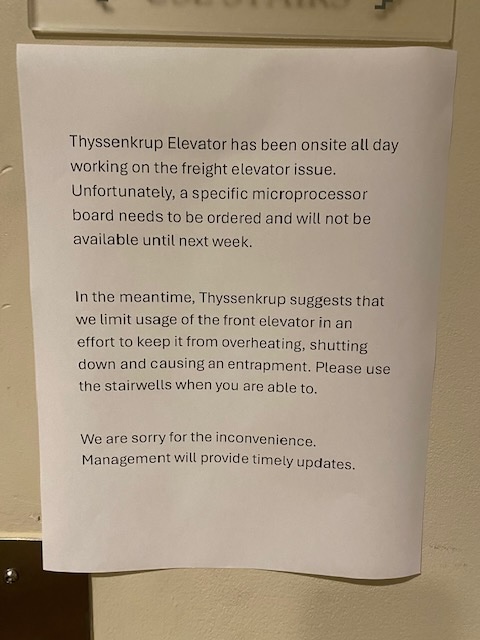
Many of the benefits of Biden’s policies are beginning to show, but they are hard to see because they are investments. For instance, the CHIPS Act is bringing manufacturing of computer circuitry (the cotton-textile dynamo of the 21st century) back to U.S., for good jobs and more control over supplies. How does this affect my life, right now? I can’t see it. But the freight elevator in our condo building is out of order and we are told to minimize use of the only other elevator, using the stairs when we can. The problem is that a specific microprocessor must be ordered and it won’t come until next week, according to the German company, Thyssenkrup, that manages the elevators. Meanwhile, the refrigerator in the half of the duplex we own is broken, and our tenant there is having to use a half-sized refrigerator we gave her while we wait for the repairman to get the parts he needs. It’s on order. The heater burned out and fried the thermostat. I don’t know, but I assume micro-chips are involved.
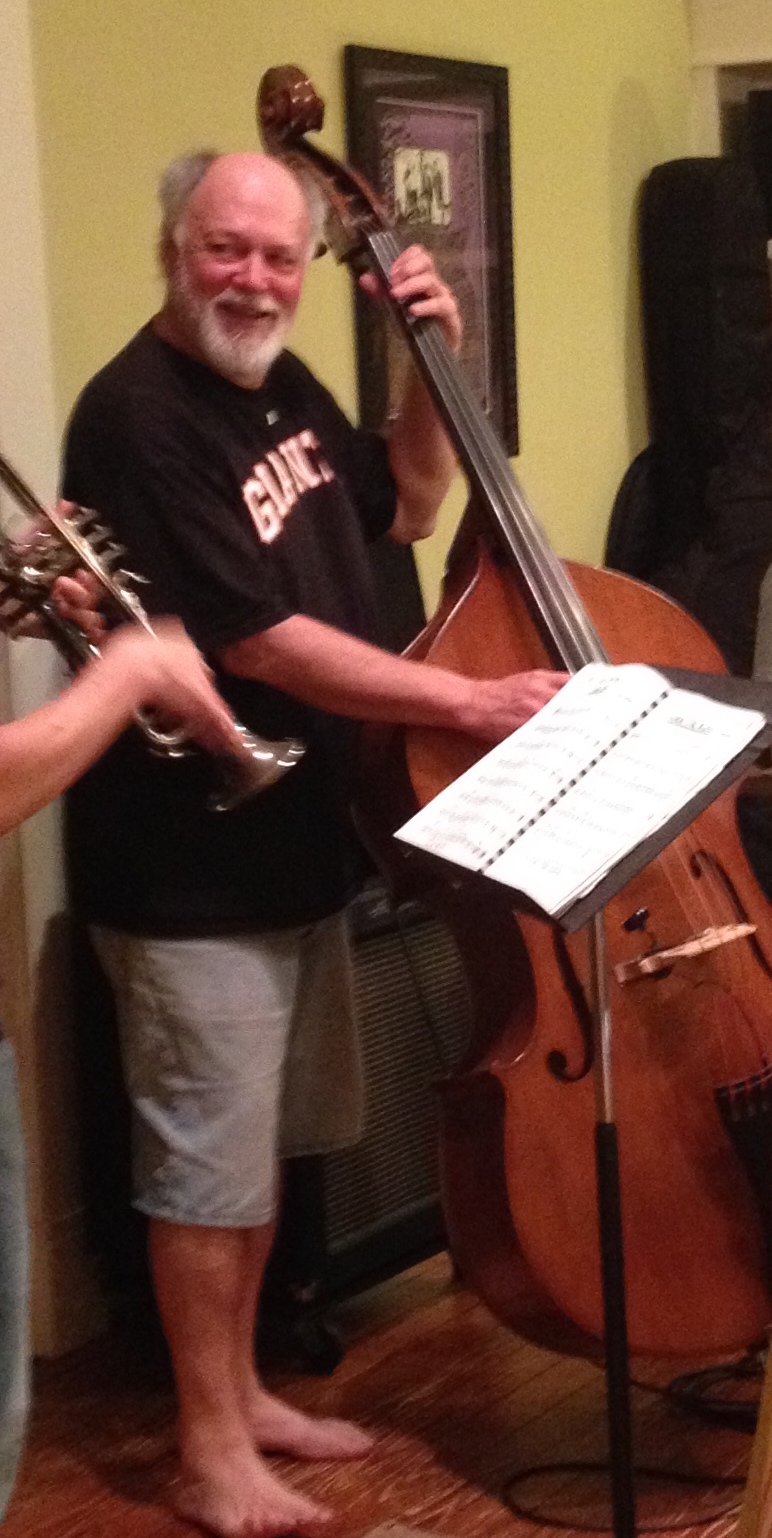
A jazz combo that grew from years of “workshopping” at the Grant Park home of bassist Rick Saylor will perform on Thursday, July 25, in the Fellowship Hall of the First Christian Church of Decatur, 601 W. Ponce de Leon Ave., Decatur.
Saylor, a former tour manager for jazz icons Wayne Shorter and Herbie Hancock, died on Aug. 6, at age 70, after suffering a heart attack. He was the host and mentor of a generation of local jazz musicians who would gather at his house every Thursday evening to play from the jazz canon, Bebop to jazz fusion.
As the steady bass player holding it together, Rick Saylor emphasized that these weekly sessions were for the joy of playing jazz and learning from one another, not to “play out.” Honoring his memory, the other musicians decided to continue the weekly sessions and break Rick’s no-performance rule with a first memorial concert last Dec. 6 at the Decatur church.
The group includes Adam Cole, keyboard; Bo Emerson and Dan McGraw, trumpets; John Willingham, guitar; Jordi Lara, bass, and Billy Bryant, drums; Walter Cumming, trombone, and Doug Cumming, tenor saxophone.
Saylor grew up in the San Francisco Bay area during the halcyon days of the late ‘60s and early ‘70s counterculture. He was immersed in the music of the time working in the famed Village Music store in Mill Valley in the Bay Area and playing bass with local bands. He also began doing sound for the Inn of the Beginning, a music venue that brought nationally and internationally recognized musicians to the area. It was there that he was recruited as a tour and sound manager, managing national and international tours for numerous groups and eventually for jazz icons, including Shorter and Hancock.
In the late ‘80s, he moved to New York to co-produce an award-winning jazz documentary series for Masters of American Music that included series on the history of jazz, Sarah Vaughan, Billie Holiday and Thelonious Monk. He also worked for a talent management agency involved promoting the “new” lions of jazz such as Benny Green, Diana Krall, Joshua Redman and Christian McBride.
The church will open at 7 p.m. for the 7:30 p.m. performance. The concert is free. All are welcome to come and bring someone.
On April 16, I voted in Georgia’s Democratic presidential primary for Joe Biden. It was the only choice at that time for beating Donald Trump. That’s what my vote meant then.
Now, Biden is no longer my choice. He is going to lose to Donald Trump if he is the only choice we Democrats have.
I can’t change my primary vote. I don’t have a choice, and didn’t have a choice then. But Biden can change his mind.
Moses worried about how the Israelites would behave after he was gone. There was so much still to do. They had not yet entered the Promised Land.
I say “he is going to lose” not as a criticism of Biden but as my fixed bewilderment about the multitude of American adults who tell pollsters they prefer Trump. Maybe they’ll change their minds by November. Maybe the polls are wrong. Biden thinks so.
Polled people gave Trump the edge long before the disastrous debate in Atlanta on June 27. Now it looks even better for Trump. He is so giddy about running against Biden, he isn’t thinking at all about how he would run against someone else. Someone wrote that Trump must be praying that Biden doesn’t step aside and let the Democratic Party be more democratic than anything we can imagine. If Trump prayed.
I pray for Biden to step aside. It’s more than I can imagine. A true revival of America. An excitement of mind, body and spirit, sweeping across the nation like sunlight in springtime. A reawakening to who we are. A recognition that Biden has actually been a damn good President, and things have finally turned around for the good, thanks to his wise and cagey successes. We are recovering from Covid-19 and its rampages. He has helped grow and strengthen NATO, an alliance that has held militarized evil in check since 1949. While we suffer in the heat and storms of this summer, we might see what another Democratic candidate could help us see clearer (since Biden, like Moses, gets tongue-tied. Ex. 6:12) – that our giant systems of agriculture, industry, transportation, and utilities are all steadily replacing carbon with clean, green energy. This is for our grandchildren and their grandchildren in the Promised Land. Thank you, Joe Biden.
But Joe Biden isn’t going anywhere. He says there is still so much (for him!) to do.
This is only the beginning of misery for us ordinary Democrats.
We will not watch TV. It’s too painful. But millions will be watching. The ads for Trump will run clips from the Atlanta debate. They will run clips of Biden wandering away from a line-up of VIPs. TV will show Biden as weak, Trump as strong. Image is everything. As Steve Bannon said in an interview (before going off to federal prison, where like Trotsky he will only become more powerful and mythic), Trump is McLuhanesque. He understands that TV is everything. Written words don’t matter. That’s old media. Language, logic, facts, news, persuasion, laws, the sacred history of the Jews and God’s Providence as handed down in Scripture – none of that matters. Soft, what light from yon window breaks? It is the East and Trump is the sun.
We Democrats voted without some important information about Biden. Millions will be voting for Trump without important information about him, thanks to the insolence of the U.S. Supreme Court, the law’s delay. Americans won’t know whether he is guilty of leading an insurrection against America. That case, aptly named Donald Trump v the United States, has been delayed until after the General Election.
Re: Zoning Board of Appeals variance decisionfor Commerce Drive curve, June 10, 2024
Dear City of Decatur Leaders:
Our city is trying hard to accommodate growth with intelligent urban planning. We see this with the projects for pedestrian and bicycle safety and connectivity found in last year’s Decatur Town Center Plan 2.0. We applaud the Commissioners’ recent updating of the Unified Development Ordinance (UDO) to diversify housing through the “missing middle” of duplexes, triplexes and quadraplexes in R-60 single-family zones. With diligent enforcement of the tree ordinance, the City recognizes the need to protect old-growth forest clusters, especially in an era of hotter summers. The city’s pilot projects for affordable and denser housing along busy Commerce Drive has invited public engagement with hearings, charrettes, and education. Historic districts like Ponce de Leon Court and landmarks like the Decatur Cemetery are respected as sites of civic place-making and collective memory.
A private developer in January bought the four adjacent lots at the northeast Commerce Drive curve, next to the cemetery and backing up to Ponce de Leon Court. If the City had known that it was for sale for $178,000, no doubt it would’ve snatched it up. The City paid two-thirds more than that for half as much property at the other end of the block of Commerce, at E. Ponce de Leon Avenue. A nonprofit institute is now working with the city to make that corner a demonstration site for all of the key urban principles Decatur is embracing: pedestrian safety; protecting old-growth trees by keeping living space dense and unified; designing a proper transition to less dense housing, and giving neighbors a voice and space to engage.
Of course a private developer has different interests and can enjoy his property rights. The developer who bought the four lots adjacent to the Decatur Cemetery has gone out of his way to work with the city’s Planning Department and meet with neighbors from the historic street abutting the rear of his property, Ponce de Leon Court. He is dealing with a very challenging piece of property, with complicated problems that prevented the previous owner from finding a buyer for many years (though at a higher price, and before last year’s UDO updates).
The state DOT created the problem in the late 1960s when it built Commerce Drive as a four-lane arterial, squeezing the property on its east side. Three of the lots became too narrow to conform to R-60 zoning and the sidewalk became a frightening walk. For pedestrians, to this day, the sidewalk is a mere stumble away from speeding traffic. Cars around the 90-degree turn have crashed a dozen times in the last five years.
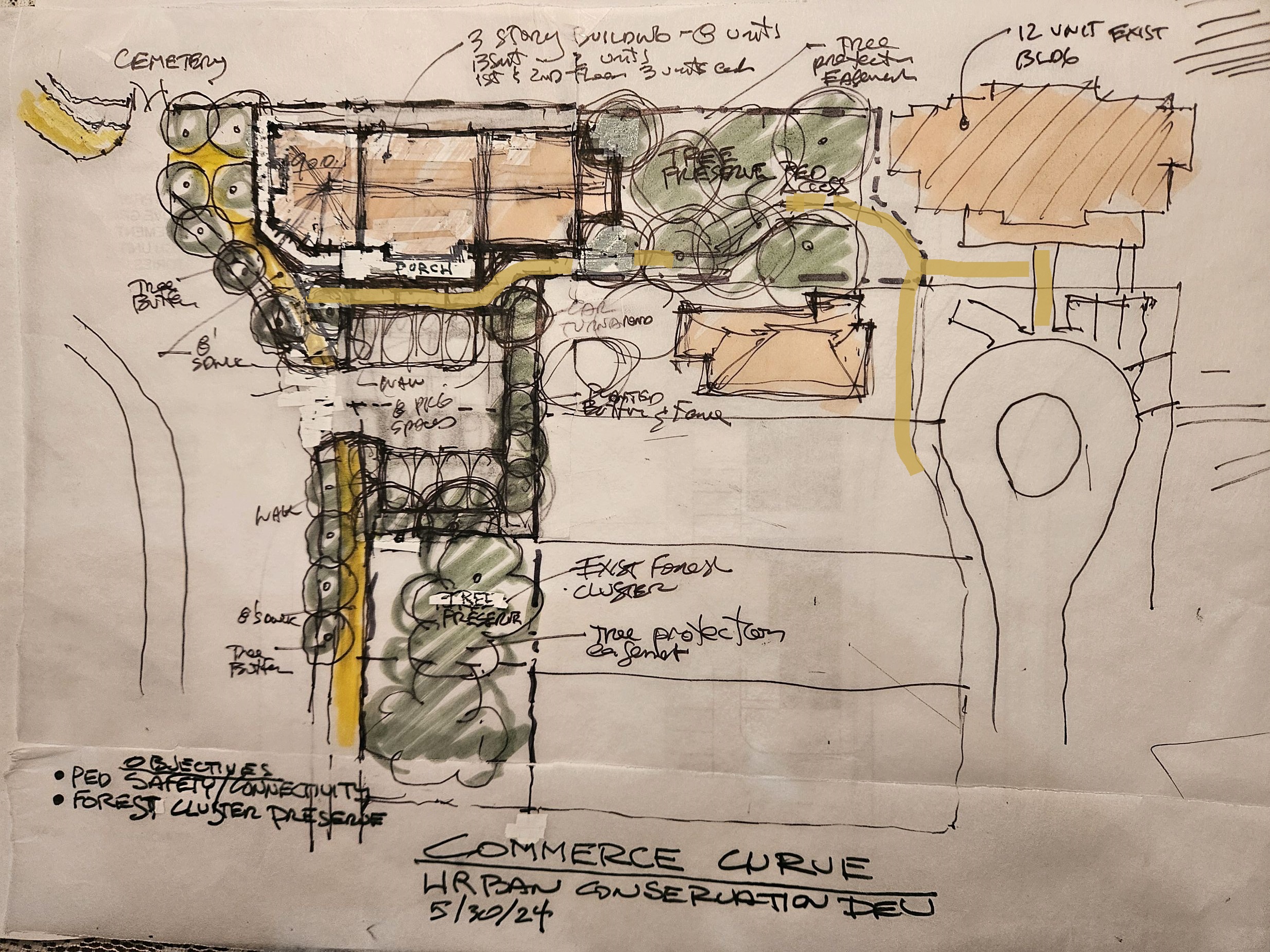
Neighbors are concerned about the danger of this sidewalk. The City has plans to widen and buffer it. The neighbors circulated a petition in favor of making the sidewalk safer. The petition embraced the City’s plans to widen the sidewalk and opposed giving the developer the variance he was requesting for a five-foot setback. The zoning code requires a 30-foot setback. The owner/developer plans to build two quadraplexes, one of them five feet from the sidewalk on Commerce Drive. Building that close to the sidewalk, he claims, will calm traffic. Perhaps so. But it would put those rental units and their residents in harm’s way. It would also make it impossible for the City to widen the sidewalk, unless the state DOT gives up a lane of that busy thoroughfare.
This variance request brought forth community involvement at a very high level. The petition was signed by 72 neighbors and other Decatur residents, including officers of Friends of the Decatur Cemetery and of Downtown Decatur Neighbors. Neighbors testified in an orderly and respectful manner at both hearings before the Zoning Board of Appeals, April 8 and June 10. We have encouraged the developer to seek a zoning change needed to build a single building with more units next to the cemetery, saving a forest cluster, leaving room for a safe sidewalk, and giving him a solid return on his investment. (He said he was interested, but wanted assurance that he could get such a zoning change.) We hired a traffic engineer, who also testified. We have not opposed the developer’s rights, but focused on the one legal criterion that would most oblige the Zoning Board to deny the five-foot variance: it “imperils public safety.”
The Zoning Board of Appeals hearing on June 10 dismayed us. We felt our entire argument for public safety was undermined when Chairman KC Boyce said before any could speak that the Board would not consider issues of “trees or traffic.” The Board’s discussion at the end seemed a slapdash attempt to solve the developer’s setback problems and then, capitulation. Board members gave no rebuttal on the city’s vision of widening the sidewalk; it was merely ignored. Dismissed almost as cavalierly was the Planning Department’s recommendation for a safer front variance of 10-feet. Board members asked the developer and his architect if they could live with a 10-foot setback. Both said no because it would mean the loss of more trees.
So the Board voted to approve the five-foot setback 3-1. Chairman Boyce voted no, but didn’t explain why. The video on the website is entirely silent, due to “audio issues.”
How did this process get off course?
The Zoning Board made its decision based on narrow legal criteria. Was the shallowness of the lots the developer’s fault? No, it was the state DOT’s fault. (Did he buy the property at a bargain-basement price because of the shallowness, and was he aware that he couldn’t built without a favorable variance? Yes, and yes, but the law protects all of that.) In most requests for a variance, such a narrow question is proper. But for this iconic gateway to downtown Decatur, deeply wooded, squeezed between a historic district and historic cemetery, and suffering an unusually dangerous sidewalk configuration, approval needed to be far more contextual. Yes, the developer has rights, but there’s a larger public good that those rights exist within. Why did the Board not table the process to allow further inquiry? Why didn’t more experienced planning and policy representatives (if not the good citizenship of so many residents) play a weightier role?
The answer cannot be that there are more permitting processes the developer has to go through that will ensure a quality project. Tree protection, storm water ordinances, and other permitting reviews do not provide for the larger context.
What is needed for this unique property is a zoning change, not a narrowly considered variance. Such a zoning change should be part of a broadly cooperative (and creative) public process that solves the developer’s problems on this property with the urbanist thinking of Decatur today and gives the new owner his rights and return on investment.
See below for one proposed alternative – a conservation development supported by many residents and neighbors of the Ponce de Leon Court Historic District that would preserve the owner’s investment, preserve the pocket forests, upgrade the dangerous sidewalk to be a safe non-car pathway, allow minimal parking, and create an appropriate transition between the existing single-family homes and higher density development. Even after getting approval of his variance, the owner/developer said he was willing to continue working with neighbors. We appreciate how open he has been in working with us, and we welcome a cooperative process going forward.
Respectfully,
Douglas Cumming
co-owner, 164 Ponce de Leon Court, Decatur, Ga., 30030
There’s this memory I have, but it couldn’t have been mine because this is before I was born. It’s 1946, thereabouts. The memory is of a college campus high in the Cumberlands of Tennessee, misty Gothic buildings, professors in loose academic gowns. An undergraduate history major has just finished reading Robert Penn Warren’s new novel, “All the King’s Men.”
He walks across the quiet campus after midnight with the novel’s last phrase in his head, “. . .out of history into history and the awful responsibility of Time.” He is re-entering his own Time, but with his imagination on fire, like the red-hot glow of heat shields when a spacecraft re-enters the earth’s atmosphere.
This is not me, but my father, Joe Cumming, who must’ve implanted that memory in me. Whether he told me about it or it came to me by the unscientific mystery of epigenetics, I have lived a life that feels supported by my father’s liberal-arts education.
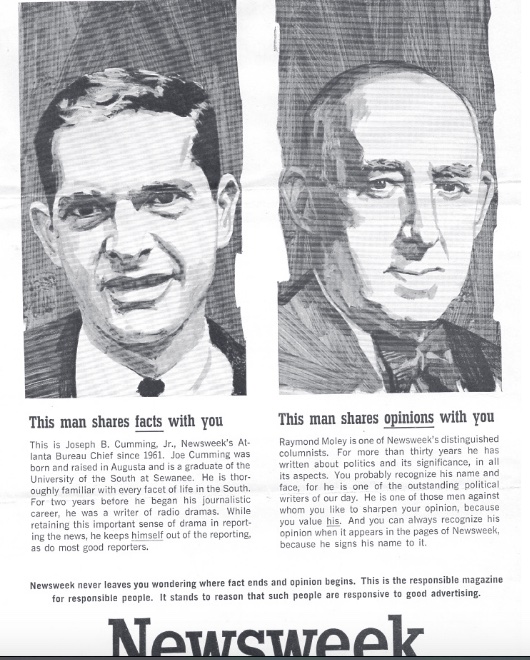
I followed in his footsteps, by dumb luck and privilege, without a map. He was a journalist, the Southern bureau chief for Newsweek magazine from 1961 to 1979. Then he earned a master’s degree from Emory University and enjoyed a second career with ten years of teaching at West Georgia College in Carrollton, Georgia.
Me? I was a newspaper reporter for twenty-five years, after a liberal arts college education. In 2002, I got a Ph.D. in mass communication and taught undergraduate courses for the next twenty years.
Now, I realize, I do have a map. It’s one that Daddy created to help his journalism students understand the connections – the goddam relevance – of history and news. He called it a Time Map.
His Time Map was the ultimate learning tool, a picture in your head that lays the foundation for more learning. A lot more. It was a mental scaffolding, a framework built out of Three Centuries, Four Wars, Six Presidents and various inventions, all dolled up in visual imagery. Think of three football fields, the 50-yard line marked off in each as 1750, 1850 and 1950. Now, rough in those Four Wars, Six Presidents and so on. Daddy loved the theater, so he also drew these Three Centuries as proscenium stages, with curtains opened on colorful costumes, personalities and cultural icons.
Woven through this time grid, like golden threads, were Four Big Ideas.
With a highly visual Time Map, your brain was ready to build a lifetime of knowledge and information that fit together. It was not rote memorization, but a map, neatly unfolding over a lifetime. Coherence would be joyously made out of the scraps coming at you in college history classrooms, movies, books, the latest technology, daily news, politics, work and, whizzing by you, life itself.
Daddy developed and field-tested his Time Map for twenty years, with college students, high school students, fourth graders, “Continuing Education” adults, friends and family members. He taught it for free, no grades and no credit. He sent it off to newspapers and to retired Supreme Court Justice Sandra Day O’Connor. He tried repeatedly to give it away to the Education Establishment, which repeatedly rebuffed it. His Time Map died.
But I find myself coming back to it these days, especially the Four Big Ideas.
Democracy
Free Press
Checks and Balances
Free Enterprise
Understand these ideas historically, in their Eighteenth Century incubation and three centuries of evolution, and you will be less bored with your job, if you have one. You will grasp the news in the undertow of its true meaning. Understand these ideas historically, and we might grope our way out of the tribal identities that are dividing us and driving us crazy. Driving me crazy, anyway.
***
Democracy? It’s not just the word for something Democrats say they’re worried about losing. Hell, Trump folks think they are the ones supporting democracy by holding on to a voluntary movement of Real People under his powerful sway, questioning no-excuses pandemic-era mail-in voting and hating the rule of elite “experts.” In the Time Map framework, Democracy has deep roots in ancient Greece and is incarnate in the writings of John Locke and Jefferson’s Declaration, the self-evident truth that “all men are created equal” and have equal rights. It’s a Big Idea, breaking the shell of the word “men” to mean “human beings,” as history hatched better ways of living together. But how are human beings equal, with such inequality all around? It’s only under the law, such as it is – equal on a jury, in the dock and with a voting ballot.
But voting isn’t equal under the Electoral College system, you say. True, and that brings us to Checks and Balances. It’s common today to say those “checks and balances” were about giving Southern slave states a check on the growing industrial population of free-labor states, and this is true. But as a concept from the 18th century, checks-and-balances was not a compromise but a scientific principle. Montesquieu (1689-1755, with about 10 names in his full aristocratic French title, like Lafayette’s) wrote about the spirit of the law as if it were a philosopher’s version of the clockwork universe of Sir Isaac Newton and Johannes Kepler. He also argued for religious tolerance as if it were a law of history and natural philosophy. The Founding Fathers drew on Montesquieu in writing the Constitution and Bill of Rights, and Daddy had this 18th century background in his head when he would teach a news story about a conflict on the Supreme Court or in Congress. The Time Map made that connection between history’s personalities, today’s news, and you and me.
Free Press? The First Amendment, marked in 1791 on the Time Map, tells Congress to “make no law abridging the freedom . . .of the press.” “The press,” at that time, was a marvelous machine that had not changed much since it was designed by Johannes Gutenberg around three hundred and fifty years earlier. The printing press, with movable type, had such power to change the Western world, the English Crown limited who could operate one. Royal licensing extended to the American colonies. Benjamin Franklin’s brother James flouted that and was jailed. Another colonial editor made the royal governor of New York look bad by printing the truth about him, which landed the fellow in jail. He was freed by a jury that defied the law of “seditious libel.” That’s the background to freedom of the “press” – a word that in the 20th century came to mean members of a respectable estate called journalists. Daddy was a journalist who would trace ideas of freedom and truth back to the poet John Milton and his famous defense of an unlicensed press. In 1644, Milton said: Let Truth and Falsehood grapple in a fair contest. “Who ever knew Truth put to the worse, in a free and open encounter?”
Milton, thou shouldst be living at this hour! These days, Falsehood seems to win quite a few of those encounters. These days, a free “press” is indiscriminately identified as “the media,” and attacked from all sides, from the Left, the Right and from your average non-news-reader.
Free enterprise? Capitalism is blamed for a lot of ills today, and rightly so. Its theory of individual freedom can be blind to the common good and to the damage that perpetual growth inflicts on the earth by over-extracting resources. But the theory behind free enterprise is another one of those 18th Century Big Ideas that needs to be understood in its place on the Time Map. Conveniently, Adam Smith’s classic on the theory, The Wealth of Nations, was published in 1776, the year of the Declaration of Independence.
As Adam Smith described it – and recommended it – free enterprise was an “invisible hand” that benefited everybody when each individual was free to pursue selfish interests. I know, it sounds disastrous, and immoral. But it assumed each individual had “moral sentiments,” which was the subject of an earlier book by the good Scotsman, Mr. Smith. Free enterprise also benefited from what’s called the “division of labor.” If I specialize in what I’m good at and enjoy, and you do your specialized job, then, instead of my spending a year trying to manufacture a pin to sew my own clothes, everybody can buy pins and clothes. Rather than my gain being your loss (the jungle of zero-sum competition), the division of labor gave the world an unparalleled abundance, after centuries of hoarding by the strong and scarcity for the rest of us. Capitalism harnessed the great human energy of greed, domesticating it into the profit motive, and created the best life that average people have ever known.
But it went off the rails. Or rather, monopolized the rails (and steel and oil) and made consumers pay whatever was asked. The beauty of Daddy’s Time Map is that, as Gertrude Stein said of history, “it takes time.” Things change. The muckrakers and Teddy Roosevelt broke up the trusts, taxed the Robber Barons, and made the income tax “progressive” by graduating tax rates upward for high incomes. Government regulations shut down quack medicines and made meat safe. Utilities got protected as “natural monopolies.” When I covered the “energy” beat for a New England newspaper in the 1980s, I watched the partial deregulation of airlines, Ma Bell, cable TV and energy, as government adapted to new technology and consumer demands. Those were mostly bipartisan fixes, in those days.
***
January 6, 2021, changed everything. The New York Times described the day this way: “Militiamen showed up proudly bearing the emblems of their groups – American flags with the stars replaced by the Roman numeral III, patches that read ‘Oath Keepers.’ Alt-right types wore Pepe the Frog masks, and QAnon adherents could be seen in T-shirts urging people to ‘Trust the Plan.’ White supremacists brought their variant of the Crusader cross.”
Daddy had died two months earlier in a pleasant life-care facility, where he had lived among his books and journal scrawls ever since Mama died four years before that. He didn’t contract Covid, but the isolation of its social distancing finally did him in.
It was remarkable – frightening, really – how close we came to losing those Four Big Ideas at that moment in history. Georgia was at the center. Remember? The day before the Capitol riot, January 5, in my native state of Georgia, we had two – Two! – runoff elections for U.S. Senators, and Democrats won both. This gave the newly elected President, Joe Biden, the bare majority he needed in both the House and Senate to get much of his agenda passed over the next two years. (Look now at all the new “green” jobs Georgia has in manufacturing. Thank you, Democrats!)
Meanwhile, the loser of Nov. 3, 2020, President Donald Trump, needed only a few legitimate doubts to support his wild and insistent claims that he had actually won in the few states where close votes swung the election to Biden, including Georgia. Amazingly – a miracle from above? – no legitimate doubts were found, despite 62 lawsuits Trump filed questioning the votes in those swing states. Conservative Republican officials, back then, stood up for the rule of law and the Constitution, even when they might have felt bullied by Trump. For example, Judge Bobby Lee Christine, a Trump appointee briefly serving as Acting U.S. Attorney for the Northern District of Georgia to replace the one fired by Trump, found no voter fraud. Just think: What if he had gone along with Trump and “found” something? In those few days when Democracy, Checks and Balances and all the rest bore the strain of an “unprecedented” President, the thread held.
But miracles like that cannot hold beyond their day. You can’t build booths on the hill of a transfiguration. People forget. Politicians change with the polls.
***
A simplistic framework of American history seemed a hopeless project, especially one as liberal and democratic as Daddy’s. He would laugh at the irony of Newt Gingrich and Donald Trump trying to kidnap a liberal, self-correcting Enlightenment story and turn it into an un-evolved, Bible-blessed, right-wing American history. But Daddy was not a real historian. He was a liberal journalist. Journalism was not quite a real profession, like medicine or the law, and not quite a real academic discipline. It was an American improvisation, like jazz. Journalism was applied liberal arts, without certification.
Government was neither the solution nor “the problem,” as Reagan called it. It was part of a great human story, if you had the map to follow it. It was a story of old injustices being faced, protested, and imperfectly reduced. It was one problem after another, grindingly fixed under an ever-changing order still called democracy, with checks and balances and so on. On balance, Daddy and I both believed, America was a self-correcting system that bent slowly, like the arc of the universe, toward justice. If you know where you came from, you can see the improvement, and what the next real problems are.
It’s 2024. Daddy’s dead, and I can’t find anybody who believes all that anymore. I read the news every morning, and it still makes sense to me. I understand why many are discouraged and depressed. But I keep the faith.
“It is sad to squint the eyes into the future years of people who separate learning from life,” Joe Cumming wrote in one of his biweekly columns on the book page of the Atlanta Journal-Constitution in 1983. “Students who persist in this will become dangerously bored and boring when the fluff of youth wears off. Such a dumb doom is unnecessary. Once the flame of learning catches it can, in time, become a firestorm.”
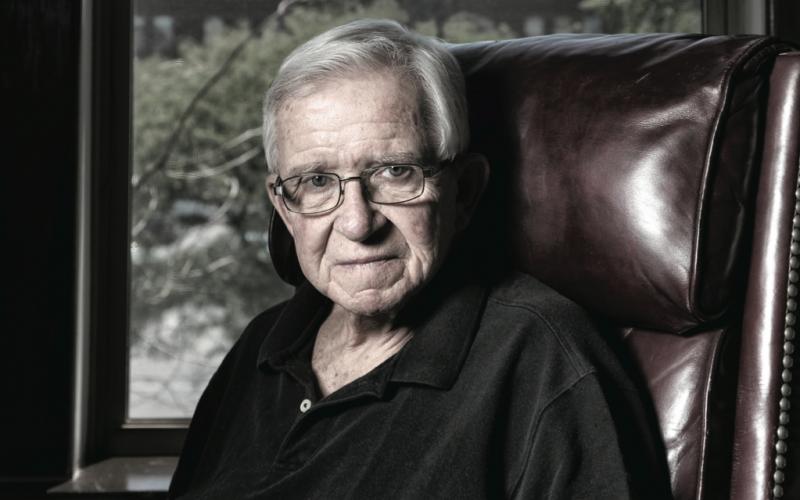
Dan Wakefield, an American journalist, memoirist and novelist, died in Miami two days ago, March 13. I had met him when he came to speak to us Nieman fellows in 1986 or ’87. (Dan had been a Nieman Fellow 22 years earlier). Back then, he had just written a novel, “Selling Out,” inspired by his wacky experience in Hollywood writing the TV series “James at 15”). At Washington & Lee University, my colleague Kevin Finch encouraged me to get in touch with Dan, who was a friend of Kevin’s. On Oct. 31, 2018, he “visited,” by speaker phone, my class on “Civil Rights and the Press.”
From 1955-1960, Wakefield covered dramatic events around race and civil rights in the Deep South for The Nation. His articles from this period include “Justice in Sumner,” on the Emmett Till murder trial (September 1955), ‘Respectable Racism,” on the white Citizens Council movement (October 1955) and “Eye of the Storm,” on developments in the wake of the sit-in movement (May 1960). All three articles are included in the Library of America anthology, Reporting Civil Rights.
Wakefield led a charmed writer’s life, as one of Kurt Vonnegut’s best friends — both started writing for the student paper at Shortridge High in Indianapolis — and an observer of American life from the most interesting corners. When we talked to him, he was doing weekly readings in Indianapolis in a duet, “Uncle Dan and Sophie Jam,” with a young female saxophone player. At 86, he was funny, in full command of his storytelling gift, and generous with his time.
Here is a transcript of that interview. I hope you find it worth reading this entire transcript.
Prof. Doug Cumming: This is partly a demonstration of how to interview because these are freshmen, not necessarily journalism majors, though I’m in the journalism department. I’ve given them assignments to do at least one interview for a story or an oral history. And also, this is a class on the civil rights movement and the press, and I think we were all very impressed with the three articles we just read from your days with The Nation.
Dan Wakefield: Yeah. Thank you.
DC: As one of my students said, these are events that we’ve been studying – the Till trial, the white citizens council, and the sit-ins that began Feb. 1, 1960 – but we’ve never seen them written up with such flair.
DW: Yeah, well that’s great. You know one of the ironies to me, I’ve always said that the first sentence I wrote about the Till trial is the best sentence I ever wrote. I still think it is. And it’s too bad, because it was the first one I ever published. So all these years later I’ve never out-done it.
DC: Want me to read it out loud?
DW: Well, if you want to.
DC: “The crowds are gone and this Delta town is back to its silent, solid life that is based on cotton and the proposition that a whole race of men was created to pick it.”
DW: Yeah. I think that sums it up.
DC: The first question I want to ask you is to tell us about your creative life now, in what Walker Percy would call these latter days of the old USA.
DW: Well, I just finished writing a memoir of my goddaughter, who is a Cuban-American girl. I met her . . . I taught for 15 years at Florida International University in Miami, in the graduate writing program, and I met her family and I met her when she was 3 years old. And she’s now 23, and I just talked to her on the phone last night. And so that memoir has just gone out and is being considered, so I don’t know its fate yet. But I spent a lot of time on that. And then in recent years I’ve edited. . .first I was asked to edit and write an introduction to the letters of Kurt Vonnegut. He was a friend of mine and I’ve known his work well. We went to the same high school although 10 years apart, and then I edited a book of his graduation speeches, which are quite fun. And then just recently I co-edited a book of his complete short stories, which is 940 pages, and wrote an introduction to that. And I’ve also been doing some radio stuff. I did a thing on the local PBS station called “Uncle Dan’s Story Hour” and talked a lot about things I had written about and people I had met and so on.
DC: What is “Uncle Dan and Sophie Jam”?
DW: Oh that’s another show we do on Monday at a place call the Jazz Kitchen, it’s a nice dinner and jazz place in the city. When we did Uncle Dan’s Story Hour I had this wonderful young saxophone player, a young woman who had been playing here in town, and I liked her playing so much I added her to just play a song at the break of that hour-long show, and then at the end. So when that year was done I said, “You know, Sophie [Faught], I don’t want to have to talk another whole hour by myself so why don’t we do a show where you play for a half an hour, and you get some other musicians, and then I’ll talk for a half an hour, so that’s what that is. . . She started playing here when she was quite young at a place, and then she played with a lot of good musicians, she played in Carnegie Hall in New York and had a chance to be a jazz musician in New York but she preferred to come back here and to have children. She has one little girl and she’s about to have another in December.
DC: You’re still shopping your manuscript around about your goddaughter?
DW: Yes, it just went out about three weeks ago.
DC: What’s the title and what’s her name.
DW: Her name is Carina and the title is “Down by the Bay.” The title comes from, really, a kind of kindergarten song, “Down by the bay where the watermelons grow.”
DC: Let’s go back to the Fifties. . . .How did you get the job and how old were you when you started working for The Nation?
DW: It was really a fluke and I’ve always said to people, especially people starting out in some kind of writing effort, you have to be good and you have to be lucky. And I was really lucky because, well I had started out in high school. I was sports correspondent for the Indianapolis Star in high school, and I happen to know some of the sports writers and then one summer in college I worked on the sports desk of the Indianapolis Star and then another summer in college I wrote letters asking for a summer job at 40 different jobs in America and I only got one, and that was from the Grand Rapids Press in Michigan, and so I took that. And I was a general assignment reporter there. My first job after college was on a weekly paper in Princeton, N.J., and that happened to be the place where Murray Kempton, who was a well-known columnist for the New York Post, lived. And he had just had his first book out. And I reviewed his book. I was really a big fan of his work. I reviewed his book in the local paper. And he called me up and said, “Well you really [decked?] the book, come over and have a beer sometime.” So I said, “How about this afternoon?” and anyway, I got to know him, and he was like a mentor for me. And in the summer of ‘55, every newspaper in the country had headlines and stories about this Emmet Till case coming up in September in Mississippi. And I said, oh my God if I could only get there and write about that. And so, just out of the blue, I called Murray Kempton and said, Is there any way, do you know any magazine that would let me write about that? And he said, “Well, The Nation asked me to write about it but I’m writing it for the New York Post, and I don’t like to write for two things at the same story, so I’ll tell them they should take you.” Well, I thought there’s not much chance of that. And I convinced him. I wished I had sometimes said what in the world did you tell them? Because the next thing I heard, he said, yeah, well go down to The Nation office and the managing editor will tell you what to do. And the managing editor. . .my payment for the story was a round-trip bus ticket from New York City to Sumner, Mississippi. That took about two days and one night. I stayed at a rooming house in Sumner, and covered the trial. And then, the trial was over Friday, and I was going to stay in the rooming house and write and Murray Kempton, who was there, said, no, it’s too dangerous. Come into Jackson. That’s where all the reporters are going to go. And I stayed in a motel in Jackson, Miss., over the weekend. I stayed up all night, and handed in this story Sunday morning. And you now, the way you filed stories in those days, you took it to the local Western Union office and they would send the story as a Western Union to the magazine. So that’s what I did, and I knew the story would appear on Monday, so I had to write it as if I’m looking back and the trial is over, which it was. So I just stayed up and did it. It was one of those events – it sort of had a form of its own. It started on Monday. It ended on Friday, and every day was very moving and very dramatic. You know, you just had to be alert and look at what was going on.
I tell you, I was very naïve. I actually got there a day early and knocked on doors and said to people, “Hi, I’m from The Nation magazine in New York. What do you think about this trial?” It’s a wonder I didn’t get shot. But then I really almost got in trouble. . I’d heard that there was a witness. And I’d mentioned in the story a supposed witness named Leroy “Too-Tight” [Collins] being held in a jail, in a town called Itta Bena, and I’d heard that two of the sheriff’s deputies were going there, so I said, could I ride with them and they said, yeah sure, and I’d go about five miles out of town, they said, “Well, this is where you get off, boy.” And they let me off, and I walked back to Sumner. And Murray Kempton said, “You’re lucky all they did is leave you off.”
DC: A lot of pretty well-known reporters were covering the trial. Do you remember John Popham with the New York Times?
DW: Yes. There’s a picture of me with him in a book of mine called New York in the Fifties. There’s a picture of me and Murray Kempton, and we’re standing at the press table of the trial, John Popham is below us, and he’s writing something, and he has a hat in one hand, and has grey hair. So I met him, and the guys from the Detroit News. There was even a guy from Paris there, I believe. It was huge, you know, packed into that little courtroom. It was filled every day.
And the press table wasn’t really big enough for all the press.
DC: The writing reminds me a little of H.L. Mencken’s coverage of the trial in Dayton, Tenn., in 1925. You’re both coming in as outsiders, and poking fun a little bit but in a sensitive way. Who influenced your writing style at that time? Was it an editor at The Nation?
DW: No, not at all. At that point, I’d never met anybody at The Nation except the managing editor, who handed me the bus ticket. If anybody, it was Murray Kempton. You know, he later won the Pulitzer Prize when he worked for Newsday on Long Island. But he was a very revered journalist in New York City for many years. He wrote three times a week in the New York Post. I couldn’t wait to get it, everything he wrote. He was a great stylist.
I think when I re-read the piece, I like the fact that it’s very direct. There’s nothing fancy about the style. It’s just trying to observe. I just re-read it this morning. And you notice that I talked about the color of Mose Wright’s suspenders and blue pants. All those things are obviously things you learn to do if you read good writing and read good journalism.
DC: Exactly. The details. So, Jack Eason of Bowling Green, Ky., who worked on his high school newspaper, has a question for you.
Jack: In your piece that we read, about the Citizens Council meeting in Montgomery, Alabama, you talked about how members of the Council, as you were leaving, tried to run after you and pull you from the car. Were there any other times when you were reporting on civil rights when you felt that you weren’t safe, or you were endangered?
DW: No. I think I was, in Sumner, Mississippi, when I was with those deputies, but I wasn’t aware of it until they had let me out of the car. No, that’s the only time. I tell you, it made a huge impression on me. Because when those guys started following me, I was at the meeting and then they were yelling at me, and I got in the car, and they were grabbing at me, it was the first time I felt, “Well, this is what it’s like when someone is attacking you as a symbol, you know? I remember when they said, “We know who you are,” I said, Well, I’d be glad to tell you and I turned around to shake hands, and they said, “No, no. We know.” They didn’t know anything about Dan Wakefield. They just knew I was a guy from New York who was writing about them and therefore I would be writing something not favorable. And I thought, well this is a tiny case, a very tiny sense of what it must be like to be a black person in this country, and somebody you know starts grabbing you, or attacking you, or beating you up or shooting you not because of the person you are, but because of what you stand for.
DC: Jack has a follow-up question.
Jack: You spoke a little to this, but could you describe more what their attitude toward northern reporters who were reporting on the civil rights movement was. . .Were they that hostile all the time, or was that an exception?
DW: It was always hostile, except one . . I will say, except one experience that struck me, I’ll never forget. I was interviewing a guy who was the head of the white Citizens Council, I think it was in Montgomery, Ala., and usually, you know, this was in the days before tape recorders. There were no tape recorders. You wrote everything down. So he’s talking and I’m writing. But what I do a lot of times is the guy says something really outrageous, I wouldn’t write right then. I would pretend I wasn’t writing and then later I would write it down when he started talking again, because I didn’t want him to realize I was writing down some terrible stuff. What he was saying to me. This guy was saying something about the goddam blacks, whatever, and I stopped writing, and he said, “Write that down, boy.” [laughs] “Okay.”
I remember he had this kind of jovial air about him. He said, “Well, you know, you and I don’t agree, it’s just like Macy’s talking to Gimbel’s.” Those were the two big department stores. They were rivals. His sense of his opinions and all the rest, he just saw it in some sort of joking way.
DC: You were in Montgomery just when the sit-ins began, we’ve read a lot about this. That was just when L.B. Sullivan, the police commissioner there, sued the New York Times in what became a landmark Supreme Court case. But you just happened to hear L.B. Sullivan addressing — I think it was — the white Citizens Council there. You were a lucky guy. The right place at the right time. Another question from Nick Mosher.
Nick: I was doing a little research on you and I saw that in college you became an atheist but then in 1980 on Christmas Eve in King’s Chapel you came back to being Christian. I was just wondering what was going on in your life or in the church on that night that caused you to change your belief system.
DW: When I went back to church at King’s Chapel on Christmas eve? Yeah well it was a lot of things that sort of come together that night. And I think part of it was, I went there because – and I think I described this in the book – but I went there because I realized I had lived in Boston for a long time but I really didn’t even know where any churches were. I just hadn’t noticed that, where the churches were, so I looked in the Boston Globe religion page and it said King’s Chapel – this was for Christmas Eve – candlelight service and carols. So I thought, well that will be innocuous enough, you know, that won’t be any big preaching or something that I won’t want to hear. So it didn’t say that the minister would read little things in between the hymns, and you know the passage from a novel by Evelyn Waugh that was about the mother of Constantine – I think the novel was called Helena – and there’s a beautiful passage toward the end of the book, and she says “Pray for the latecomers to the manger, and those who were not that aware for a while and came late.” So I felt like that was addressed to me. And it was very powerful. But also, I tell you, I go to a church where I am now, I think that nothing will ever compare to – in my eyes – what King’s Chapel in Boston was like in that era. I don’t know what it’s like now. And it was so powerful on Christmas Eve. People who usually didn’t go to church went there, the church was packed, and everybody got out the hymnal and it started out with everybody singing “Come All Ye Faithful, Adeste Fideles,” . . .and it was really very powerful.
DC: I remember when you were talking to us Nieman Fellows at the Lippmann House – either 1986 or ‘87 — . . .you had just written that novel Selling Out . .
DW: Yeah, that was a Hollywood novel.
DC: . . and you said you were going to that Episcopal monastery in Cambridge, [Society of St. John the Evangelist] and I think you were working on a book, a kind of spiritual memoir.
DW: Yeah, well that was the book the former questioner referred to, called Returning, a Spiritual Journey. And that came out in, I think, ‘85. In fact, I’ll tell you a funny story.
It came out on the Sunday before Christmas in the Sunday New York Times Sunday Magazine, and it was called “Returning to Church.” I came home from church that Sunday and had an answering machine, and I pressed the button in the message, and there was the voice of Kurt Vonnegut and he said, “I forgive you.” So we had a kind of running joke about that. Much later, I saw he had a poem in The New Yorker, and I didn’t know he ever wrote poetry. So I wrote him a card and I said, “I see you’re now a poet. I forgive you.” So that went on.
Maddie Smith: What was the most rewarding experience of your career?
DW: [pause] Oh boy. Well, I think certainly seeing that first piece come out in The Nation was really astounding. . .and I think the other was my first novel because after I wrote a fair amount of journalism and my first book was about Spanish Harlem [Island in the City, 1959] and the publisher with Houghton Mifflin in Boston and I was living in New York. And after that, my dream had always been to write a novel. So I wrote 50 pages of a novel. My agent sent it to him. Because he had published a journalistic book on Spanish Harlem. And we didn’t hear for about a month. And then my agent called. He said, well, Houghton Mifflin wants to pay for you to come to Boston for a day and night and they want to take you to lunch at [?], the fancy restaurant in Boston, and I said to my agent, Is this good or bad? And he said, well, it could be either one. It turned out to be bad. They took me to this fancy lunch and it was not my regular . . editor, it was the head of the company and the managing editor and the publisher, and they said, Dan, we think you’re a wonderful young journalist, but you’re not a novelist.
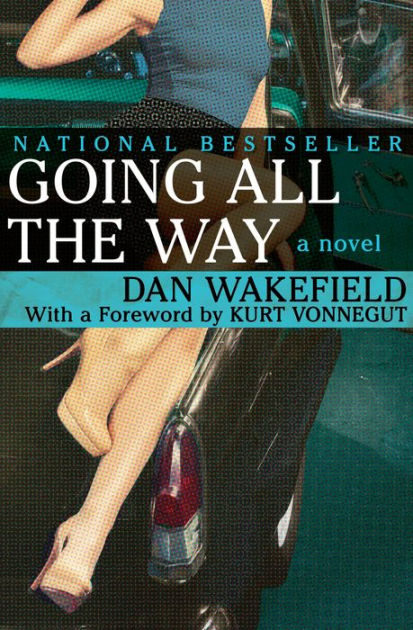
You know, I later thought, they could’ve just said they didn’t like that 50 pages. But “son, you’re not a novelist,” was really a blow. Luckily, I had some people who really believed in me. In particular, a wonderful poet named May Swenson. And I kept on trying to write a novel and made four or five more false starts, and then finally in 1968 I had written what was a whole issue of the Atlantic on the effect of the Vietnam War on this country, so I had a little money ahead of the game, because that became a book. So I decided, OK, this is it. I’m going to write the novel. It’s now or never. And the novel was called Going All the Way. It became a best seller. Vonnegut reviewed it in Life magazine. It was a great thrill, because that was something I’d always wanted to do. And had been told that I couldn’t do it. So of course I was anxious to send a copy to Houghton Mifflin. And then I learned they had also turned down Julia Child’s book on French cooking. They told [her] that it was too long and that Americans would never be interested in French cooking.
Anyway, I’ve talked about that before — you know, them telling me I’m not a novelist. I always say the moral of that story is, Don’t let anybody else tell you who you are.
DC: I’m wondering, with this room of 14 18- and 19-year-olds. . . How old are you now?
DW: 86. I’m amazed that I am still sort of functioning in all the different ways, which is miraculous. Do a lot of yoga, that’s my advice.
DC: Actually, I just saw something in the New York Times, and it was What would you tell your 18-year-old self, you know, for people much older? And I thought about that, and I won’t say what I would tell myself. But what would you tell yourself?
DW: Well, there was something that I did tell myself. I just happened to see this quote. It was in some kind of library. It was a quote of Abraham Lincoln. And the quote was – and he had obviously given this advice to himself – and he said, “I will study, and get ready, and maybe the chance will come.” So, I’ll never forget when I got that assignment to do the Till trial, I thought of that quote. And I thought I was ready. I remember reading this thing about Michael Jordan talking about being in the zone when you’re playing. And he said, “You know, you can’t make the zone come to you. You have to be ready when it does come.” You know, you have to do all the preparation and get yourself in the condition that you’re ready to go with it.
DC: Well, I hope that’s what four years of a liberal arts education is supposed to be. . . Where did you go to college?
DW: I went to Columbia and it was one of the greatest things. You know, later, when I got the Nieman, at the end of the Nieman year which, as you know, is a year at Harvard, it was the first time I donated to the Columbia alumni fund, because I was so glad I had gone to Columbia and not Harvard. I loved the Nieman program, of course, but I think Harvard is one of the biggest frauds in America. Because, at Columbia, the greatest professors, nationally known professors, taught their own undergraduate courses. Graded their papers. You could walk into their offices any time and see them. At Harvard, the great professors just came out on the stage and gave a lecture and disappeared and then you were taught by graduate students.
Anyway, I was very very happy I went to Columbia because I went to Mark Van Doren, the poet, he was from Illinois, and he had this middle-western accent so I felt at home and all my classmates were from New York and I remember we walked out of Van Doren’s first class and I said, God, Van Doren is great, and one of them said, “Aw, he’s too midwestern.” I said, “Yeah, that’s it.”
DC: You were present at Shaw University when SNCC was formed. You were in Atlanta when the women were trying to figure out how to keep the schools open. Now, looking back on those heady days of the Civil Rights Movement, what do you think about what’s going on now in our country as far as politics and race?
DW: [pause] I think it’s criminal. I hope everybody will read the book Between the World and Me, by Ta-Nehisi Coates. I know I don’t pronounce his first name right. You know, I was a friend of James Baldwin in New York and he told me some things I didn’t understand. I really came to understand them when I read the Coates’ book.
You know, the controversy I had had with Baldwin . . . one night at a dinner, he was talking about his younger sister and how she was 16 and she wanted to be a fashion designer and she was [?] and she was going to suffer, and somebody there said, yeah, well all 16-year-old girls suffer. And I said, yeah, all 16-year-old boys suffer. And [Baldwin] turned to me said, “You don’t understand.” And it was really painful, because I thought I did understand. And I really think I came to understand more reading that Coates book. That in addition to everything else, if you’re black in this country, you have the fear of your body being destroyed anytime. I mean, any policeman, as we’ve now seen on tape many times on TV, can take you out of your car and shoot you or put you jail for almost anything. And as you know we have the greatest mass incarceration of any time in our history and of any place in the world. And what’s happening now is politically . . .well, I don’t need to say it.
You know, some people said I lived through the McCarthy era, was that worse? I said, “No, because we had real. . .we didn’t have Fox News. So we didn’t have an alternative universe of facts. And we didn’t have the social media that allows anybody to, you know, vent their own hate and their own false premises. That’s my speech.
DC: Yeah, well that was awfully good, and we’ll have to end on that. You’ve really given us an amazing 45 minutes. I can’t thank you enough. I’m going to transcribe this and maybe I’ll send you a copy.
DW: Ok, thank you very much. I’m glad to talk to you. . . say hello to Kevin [Finch].
In the pretty courtyard of dogwood trees on the ground floor of Holy Trinity Parish facing Sycamore Place, Decatur’s hungry and dispossessed arrive one or two at a time for help.
They are welcomed as expected guests, for most have made an appointment with DEAM – Decatur Emergency Assitance Ministry. A greeter will take their names, then another volunteer will lead them into the pantry to “shop” for what they need, or help with rent or prescription bills. Unhoused people can pick up a meal in a paper bag.
DEAM is a consortium of local churches that operates here from 9 a.m. to noon on four weekdays (closed on Wednesdays for supply deliveries). Some 60 volunteers make it work, including a number from Holy Trinity Parish. But DEAM could always use more volunteers, says HTP parishioner Pete Pfeiffer, the treasurer of DEAM.
DEAM began in 1977 with a push from two women, the Rev. Dorothea Gatlin of Decatur First Baptist Church and long-time public school teacher Mary Leila Honiker of Decatur First United Methodist Church. Local church ministers recognized the need for a more coordinated system of help for families with emergencies. In April 1984, it moved from the Lutheran Church of the Messiah into Holy Trinity, which has remained its home (for $1 a year) ever since.
The need is great, but seems at least manageable under DEAM’s well-run operation. In 2022, the agency provided the following services, according to Pfeiffer:
Food ($41,400 worth), clothing and personal hygiene items to nearly 5,000 individuals.
Emergency utility assistance to 910 households. The maximum grant was $750, with extra funding during the COVID-19 pandemic, but is now $500.
Emergency housing assistance totaling about $10,000 last year. None is available this year, without the pandemic funding it had last year.
Emergency prescription costs for 182 individuals with insurance gaps or no medical insurance.
Two women are the only paid staff, and they get more from the personal satisfaction than from per-day pay, a total of $19,315 plus benefits last year. Victoria Carter, the office manager, said starting as a volunteer after her husband and mother died in the same year saved her life.
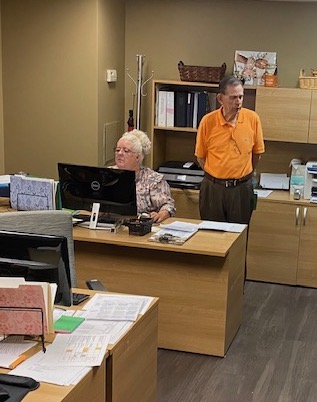
Victoria Carter, DEAM office manager, and Peter Pfeiffer, the treasurer, close up shop after another busy morning.
“To me, it’s a privilege to be in a position to help,” she said. She also appreciates having the best group of people she’s ever met in her life. “They not only love the community. They love each other and love doing their work.”
Last year, $124,000 came in from the 19 churches in the consortium. A little less than that came in from individual and corporate donations. In addition, DEAM received in-kind donations, such as groceries set out on people’s front stoops – the Porch program – and had an $8,000 grant for pandemic-related assistance. That grant is gone, and other sources are expected to shrink this year, Pfeiffer said.
The way DEAM functions, with clients making appointments and choosing what they need in their emergency, “there’s no gaming the system,” Pfeiffer said.
“As we learned during the pandemic, the need here is far greater than what we give.”
This is from the Spotlight series featuring outreach ministries of Holy Trinity Parish, Episcopal, Decatur, Ga.
Every Monday afternoon during the school year, Path to Shine brings adult volunteers together with a hand-picked group of about 12 students from Avondale Elementary School.
The goal is lofty. The students have potential for academic success, even for college and a fulfilling life in the community. But they are struggling.
Holy Trinity Parish’s Lindy Newman, who directs Path to Shine for Avondale, learned about struggling students long before in her first year of teaching elementary school. “So I started having lunch once a week with one child,” she said. “I’d bring in a sandwich and potato chips.”
It was transformative. The same slow magic can happen with the one-to-one relationships that develop in Path to Shine. For example, one bright but impulsive student used to pitch temper tantrums, but has turned out to be very personable, she said. Staying with the program since kindergarten, he now takes care of a younger kid.
Typically, the six or seven volunteers are retired teachers like Lindy. Most are not with HTP. But it began with HTP when a deacon from the Atlanta diocese, Leslie-Ann Drake, visited the church.
Drake realized, from her work in a women’s shelter, that children without resources need to understand how important it is to finish school, go to college and stay away from bad influences. She started Path to Shine out of a Baptist church in Smyrna. Today, after Drake retired and the program transitioned to be an independent nonprofit, Path to Shine is in 13 metro Atlanta schools. Marie Davis, the current director, is hoping to expand into many more schools in Cobb County.
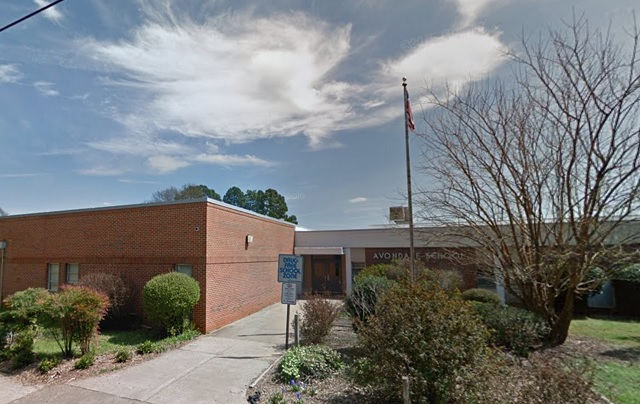
With Father Gregg Tallant’s support, Lindy started the local Path to Shine. HTP thought it would be with Glenwood Elementary, across the street. But instead, it began at Avondale Elementary, 8 Lakeside Drive. With a declining student population that is 95% eligible for free and reduced lunches, the school needs resources.
When classes end at 2 p.m. each Monday, Lindy and another volunteer walk the Path to Shine students around the corner to Gospel Hope Church, the former First Baptist on Covington Road. The mentors – not “tutors” – follow a Path to Shine curriculum that includes reading aloud by the students, or by the mentors. They go outside for an activity, have a snack, do their homework and focus on the character-building traits the school stresses: kindness, responsibility, helpfulness and such.
New volunteers get two hours of training from the metro-wide program and about an hour of the state’s mandated training for abuse reporting.
The Avondale program’s greatest need now is for a volunteer who will start in the fall, usually a week after Labor Day, to discern whether to replace Lindy Newman as director the following year. In the fall of 2024, she’ll be ready to be a mentor only, not the director. And if she doesn’t find a replacement, she says, a valuable and well-running program might have to shut down.
Thisis from a “Spotlight” series on outreach ministries at Holy Trinity Parish, Episcopal, Decatur, Ga.
A favorite book of intellectual conservatives is “Ideas Have Consequences,” by Richard Weaver, a University of Chicago academic who dug deep into a lost intellectual culture of his native South. In another book, “The Southern Tradition at Bay,” he unearthed a supposed alternative (Southern, without dwelling on the problem of slavery) to America’s soul-enfeebling forces of industrialism, capitalism and individualism. “Ideas Have Consequences” is more philosophical, an attack on the materialism, positivism and empiricism underpinning modern science and technology. It’s an appealing notion, but too abstract as an account of our complicated world today, or of human nature.
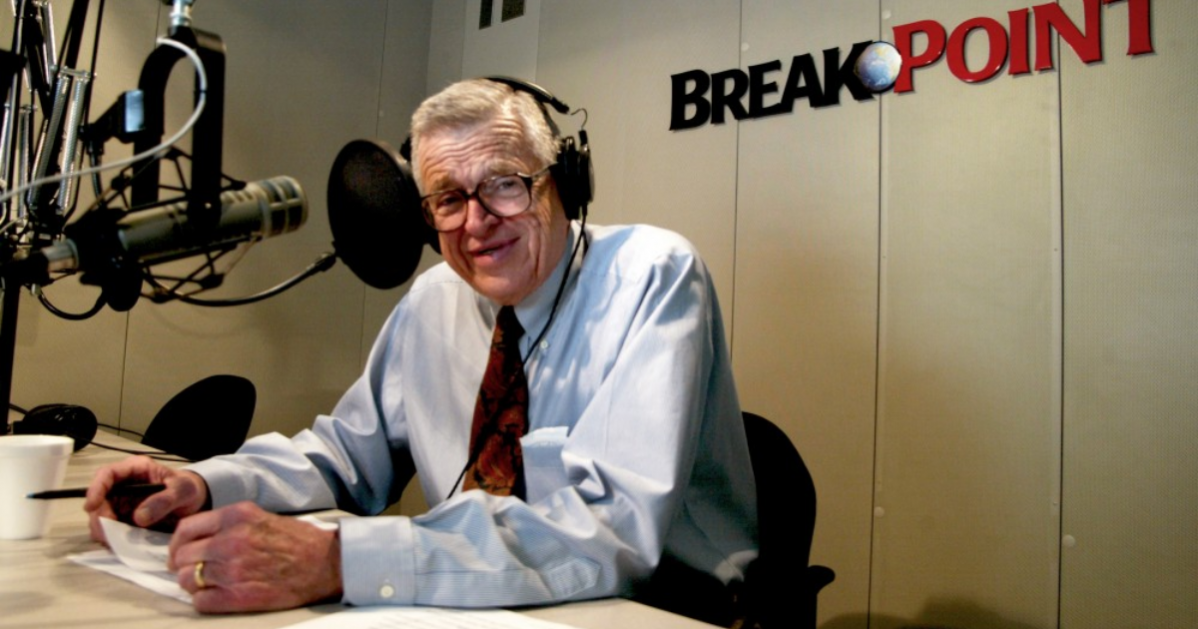
But some ideas do seem to have specific consequences, especially bad ideas that are packaged like candy-colored pills in a word or phrase. One of these is the idea of a “Christian worldview.” One dark and lonely night when I was driving home to the Shenandoah Valley from a Richmond hospital, I heard this phrase on a talk-radio show. My feelings were in a heightened state, alert to reality and divine presence as our daughter lay in that hospital recovering from bone-cancer surgery. Callers to this radio show, called “BreakPoint,” were complaining about various ways that schools were pushing godless and anti-Christian positions in American classrooms. Their generalizations bothered me, and much of their evidence seemed paranoid or flatout wrong. I had covered these sorts of classroom controversies as an education reporter. What bothered me more than the callers was the way the host accepted their stories uncritically, and then elevated them into his unifying idea that he called “a Christian worldview.”
The host, I learned during a program break, was Chuck Colson. Really? The lying SOB legal counsel of Nixon’s White House during that moral collapse in high places known as Watergate? Yes, that Chuck Colson. I knew of his born-again conversion to Christianity, because I had heard him about 30 years earlier explaining at the Atlanta Press Club how he had arrayed the arguments of C.S. Lewis’s “Mere Christianity” on a legal pad, countered these with lawyer-like objections, and judged that his emotional conversion experience, on balance, was also intellectually valid. I’m a C.S. Lewis fan, so I identified with his thought process. Thirty years later, I knew that Colson’s time in prison had led him to start a Prison Fellowship that he saw grow into a national program that was doing good for a lot of inmates. This was real Jesus work, I was sure. “I was in prison, and you visited me.”
But listening to him spin out the resentments inherent in the concept of a “Christian worldview” angered me. I resolved to check out the callers’ assertions that he was accepting, and exploiting. “If your mother says she loves you, check it out,” we like to joke about how journalists think. My doubts, later, checked out.
Colson died in 2012. His funeral in the National Cathedral honored, as it should, his good work through Prison Fellowship and his influence on George W. Bush’s remarkably sweeping fight against AIDS and HIV in Africa.
He was also responsible for pushing the notion of a “Christian worldview,” an idea that has had consequences. You can see it in our political divisions today, in the way entire churches of evangelical Christians can turn out any pastor they perceive as a “liberal.” Not that these “Christian worldview” folks follow the difficult Amish-style Christian tradition of “be ye separate” by actually leaving the culture of cars, TV, suburban enclaves, voting and shopping malls (unless it’s in a survivalist, militia-forming unit). Instead, there is now a subculture and mindset that fears what’s beyond their Christian bookstore readings, prescribed enjoyments and politics. Out there is another “worldview” that is unbiblical and lacking in moral absolutes.
“Chuck became convinced that it was absolutely necessary to develop a Christian worldview—a comprehensive framework regarding every aspect of life, from science to literature to film to politics,” wrote Eric Metaxas in “Seven Men: And the Secret of Their Greatness.” Metaxas is a best-selling biographer pushing ideas that seem to come out of his assumption of “a Christian worldview.” So he interprets facts from this perspective. He says that Colson knew that the “real” cause of crime is not poverty or “race,” but a lack of moral training. He says Colson knew this by studying the writings of sociologist James Q. Wilson. I’ve read Wilson’s “Thinking About Crime” and took the course, “Crime and Human Nature,” that his collaborator Richard Herrnstein taught at Harvard when their book of that title came out. It’s true that these conservative scholars question environmental factors like racism and poverty as the primary causes of crime, but what they find instead is inherent factors like an individual’s impulse control, time-horizon and perceived consequences. These are behaviorist factors, not something from Colson’s ideology of moral decline.
Is it possible for Chuck Colson to be an authentic born-again convert and powerful witness for prisoners and prison-reform but also be wrong about “a Christian worldview”? Is it possible that the way Christians live in both the City of God and the worldly city has always been complicated, at least since St. Augustine’s day as Christians assumed civic responsibility in the decline of the Roman Empire? The Enlightenment ideas of liberal democracy, checks and balances, regulated free enterprise and equitable laws have been remarkably good for the country, and for communities of faith. Another good idea in that cluster of 18th century ideas is religious tolerance – the twin balance of the First Amendment, freedom of religious expression (the U.S. Supreme Court in the 1890s said that was only about opinions, not actions, and Justice Scalia oddly enough rolled back religious rights to that dry notion in 1990, prompting a huge bipartisan reaction called RFRA) but also freedom from religious establishment (e.g. prayer in public schools). We live in a pluralistic, multicultural society, thanks to these old time-tested ideas. Many forces of the 21st century are undoing trust in these liberal, democratic ideas and institutions, on the left and right. Colson’s idea of a “Christian worldview” was an early antagonist for eroding that trust.










 Docs and musings