Grace Honors Jonathan Daniels

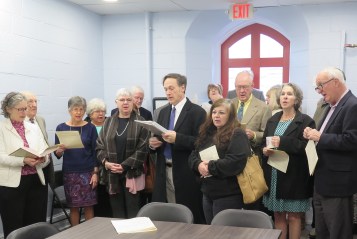
Singing at dedication

Libby, at far left, was one of the grant writers on the UTO grant.

“An actual saint was in this place, think of that,” Col. Keith Gibson told fellow church members gathered in the new Jonathan M. Daniels Community Room underneath the sanctuary of Grace Episcopal Church.

The Sunday dedication and blessing, Feb. 3, was not only the official unveiling of the room honoring an actual Christian martyr recognized by the U.S. Episcopal Church – Virginia Military Institute valedictorian Daniels, murdered in Alabama in 1965 while protecting a fellow civil rights protester. The dedication service also moved into the larger restored space – now called the Brooke Family Undercroft.

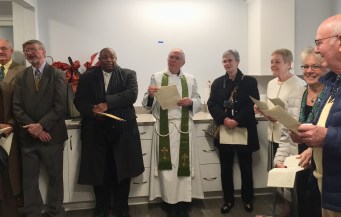
Then it moved into a refurbished third room, the Sacristy, where sunlight played through old gothic windows onto fresh-painted walls. “Blessed may you be, O Lord,” recited the Rev. James Hubbard, the interim rector.

The $325,000 renovation has brought back to life the 136-year-old undercroft of the former R.E. Lee Memorial Church. This lower level of the limestone church building at 123 W. Washington St. had been virtually unused since it was outgrown in 2007 by the early learning center Yellow Brick Road.

sacristy

L-R, Bob Glidden, Pat Mayerchak, Rev. McKinley Williams of First Baptist, Fr. James, Elizabeth Harralson, Jane Brooke, and Gail and Barton Dick.

Now it is the newest space in town for choir rehearsals, church meetings and community activities. It has even become the new home of the “Wednesday Morning Bluegrass Jam,” a local tradition that has survived some 25 years in various coffeeshops around Lexington.

The renovation, by Phoenix Construction, was supported by the second phase of the parish’s three-year capital campaign and by a United Thank Offering of $47,000 from the national church. The UTO grant was specifically to pursue the national church’s agenda of racial reconciliation under the motto of “Becoming the Beloved Community.”

An article last week by the Episcopal News Service described two years of intense debate over the church’s name. “The process of congregational soul-searching began in the wake of the 2015 massacre at a black church in Charleston, South Carolina, by a racist gunman with a fondness for Confederate symbols.’”

The vestry of the church voted in September 2017 to restore the original name of Grace, replacing the name it had borne since 1903, R.E. Lee Memorial. Robert E. Lee, when he was president of Washington College, served as the senior warden of Grace Church.

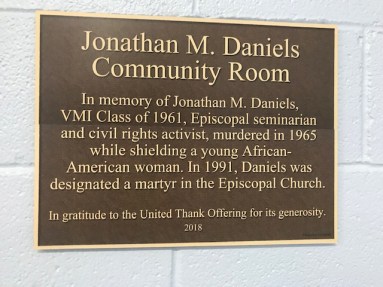
Daniels plaqueJonathan Myrick Daniels, as a cadet at VMI, attended the church and sang in its choir. In 1965, while in seminary in Cambridge, Mass., preparing to become a minister in the Episcopal Church, Daniels heeded the call of Martin Luther King Jr. to join the fight in Selma for equal voting rights. After responding clergy left the area and Congress passed the Voting Rights Act, Daniels returned to work on voter registration and breaking down racial barriers. He was killed when he stepped into the line of fire to protect a young black woman who was the target of a parttime deputy’s shotgun. The Episcopal Church honors him with a Feast Day on Aug. 14 and his name is among martyrs (including King) named in a chapel of England’s Canterbury Cathedral.

The Brooke Family Undercroft honors a Lexington family involved in the church for six generations: John Mercer and Kate Brooke, George Mercer and Isabel Brooke, George M. Jr. and Frances Brooke (who died in December at the age of 101), George M. III (who died last April at age 73) and Jane Brooke, George M. IV and Erika Brooke, and their four children, Elise, Emma, John M., and Philip Brooke.

The refurbishing of the 1875 Sacristy was underwritten by the Helen S. and Charles G. Patterson Jr. Charitable Trust Foundation.

I wrote this for the Lexington News-Gazette, which ran it on its front page, Feb. 13, 2019.

Posted in Uncategorized | Leave a comment

2018 History Division Annual Report

HISTORY DIVISION OF AEJMC

ANNUAL REPORT 2017-18

Submitted by Division Chair Douglas O. Cumming, June 9, 2018

1a. Division name: History Division of the Association for Education in Journalism and Mass Communication

1b. Current Officers

Head/Program Chair

Doug Cumming
Washington and Lee University

cummingd@wlu.edu

Vice-Head/Research Chair

Erika Pribanic-Smith

University of Texas-Arlington

epsmith@uta.edu

Second Vice Chair/Secretary (includes Newsletter Editor)

Teri Finneman

University of Kansas

Finnemte@gmail.com

Incoming Second Vice Chair (subject to vote of Division August 2018)

Will Mari

Northwest University

William.mari@northwestu.edu

Teaching Standards Chair

Kristin Gustafson

University of Washington-Bothell

gustaf13@uw.edu 

Personal Freedom & Responsibility Chair

Melita Garza

Texas Christian University

melita.garza@tcu.edu


Membership Chairs

Will Mari

Northwest University

William.mari@northwestu.edu


Amber Roessner

University of Tennessee

aroessne@utk.edu


Grad Student Liaisons

Christopher Frear

University of South Carolina

cgfrear@gmail.com


Kenneth Ward

Ohio University

kw749014@ohio.edu


Book Award Chair

John Ferré

University of Louisville

ferre@louisville.edu

Covert Award, Chair

Nancy Roberts

SUNY-Albany

nroberts@albany.edu


Joint Journalism & Communication History Conference

Nick Hirshon

William Paterson

hirshonn@wpunj.edu


AEJMC Southeast Colloquium History Division Research Chair

Cayce Myers

Virginia Tech

mcmyers@vt.edu


Webmaster:

Keith Greenwood
Missouri School of Journalism
greenwoodk@missouri.edu


  1. Annual Demographic Form. See attached file: 2018_HIST DIV demographic_form. [Please add “History Division” to top of this form.]


  1. Overall statement weighting the division or interest group’s activities for this year in the Research, Teaching and PF&R areas.


As division head, I would weight our 2017-18 activities outlined below as follows: Research 60%; Teaching 20%; Professional Freedom and Responsibility 20%. If there is an imbalance, it is only for this one year because the most challenging and preoccupying activities were related to taking on the peer-reviewed quarterly Journalism History, which has operated independently since 1974, and naming its new editor. The division’s officers also spent time working out significant proposed changes to our bylaws and discussing difficulties that have come with the popularity of a joint media history conference we co-sponsor. These activities I would characterize as largely if not entirely research oriented. At the same time, a re-formating of our newsletter Clio Among the Media from a PDF quarterly to a monthly e-newsletter carries weight for all three areas, which each produce columns for the newsletter. Also, we are sponsoring conference panels from all three areas, as can be seen in the following reports.

  1. What are your most important goals for the upcoming year?
    • We will continue to facilitate the transition of the academic journal Journalism History from an independent publication to the division’s official journal. Further details on this process so far are outlined under RESEARCH below and in last year’s annual report.
    • A solid foundation of young historians will bolster our division and ensure its future. Therefore, the incoming chair aims to increase student involvement in the History Division by encouraging a more active graduate student committee, reaching out to universities (including both mass communication and history departments) that typically are not represented on the summer and spring conference programs, and publicizing financial awards available to student presenters.
    • The division has for many years co-sponsored the Joint Journalism and Communication History Conference with the American Journalism Historians Association. The once-small conference has experienced growing pains, and its chief organizer is nearing retirement. During the coming year, the division aims to work with AJHA officers and JJCHC organizers to institutionalize the spring event, thus ensuring its future, and improve its function, especially the research paper submission and review process.
    • As history becomes an increasingly lower priority in journalism and communication curricula, it is important to emphasize that our division’s scholars have as much impact in the classroom as they do in the research community. As proposed by our teaching standards chair, the division will explore establishing a teaching competition to highlight best practices in history pedagogy.

What goals did your group set this year that you were unable to reach? Why?

  • We have accomplished all goals set for 2017-2018, although the transition of Journalism History is ongoing. The two other goals set last year by incoming head Doug Cumming related to developing a deeper “bench” among membership for serving as officers and distributing the work load (e.g. Research chair, Program chair, newsletter editor, etc.) more broadly and giving those roles more than a year’s tenure, where appropriate. The idea was to make leadership of the division more deeply experienced and more sustainable over the long run. These goals are met by a number of proposed changes in our bylaws as the three officers agreed on, and sent to membership in June for discussion and vote at our business meeting at the conference in August.

How may any or all of the Standing Committees help you to achieve your goals in the coming year?

  • The Publications Committee might be able to assist our continuing effort to find a satisfactory arrangement with an academic publisher for the division’s newly acquired scholarly journal, Journalism History.
  • The Research Committee might help with our efforts to strengthen the Joint Journalism and Communication History Conference, especially as we explore better mechanisms for receiving, reviewing, and organizing submissions of abstracts.
  • The Teaching Committee might help with our efforts to establish a history teaching competition.


RESEARCH


  1. Number of faculty research paper submissions 32; number of acceptances 20; 62.5%. (NOTE: Two of the faculty research paper submissions were co-authored with students; both were accepted.)


  1. Number of student research paper submissions 15; number of acceptances 6; 40%.


NOTE: The division received a total of 50 research paper submissions, one of which was disqualified and not counted above. Two of the papers submitted were not designated as student or faculty and also are not counted in the above questions; both were rejected. The overall acceptance rate for the division was 53% (26 of 49 qualified papers).


  1. Overview of judging process (see attached review form).

The research chair solicited judges with a variety of research interests within the field of journalism and communication history and made sure that each judge received papers within his/her area of expertise so that authors could receive the most knowledgeable feedback possible. Each paper had three reviewers. Reviewers scored papers on the attached form, and the papers to be programmed were selected based on ranking of total scores. Student and faculty papers were considered equally. Slightly more than 50% of papers were selected because the last few papers around the 50% mark were extremely close.


  1. Total # of judges 71; 2 papers per judge.


  1. Did your group conduct any other type of refereed competition? N/A


  1. In-convention activities related to research.
  • Presentation and discussion of 26 research papers.
  • Three research panels.
  • Member tour of the Library of Congress.
  • Member Q&A and tour at the National Press Club.
  • Outreach to graduate students through a jointly sponsored (with GSIG) reception at the annual convention.
  • Presentation of awards at business meeting for top papers, book, and article.
  1. Out-of-convention activities related to research.
  • Annual Joint Journalism and Communication History Conference, sponsored by the AEJMC History Division, the American Journalism Historians Association, and NYU, March 10, 2018, NYU Arthur L. Carter Journalism Institute, New York City.
  • 43rd AEJMC Southeast Colloquium, hosted by the College of Communication & Information Sciences, the University of Alabama, Tuscaloosa, AL, March 8-10, 2018.
  1. Research goals and activities of your division.


  • The big goal for the division this year was to implement the adoption of the academic journal Journalism History as the division’s official journal. Based on the investigative work of an ad hoc committee in the previous year, the division leadership recommended adoption, and the membership approved via an online vote immediately following the 2017 conference. AEJMC approved the adoption at its December meeting. Over the past several months, the ad hoc committee has continued work, ensuring the financial stability of the journal, conducting a successful search for an editor, and exploring publishing options. Our executive committee approved the recommended journal editor and began the process of setting up a journal oversight committee within the division’s leadership.
  • Another goal for the division this year was to restructure the officer positions, which relates to research because it affects the selection of Research Chair. Currently, the top three positions are Chair/Program Chair, Vice-Chair/Research Chair, and Secretary/Clio Editor. If the membership approves the officers’s proposed amendment to the bylaws, the leadership will be more in line with other divisions, as follows: Chair, First Vice-Chair/Program Chair, Second Vice-Chair/Research Chair.
  • The Clio newsletter published three times in its traditional PDF form before launching as a monthly e-newsletter. Research-related content includes journalism history book excerpts, columns related to research activity, and profiles of individual members and their research.
  • Listserv emails to promote particular events and opportunities.
  • Social media, including a Facebook page devoted to the group, allows members to discuss research in progress as well as make announcements.
  • Promotion of paper submissions through awards for top three faculty papers, top three student papers (plaques for top two places, certificates for third).
  • $500 cash prize, top academic article of the year.
  • $500 cash prize, top academic book of the year.
  • Creation of the Michael S. Sweeney Award for the best article of the year in Journalism History, with the first winner selected by Division officers from nominations by outgoing editor Sweeney.


TEACHING:


  1. In-convention activities related to teaching. For the upcoming 2018 AEJMC convention, the History Division’s three teaching panels bring together the work and ideas of 14 scholars (panelists, moderators, discussants) and five journalism practitioners. The Division co-organized three teaching panels—two that teaching chair Kristin Gustafson co-organized and one that membership co-chair Amber Roessner organized. In the space below, Gustafson describes how they each will fulfill the Teaching Standards Committee’s focus on curriculum, leadership, course content and teaching methods, and assessment collectively.


The first 2018 panel, “Contextualizing Media Credibility in 2018,” will specifically address Teaching Standards Committee’s focus on curriculum, course content and teaching methods, and assessment. Our panelists will offer ideas for how professors can provide historical perspective on the current era, when the U.S. president frequently charges that reporting on his administration’s shortcomings is “fake news” and many citizens doubt the truth and believability of journalism. We see the panel as taking into account changing notions of balance, fairness, objectivity, and credibility in journalism education and the news industry, as well as addressing histories of media relationships with government and other power-wielding entities.

The second 2018 panel, “Innovating ideas that foster a community and its history,” addresses the Teaching Standards Committee’s focus on curriculum, course content and teaching methods, and creates an opportunity for AEJMC members to interact directly with community journalists and the community stories they produce. We sought newspapers from a variety of audiences: LGBTQI, race, language-based, economic (homelessness), religious, and geographically-bound neighborhoods. Journalism educators attending the panel will learn about fresh news projects happening in the D.C. area and come away thinking about how they might replicate these strategies in their respective classrooms ranging from Race and Media to Introduction to Journalism to Mass Media History.

The third 2018 panel, “Remembering, Forgetting and Nostalgizing 1968: The Year that Rocked Our World,” addresses the Teaching Standards Committee’s focus on curriculum, course content and teaching methods, and possibly assessment. The panel brings together historians and memory scholars to explore how earlier waves of anniversary memory have addressed certain moments and movements, such as the Tet Offensive, the Martin Luther King Jr. and Robert Kennedy assassinations, the anti-war movement, and the Civil Rights, Black Power, and Women’s movements.


  1. Out-of-convention activities related to teaching.


AEJMC History Division’s out-of-convention activities related to teaching standards have taken up the Standards Committee’s focus on curriculum, leadership, course content and teaching methods, and assessment. Primarily this has been through my quarterly columns in our Division’s newsletter Clio Among the Media: Newsletter of the History Division of the Association for Education in Journalism and Mass Communication. This year’s four columns brought forward the work of 34 scholars/practitioners and featured several multi-media projects featuring student work and/or serving student research projects. As journalism educators and media historians, we have excellent classroom practices and curriculum designs. Since taking on the teaching standards chair position in 2015, Gustafson has invited Division members to share their best practices that encourage pedagogies of diversity, collaboration, community, and justice. The ideas and examples matter to our work and stretch us to explore new strategies.


  1. Teaching goals and activities of the History Division


In addition to the teaching panels and Clio columns, Gustafson proposes that we consider a special competition that highlights best practices in history pedagogy and/or scholarship of teaching and learning. As described earlier, the History Division’s teaching goals and activities focused on four pedagogies of diversity, collaboration, community, and justice. This focus supported the Teaching Standards Committee of AEJMC’s focus on curriculum, leadership, course content and teaching methods, and assessment. Our collaboration with three other AEJMC groups—Newspaper and Online News Division, Community Journalism Interest Group, and Cultural and Critical Studies Division—added breadth and depth to our division’s reach. The senior scholars who moderate panels or serve as panelists do important mentoring that supports our division’s efforts to reach out to new scholars and invite new members. As we move into the new AEJMC year, the teaching standards focus will continue to support our History Division’s goals.


PF&R:

  1. The History Division organized and was the single sponsor for the 2018 AEJMC Conference PF&R panel session “Connecting Industry and Ivory Tower: Advertising, Journalism and P.R. Executives Tell Professors How to Matter.”
    This PF&R panel offers AEJMC members insight from leaders of the industries that represent a basis for our research and for which we prepare the future workforce.

The fields of journalism, advertising, and public relations, though distinct, share a place in the academy as professional disciplines that train students for particular media careers. Increasingly, however, these are often overlapping. Beyond offering tips on how to better prepare students for the workplace, this panel explores how professors can make their research and creative activity more accessible and useful to related industries. Given the issues confronting media industries currently, we expect this panel to touch on ethical challenges of inclusion and diversity both in messaging and issues. We have recruited a highly diverse panel by race and gender to further these goals. Other ethical issues for the panel’s consideration concern the pressures on the free and independent press at a time when the media is increasingly a target of the Trump administration.

History Division Head Doug Cumming of Washington and Lee University is the scheduled moderator. Confirmed panelists from the industry include Mizell Stewart III, Gannett and USA Today Network; Elite Truong, Washington Post; Chuck Alston, MSLGroup; Wendy Melillo, American, and Jodie Warren, MDB Communication.


  1. Out-of-convention activities related to PF&R. The PF&R committee of the History Division supported the draft AEJMC statement on hate speech. At this writing, the statement is still in draft format, and though it was spurred by the incident in Charlottesville, it still provides timely, necessary, and useful recommendations for helping journalism students and working journalists in their coverage of these issues.


The History Division also endorsed the American Historical Association’s statement condemning the Polish law banning discourse about Polish complicity with the Nazis. As a member of the AHA’s Council of Affiliates, the division made this endorsement with agreement from the officers and previous head.


Additional out-of-conference activities included PF&R columns in our division newsletter, as detailed below.


  1. PF&R goals and activities. The 2017-2018 year represented a transition in the History Division PF&R chair, with Melita M. Garza replacing Tracy Lucht in the role. A primary focus of the new chair was to highlight issues related to diversity and inclusion of racial and ethnic minorities in the journalism field. Another was to extend the dialog surrounding significant PF&R events of the prior convention to help establish a continuity of ideas, rather than to simply present a one-off PF&R activity. Dr. Garza wrote two newsletter articles that elaborated on the 2017 PF&R Panel: “Where Do We Fit In? The Beginnings of the National Association of Hispanic Journalists; the National Association of Black Journalists; the Asian American Journalists Association and the Native American Journalists Association,” which was held at the August 11, 2017, AEJMC 100th Annual Conference, Marriott Magnificent Mile, Chicago, Illinois. It was a joint Minorities and Communication and History Division PF&R Panel.

The first of these columns examined the much-overlooked history of Native American journalists, and featured an interview with panelist Mark Trahant, a key figure in the founding of the Native American Journalists Association (NAJA). A second column centered on a post-convention interview with another panelist, Vinicio Sinta, who discussed the challenges of researching Latino journalism history.

One prime goal of the current PF&R chair is to try to highlight areas for more inclusive research concerning media history, and to try to expand the conception of journalism history beyond the black-white race binary. Developing a more complete understanding of American journalism history is particularly important in light of the country’s ongoing racial and ethnic conflicts.

General Information:

  1. Please see the four attached issues of the Division newsletter, Clio Among the Media. Starting in May, our newsletter converted from a quarterly PDF to a monthly e-letter as an experiment in making it more timely and flexible for digital use.


AEJMC · Association for Education in Journalism and Mass Communication · AEJMC
234 Outlet Pointe Blvd. · Columbia, SC 29210-5667 · 803-798-0271 (voice) · 803-772-3509 (fax)


Posted in Uncategorized | Leave a comment

2017 History Division Meeting Mintues

History Division 2017 Business Meeting Minutes, Chicago

(Printed in Clio Among the Media, Fall 2017, pp. 5-8)

By Erika Pribanic-Smith, University of Texas-Arlington
Vice Chair/Research Chair

Outgoing Chair Mike Sweeney (Ohio) called the meeting to order at 7 p.m. on Friday, Aug. 11.

The membership accepted the minutes from last year’s meeting as reported in the Fall 2016 Clio.

Book Award: The winner this year was Robert G. Parkinson, assistant professor of history at Binghampton University, for “The Common Cause: Creating Race and Nation in the American Revolution” (University of North Carolina Press). Book Award Chair John Ferré (Louisville) indicated that the judges selected from among 26 nominated books. Judges were Fred Blevens (Florida International), Kathy Roberts Forde (Massachusetts-Amherst), and Linda Steiner (Maryland).

Ferré described the book as “chilling and gripping,” centered on the argument that those leading the American Revolution united the colonies by turning them against a common enemy that had to be more than just England. By unifying the public against Native Americans and African-American slaves, the book argues, the nation’s founders built racism into the country’s foundation.

Parkinson said he wanted to write something about the Revolution and race, so he started by reading all the colonial newspapers. “I was really shocked about what I found,” Parkinson said, “and that’s a massive amount of material in the middle pages of the newspapers—what everyone else has overlooked.” Parkinson argued that the Revolution’s leaders needed to scare people into fighting, and they did that by preying on people’s fear and outrage.

Newspapers allowed those leaders not only to strike while the iron was hot but to keep striking, Parkinson said. They did that in part by reprinting the same items in every newspaper. Parkinson advised young researchers not to rely on databases; he said he never would have reached the argument he did if he had just “dipped in” to the available resources. “I needed to read them all, one after the other,” he said.

Covert Award: For the second time, Sheila Webb (Western Washington) received the division’s Covert Award for best mass communication history article. Her piece in Journalism Monographs, “Creating Life: ‘America’s Most Potent Editorial Force,’” was selected from among eight nominees. Webb said she became interested in Life magazine as a graduate student; she described hauling issues home from the library in garbage bags to go through them. In total, she viewed 55,000 images, of which she ultimately coded 4,500.

“I was always interested in the start-up of media forms,” Webb said. “My project was on the first decade of Life magazine, which was a new pictorial, and how does a magazine position a cultural moment in order to become the most successful magazine launch in history.”

Webb acknowledged the late James Baughman for his assistance with her research.

Conference Papers: Outgoing Research Chair Doug Cumming (Washington and Lee) reported that the division received 50 paper total paper submissions. The division accepted 28 faculty papers and 3 student submissions for a total acceptance rate of 62 percent. None of the papers had to be scrubbed for identification, which was a problem in the previous paper competition.

Each paper had three reviewers. Cumming thanked the judges for their feedback and role in the process of generating knowledge.

The following authors received awards for their work: Linda Lumsden (Arizona), first-place faculty paper; Ken Ward (Ohio), first-place student paper; Stephen Bates (Nevada, Las Vegas), second-place faculty paper; Steven Holiday (Texas Tech), second-place student paper; Kenneth Campbell (South Carolina), third-place faculty paper; Jane Weatherred (South Carolina), third-place student paper.

Elections: The membership confirmed the appointments of Teri Finneman (North Dakota State) as Secretary/Newsletter Editor and Melita Garza (Texas Christian) as PF&R Chair. These officers had been nominated by the division’s leadership. The membership made no nominations from the floor. [NOTE: The following additional appointments were made after the convention: Amber Roessner (Tennessee), Membership Co-Chair; Christopher Frear (South Carolina) and Ken Ward (Ohio), Graduate Student Co-Chairs.]

Journalism History: Frank Fee (North Carolina, emeritus) chaired an ad-hoc committee Sweeney appointed to investigate the division’s adoption of the scholarly journal Journalism History. Forde, Garza, and Will Tubbs (Western Florida) also served on the committee.

Journalism History has been operating as an independent academic journal since its inception in 1974; Sweeney has been the editor for several years. Based on its research over the past year, the ad hoc committee recommended that the division adopt the journal. Fee said that because of Sweeney’s health and the journal’s finances, Journalism History will survive perhaps 2-3 years if something is not done to secure its future.

“If we lose Journalism History, we lose a significant place for us to publish our work, which is important to the field at large for the dissemination of knowledge and to journalism history scholars for tenure and promotion opportunities,” Fee said.

Fee said the committee has identified several reasons adopting the journal can and should work. Contracting with an academic publisher would increase the journal’s profitability and provide some opportunities that the journal doesn’t have now. The committee has talked with two publishers (SAGE and Oxford) as exemplars. Interest has been lukewarm, but Fee suggested that the publishers would like to see the journal firmly in the division before moving forward.

AEJMC requires the division to show an interest and willingness to take on the journal under any circumstances (self-publishing if necessary). AEJMC would have to approve the adoption as well as any publisher contract. The AEJMC board next meets in December. Fee anticipated that the division would be ready to adopt the journal by then and possibly have a contract with a publisher prepared.

Fee said a contract with a publisher would put Journalism History on equal footing with other AEJMC divisions’ journals.

The committee proposed a two-step process: First, those in attendance at the meeting would vote on a resolution that the committee should conduct an official vote of the membership on adopting the journal. Second, the committee proposed would conduct a vote via SurveyMonkey on the question, “Should the division adopt the scholarly journal Journalism History and, if possible, contract with an academic publisher to produce it?”

Fee noted that the committee conducted a straw poll via SurveyMonkey earlier and found that 91 percent of the membership favored moving forward with adopting the journal.

Fee said Sweeney promised American Journalism Historians Association that Journalism History would not pursue a contract with Taylor & Francis, which publishes AJHA’s journal American Journalism.

In response to questions from meeting attendees, Fee noted that changes in format and flexibility would be potential trade-offs of contracting with a publisher. But, Garza added, the current model is unsustainable.

“It’s not a choice between having what we have now with the beautiful illustrations and having something else that’s not as nice visually,” Garza said. “It’s a choice between not having a journal or having a journal that’s perhaps not as pretty.”

Forde suggested creating a website where supplementary material such as illustrations could be published.

Sweeney pointed out that a publisher could attach Digital Object Identifiers (DOIs) to articles. He explained that DOIs are URLs that are guaranteed to persist forever, and an independent publisher cannot offer that. Sweeney said tenure and promotion committees increasingly are looking to see if candidates are publishing in DOI journals.

Fee added that an academic publisher can promote the journal better than an independent publisher can, raising the number of article downloads and citations.

“The benefits are considerable and the trade-offs as we’ve found them are insignificant in comparison,” Fee said.

Fee said if the division takes on the journal, it’s an all or none proposition; it’s not dependent on getting a contract with an academic publisher. The committee recommended that the division form a publications committee to scout the territory further and investigate other publication options.

Attendees at the meeting voted 45-0 in favor of conducting an official vote of the membership via SurveyMonkey.

Committee Reports

Teaching: Teaching Chair Kristin Gustafson (Washington-Bothell) mentioned the panel she co-organized with the Newspaper and Online News Division. She also asked that members send ideas for Clio teaching columns to her at gustaf13@uw.edu. She seeks ideas for teaching that involve diversity, inclusivity, collaboration, community, and justice.

Membership: Membership Co-Chairs Finneman and Will Mari (Northwest) reported that they focused on member relations over the past year. They featured members in Clio columns and social media posts, organized a tour at the Museum of Broadcast Communications, and facilitated Media History Engagement week, which resulted in 330 Twitter posts from 110 people and reached 40,288 followers. They also noted that membership has climbed slightly from 284 to 294.

Tom Mascaro (Bowling Green) expressed dismay at the condition of some of the media in the basement of the broadcast museum and asked if the division might encourage the museum to store their films better to preserve the history in the museum’s holdings. Sweeney indicated he would contact the museum to relay the concerns.

  1. Joseph Campbell (American) asked how many students were members of the division. Though that information was not available during the meeting, Sweeney reported after the convention that the division has 25 student members.

Website: Keith Greenwood (Missouri) reported that with the widespread use of social media, most updates to the website have been posting new issues of Clio. He noted that the website is the institutional history/archive for the division; he plans to fill in more of the division’s history over the next year to make it a more useful repository.

Financial Report: Sweeney reported that the division has just about broken even this year. The starting balance was $8,160.42, and income from dues as of Aug. 1 was $1,927.50. Expenses included the museum tour fee, a reception the division co-hosted at the convention with the Graduate Student Interest Group, plaques and certificates for award winners, and $500 each to the winners of the Covert and book awards.

New Business: The Council of Divisions proposed four cities for the 2021 AEJMC conference: Kansas City, MO, Austin, TX, St. Louis, MO, and New Orleans, LA. Sweeney mentioned that the NAACP recently had issued a travel advisory indicating Missouri may be unsafe for minorities, and the state of California had issued a travel ban that would prevent California institutions from reimbursing their faculty and students for travel to Texas (among other states) because of sexual orientation-based discrimination.

Among the points brought up during discussion were that AEJMC had a memorable meeting in New Orleans 20 years ago; other divisions had requested that the Council of Divisions provide further choices; it was unfair to paint everyone in the banned states with the same broad strokes; and the bans may be lifted by 2021.

Sweeney offered to report the vote to the Council of Divisions with “rich qualitative” comment expressing the division’s concerns. Thirty of the division members voted for New Orleans, seven for Austin, and one for Kansas City; St. Louis received no votes.

New Leadership: Effective Sept. 1, Cumming and Erika Pribanic-Smith (Texas-Arlington) are promoted to division chair/program chair and vice chair/research chair, respectively.

Cumming relayed his goals for the coming year, the first of which is to carry out the will of the membership regarding Journalism History.

The second goal is to deepen the bench for incoming officers in the years to come. He noted that the top officers hold multiple positions: chair/program chair, vice chair/research chair, and secretary/newsletter editor. In other divisions, those positions are separated, and spreading the roles among more people would lighten the load on the division’s leadership while providing more service opportunities for the division’s members.

Cumming thanked Sweeney for the tremendous help he had given him and others in the division over the past year. Cumming said he counted Sweeney among his heroes for taking on the task of division head as well as editing Journalism History while battling terminal cancer. Cumming presented Sweeney with a button he had found in the apartment of his father, who had been a Newsweek bureau chief during the Civil Rights movement. Cumming said he treasured the button, and “a real gift is when you give something that you treasure.” The button also was fitting to Sweeney; coming from James Meredith’s 1966 march in Mississippi to defy racism, the button said in large letters, “March Against Fear.” The membership met the gift with lingering applause.

Announcements: David Bulla (Augusta) announced that he and his colleague Debbie van Tuyll are reviving the defunct Atlanta Review of Journalism History, renaming it the Southeastern Review of Journalism History. They aim to publish an edition in Spring 2018 and are seeking submissions of research papers and book reviews. Bulla said the journal strongly encourages student submissions.

Cayce Myers (Virginia Tech), the division’s research chair for the AEJMC Southeast Colloquium, announced that the regional conference will be March 8-10, 2018, in Tuscaloosa, AL. The deadline for submissions is Dec. 11. Details are available at https://cis.ua.edu/sec18/

Nick Hirshon (William Paterson), the division’s co-coordinator for the Joint Journalism and Communication History Conference, announced that Pamela Walck (Duquesne) is the new JJCHC co-coordinator from AJHA. They are going to continue the practice begun last year of having an early-bird deadline of Nov. 1 to receive a response by Thanksgiving. Final deadline will be Jan. 4, 2018; the conference is March 10, 2018. Details are available at https://journalismhistorians.org/

American Journalism Historians Association is meeting in Little Rock, AR, Oct. 12-14. Details are available at ajhaonline.org.

Cumming announced that during the research paper competition next year, the research chair from each division will select papers most relevant to the journalism profession and submit them to a conference-wide competition with a large cash prize.

Tim Vos (Missouri) announced that the University of Missouri Press is seeking proposals for a new book series entitled “Journalism in Perspective: Continuities and Disruptions,” which he is editing. Contact Vos at vost@missouri.edu for information.

Garza reminded members about the AEJMC Trailblazers of Diversity oral history initiative. The initiative is seeking subjects; they are particularly interested in hearing from people in public relations, journalism, and the academy who have done work to promote diversity in the profession.


Posted in Uncategorized | Leave a comment

Something for Democrats to Run On

A terrible premonition dawns on my Democratic friends: Their party could fail to win either the House or the Senate this November.

An even darker vexation follows: Trump is re-elected in 2020 (after winning the Nobel Peace Prize).

My wife, shaken by this foreboding, challenged me to think of something the Democratic Party can do to stop this train wreck. It’s not enough, she says, for us just to be against Trump. We need to be FOR something.

I usually vote Democratic as an old family tradition. I’m more loyal than liberal.

But this doesn’t work for most voters. And being appalled at what we have now isn’t good enough.

So I came up with something.

I’m thinking of a busy community college campus full of people of all ages, high school dropouts, single mothers, blue-collar workers. They are struggling and sacrificing for a better future, not just for themselves but for family and that deep American impulse to rise a notch or two.

This is not like the elite university where I teach, Washington and Lee, but is much more common and important for America’s future. Take, for instance, Surry Community College, with a campus in Mt. Airy, N.C.

One of our sons, after four years in the Marines, just completed his training at SCC on the GI Bill for three types of metalworking. The school asked him to come back and teach welding. He has taken out a mortgage to buy a farm and is waiting for his first child to be born.

A few years ago, after fighting in Iraq, he was hopping trains, Dumpster-diving and protesting police oppression. But there’s something about the future that calls us all, at some point, to improve our position, to plant fruit trees or raise children, to do something not only for others, but for our own not-yet-born.

The Democratic Party should claim this. It should be the party that honors the American will to build and plant and sacrifice for our future. It should point out the contrast between this impulse and the live-for-the-moment hedonism that, oddly enough, has become the Republican brand.

Yes, Trump promised rebuilding infrastructure. But since his actual plan is such a disappointment, the Democrats should re-claim it, 10-fold. Better roads and bridges, yes, but also public transportation.

Democrats have an opening here. They should face the disaster of traffic in cities like my own  hometown Atlanta by being smart about the future, finding the good balance between preservation, recycling and engineering.

Today’s technology is neither good nor bad in itself, or rather, both very good and very bad. We don’t know what kind of future it will bring. But Democrats can talk about making it good, with time horizons going out 50 years and more.

I don’t have a slogan as catchy as Make America Great Again, but I have this idea: invest in the future beyond our selfish, crazy present. Creating a huge deficit on tax cuts that feel good, temporarily, is not future thinking. Supporting children and ordinary people’s drive for education and health is future thinking.

Seeing global alliances as an investment and not squandering our privilege as the world’s last super power, that’s future thinking.

Spending on Medicare and Social Security is related. It’s keeping a promise made by our future-thinking (Democratic) forebears.

The GOP agenda seems to be driven by a fear of the future and a reliance on TV’s emotional present tense.

I understand that. The future is scary and the present is stimulating, like Reality TV.

But the future is also something Americans have always believed in. That was the genius of the Founding Fathers. It’s why we fought a savage Civil War. Robert Frost liked to say in lectures that we don’t just believe IN the future – we believe the future IN.

We don’t control it, of course. This is not about a five-year plan or the perfectibility of man, but about actionable belief – planning and trusting at the same time.

In his poem “Carpe Diem,” Frost jokes that “seize the moment” was a hoax imposed by old poets who liked to imagine young love that way. But in reality, the poem says, life lives in the past and in the future. The present, he says, is too confusing, too much for the senses.

If Democrats could steer their party toward the future, in rhetoric and in faith, then the tail winds of the GOP breakdown will get them somewhere for sure.

This ran in the blog on Southern culture and politics “Like the Dew.”


Posted in Uncategorized | Leave a comment

A Tory ghost on the Lower East Side

Last July on the Lower East Side of New York, I was draining the ice cubes of my second cocktail at Schiller’s Liquor Bar on Rivington Street when I fell into a trance. Rivington himself seemed conjured up from the vasty deep of history.

Time: July 1, 1802. Place: Hanover Square, New York

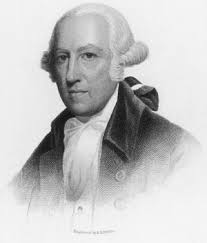
Rivington etchingGreetings, honored colleagues of the American press. I am James Rivington, or Jemmy Rivington to my friends. A “Judas” and a “servile wretch” to my old enemies. But that was a quarter century ago, during the tumultuous years of the American Revolution. I am an old man now, 78 years of age, and I have made my peace with God and my fellow man. I wish only to set the record straight on a few points of my character and my actions during those heady years when I published one of the finest newspapers in America.
I was born in London in 1724, an age when wit and fashion met in the coffeehouses and taverns, and everywhere, presses were cranking out magazines and books.

I grew up to learn the ways of a gentleman – which meant settling into my father’s business and enjoying life. Since my brother John was handling the family publishing business well after Father’s death in 1742, I eventually started another publishing shop with a partner named John Fletcher the playwright.

By temperament, I was a gambler. Many gentlemen are gamblers, but my love of gambling was inordinate. I lost as much as 10,000 pounds on one trotter at Newmarket! But then Fletcher and I made that much in profit publishing Smollett’s magnificent History of England. The life of a gambler is a life of sudden turns in the wind.

A favorable wind blew me out of England to seek my fortune in America in 1760. I landed in Philadelphia, set up a bookselling shop there, and tried my luck setting up similar businesses in Boston and New York. I helped devise a wonderful scheme for selling land in Maryland by a lottery. But this investment collapsed utterly, and I was left in ruin.

I started my New York print shop right here in Hanover Square in 1773 and launched my weekly newspaper, the New-York Gazetteer. It was a fine newspaper, lovely typography, the royal arms on the masthead, written in the King’s English, and a vital balance to the radical non-sense being printed up in Boston around this time. I printed all sides of the issues, “Open and uninfluenced,” “to please readers of all views and inclinations,” and I protected the identity of any author who wished to be protected. I had an astonishing circulation of 3,600.Rivington hung in effigy

Publishing the only major Tory newspaper, I decided to reach the widely dispersed readers of that political stripe. So to the name The New-York Gazetteer I added or the Connecticut, Hudson’s River, New-Jersey, and Quebec Weekly Advertiser. I even considered adding “West Indies,” but it wouldn’t fit on the masthead.

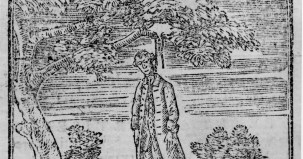
Well, 1775 proved quite a tumultuous year. The more I sought to give a calm, balanced account, the more the so-called Patriots attacked me. A mob from New Jersey hung me in effigy. To show my contempt for this insolence, I printed a woodcut of myself hanging from that same tree, well-dressed and bewigged, as always.

Then came that thug “King” Sears, a leader in New Haven of one of those so-called Sons of Liberty gangs. He led a rabble to come attack my press. Soon, I was under arrest, but was pardoned.

Now let me tell you another story. You will be astonished when I tell you that I helped General Washington win the War of Independence in 1781.

I returned to New York in 1777, when it was safely in the hands of the British Crown. General Washington had been ignominiously routed. The Crown promised me 100 pounds a year to be the official newspaper of the royal government here. I resumed my bookstore business and opened a coffee shop. The latter was very popular with the British officers, which made it an excellent place to gather the freshest news for my paper. This also made it a perfect place to gather intelligence for the Patriot cause. Yes, that’s right. I was engaged in espionage for the other side.

By 1779, I could see which way the Fates were tending. I was a gambling man and I bet on your great country.

I knew Washington, and his spies knew me.

In 1783, Washington entered New York in triumph. The British soldiers had withdrawn, and virtually all Tories had fled to Canada or back to England. Except me. Now why do you think I was protected? And why do you think Washington came straight to visit me in my bookshop? I took the general into a back room, telling him I had an important agricultural book on order for his plantation work in Virginia. The door was slightly ajar, and two of Washington’s aides heard the clinking of two heavy purses of gold being placed on the table. That was my payment. I took it, only because I was in terrible debt. The Crown had failed to pay me what it promised.

Call it the fair settling of accounts between gentlemen, for a gamble that won the day.

I am again in poverty. My paper and other businesses failed. I was in debtor’s prison a few years ago. But I am a loyal American, and will remain so until I die. In fact, I will make one more bet – and that is that I will expire in three days, on the exact day of this country’s glorious statement of independence, July 4. Then you will know, that I was a true blue American, and a damn good bettor.

I finished a scrumptious dessert and drifted out onto Rivington Street. Schiller’s Liquor Bar closed down the following month, victim of rising rents in the most economically stratified neighborhood in Manhattan.

[published in “Clio Among the Media,” the quarterly newsletter of the History Division of the Association of Education in Journalism and Mass Communication, spring 2018.]

Posted in Uncategorized | Leave a comment

Southern Crescent

Yes I guess the gate of heaven
is everywhere.
But you had to see on your cellphone
in the dark
that the train would be two hours late
turning us three back home
at exactly the right moment so that
from your side
of the turned-around car you saw
that shooting star.

Thank you, whoever made the train late,
and made the sun rise later
throwing winter light on your image
in my rear-view mirror:
The face of an angel and the bare patch
from radiation
showing a crescent scar, gateway
to consciousness.
And out there, a celestial ocean of cloud filling
the Shenandoah Valley

hilltops popping out like islands
in a bay.

Posted in Uncategorized | Leave a comment

How to change the “Confederate” name of a church

Confederate symbols in churches, especially Episcopal churches in Virginia and the National Cathedral in Washington D.C., have followed a pattern of controversy parallel to, but distinct from, the civic battles over their removal from public spaces.

Lee's church -- finally! copyIn Episcopal churches directly associated with Robert E. Lee, the controversy has been a deeply emotional, semi-private clash of sensibilities, one side claiming to respect the sacredness of history and the other, the history of sacredness.
It has been, under the surface, a re-litigating of Lee’s terms of surrender at Appomattox.

St. Paul’s Episcopal Church in downtown Richmond is the church Lee and Confederate President Jefferson Davis attended during the Civil War. Five months after the mass shooting in a black church in Charleston by a neo-Confederate waif in June 2015, the church began removing images of the Confederate flag from kneelers, bookplates and plaques. “This decision is completely asinine,” one reader commented online in the Times-Dispatch. “These are monuments to the dead and have a deep and direct connection to the history of this building. Burning books and removing historical markers will not help you resolve your juvenile white guilt, self-hatred, or racism.”

The rector of St. Paul’s, the Rev. Wallace Adams-Riley, resigned on Sept. 15 amid speculation that the church’s embrace of Presiding Bishop Michael C. Curry’s call for racial reconciliation had played a part. St. Paul’s own commitment to the national project is called History and Reconciliation Initiative (HRI), which some felt was somehow behind Adams-Riley’s resignation. A statement from the vestry refuted these rumors.

“Nothing could be further from the truth,” the vestry said. “HRI is the most vibrant and energized project St. Paul’s has undertaken in many years. This work is a mandate of the Presiding Bishop and was Wallace’s gift to the church, and we intend to live it forward fully, without reservation.”

Meanwhile, at Christ Church, Alexandria, a 1773 Episcopal parish that claims George Washington and the Lee family as former worshippers, a relatively new rector was pushing for the removal of heavy memorial plaques to Lee and Washington on either side of the altar, both donated by parishioners after Lee’s death in 1870. The Rev. Noelle York-Simmons, suggesting the church needed to be “radically welcoming,” had run into resistance. “The discussion about the appropriateness of the plaques in our worship space caused friction in our parish family,” said an Oct. 26 letter signed by York-Simmons and the vestry. “We understand that the discernment process has felt confusing and exclusive. We hope all parishioners will be more fully involved as we move forward.”

In Lexington, Va., the friction began for R.E. Lee Memorial Episcopal Church in 2015 after the Charleston shooting. A parishioner who teaches Shakespeare at Washington and Lee University next door wrote a letter to the rector, the Rev. Tom Crittenden, and the senior and junior wardens calling for a “frank, Christ-centered discussion about the name.”

Father Crittenden believed that compromise was possible, with enough love and forbearance. It turned out to be a far more difficult and costly belief than anyone imagined. But in the end, he was right.

I was on the vestry of the parish for all three years of the controversy.  On Sept. 18, 2017, my final year, I voted with a bare majority 7-5 to change the name to Grace Episcopal Church.

To me, it felt like a miracle, considering how unbending the resistance had been since 2015 among some lay leaders and how empty the church’s youth program had become because of the alienation of younger families. The defense of Lee’s memorial name, which would have mortified Lee the traditional churchman, had become a gothic battlement against the shifting cultural winds.

“Grace” seems the right word, a return to what it was called in the 19th century when Lee was senior warden after he joined the church in 1865. (“Memorial” was added after he died in 1870; it became R.E. Lee Memorial in 1903).

In 2015, Father Crittenden did not try to stop the issue at the church door. But neither did he push toward a foregone conclusion. He summoned a special vestry meeting. He helped organize house meetings and parish meetings for well-run discussions. Instead of a vote, there was a survey. Nearly a third of the congregation felt there was something wrong with the name, from a Christian perspective.

Despite all of this effort at dialog – or maybe because of it – most members were unhappy with the process. Although the vestry had imposed a super-majority requirement on itself for such an upending change (falling one vote short, 9-6, in November that year), neither side felt that the vote settled anything. The church ended the year in a dark funk.

In the face of a fractured church that one vestry member compared to our national political discourse, the rector sought outside help that turned out to be based on radical peacebuilding techniques from the pacifist Mennonite branch of Christianity.

Cooperative by Design, LLC, is a consortium of “peacebuilding practitioners,” most of whom have connections with Eastern Mennonite University, an hour northeast of Lexington in Harrisonburg. Father Crittenden researched the group and, with the vestry’s approval, invited two of its consultants (one an Episcopal priest) to the vestry retreat in January 2016. Two things were memorable about their visit to that retreat: A technique of giving an individual the power to speak while others listened and secondly, the idea that conflict was not something to be “resolved” but was a kind of energy that could be used for “transformation.”

Such conflict-transformation was to come from recommendations by a group of six parishioners who would experience that transformation themselves. It would be expensive: The original contract was for up to $12,000, but the work took more time and effort than the consultants had planned on. In the end, Cooperative by Design submitted bills totaling more than $16,000.

It was hard, wrenching work for the six on the committee. They all said as much, although they were reluctant to speak as individuals about the experience. After nine months of two-hour meetings every two weeks, plus leading about a dozen focus groups with more than 100 parishioners, this “Discovery and Discernment Committee” formed a bond of confidentiality: No grandstanding. When they submitted their final 15-page report in April, they seemed to me like castaways rescued from an island after a powerful common experience.

Father Crittenden was seeking healing and reconciliation, so did not put a limit on where God might lead the committee. But even he did not expect the committee to come back with a recommendation to change the name, or that it would cost him his job. When they first came, the consultants had insisted that the name-change was only a symptom, a “presenting” issue of conflict underneath. What the underlying issue or issues might be was anybody’s guess.

Robert E. Lee as symbol, a symbol generations of white Southerners invested with almost Christ-like qualities (as historian Emory M. Thomas has noted), has been hard on the rectors of Lee’s churches. The reason Father Crittenden resigned after it was all over is complicated, and in some ways, inexplicable. A steady, patient, gifted man, Father Crittenden announced his resignation after 10 years at R.E. Lee Memorial, and three and a half weeks after the name change.

In one of his last sermons, he called the D&D report our “John the Baptist moment.”

To many parishioners, it seems he was chewed up unfairly by the name-change controversy. He was faithful to a middle way, a way that worked beautifully for him in his previous parish in Tallahassee. There, his church flourished and weathered liberal-conservative battles over doctrine that had caused six other Episcopal churches to split or close down.

In the fullness of time, it was his middle way that changed the name from R.E. Lee to Grace. The Discovery and Discernment Committee had found “identity” as an underlying issue. The answer to that identity could not be a stark binary choice, dividing “winners” and “losers.” It had to be compromise. The committee’s recommendation was to restore the historical name of Grace, but also create a subcommittee “to honor Lee and the history of this parish in meaningful and significant ways.”

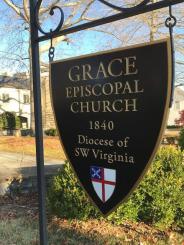
It took the vestry five months to accept that compromise, and even then, it was with a close, bitter vote. But the D&D committee’s recommendation became the map. No more argument was needed. Now a sign hangs out front for “Grace Episcopal Church, 1840,” and a history committee I chair, dominated by church members who opposed the name change, is discussing an interpretive sign for the front of the Parish Hall with brief sketches of famous people who worshipped in the church. That would include Lee, of course, but also could include Jonathan Daniels, a former VMI cadet who was martyred in Alabama in 1965 while helping register blacks to vote.

Father Crittenden’s farewell sermon was on All Saints Sunday. He said that he prays we will continue to implement the Discovery and Discernment Committee’s recommendations — “all of them,” he added. “Last April, the vestry ‘tabled’ some of the recommendations. People of God, we don’t, we can’t table the work of the Holy Spirit!”

###

This ran as an opinion column on Religion News Service.


Posted in Uncategorized | Leave a comment

Real news, in my opinion

Fake news was real.

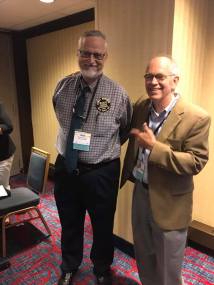
Me and Mike

Mike and me, outgoing and incoming heads of History Division, AEJMC

There really were a bunch of teenagers in a former Communist city in the former Yugoslavia cranking out confections with tabloid-headlines quoting fake FBI sources saying Hillary Clinton was about to be indicted, or whatever.

Kids will be kids, and on social media, they learn fast. These kids learned that the American click-bait market paid better than the Eurozone, and that politics worked better than listicals, and that pro-Trump scams were easier to manufacture than cat videos.

So they flourished for a while during the 2016 presidential campaigns, fooling Trump fans with more than 100 websites that sounded like red-blooded right-wing American political sites. But the system is self-correcting. Sort of. BuzzFeed and The Guardian exposed the fraud. Google and Facebook said they would shut down fake news sites. Not much damage was done. Oh yeah, except Donald Trump was elected president.

Trump is amazing. You have to admit it. A shameless swindler on a scale that makes the Music Man and Wizard of Oz seem puritanical. To say he “lies” misses the point. Poets lie in one way. Swindlers lie in another. But it’s not really lying. It goes with the vocation.

If his dominance were just reality TV, pro wrestling or tabloid news, we could be entertained or put off, as New Yorkers and cheated contractors and golf partners have been for decades.

But we’re media historians and communication professors, not quite his “enemy of the American people,” but fellow travelers. To add another swirl to his libido for confusion, he misappropriates the term “fake news” by applying it to the New York Times and CNN.

The “failing” New York Times (with stock rising from $13 to $18 a share in the past year) does indeed commit factual errors every day. That’s journalism. Trump applies the term fake news to real journalism in two ways. One is for news he doesn’t like. The other is for when there’s an error in a news story he doesn’t like.

How do you teach this stuff these days? How do you study it?

Craig Silverman, the media editor at BuzzFeed who exposed the fake-news prodigies of Macedonia, is a leading expert on fake news and on the related problem of online verification of rumors (about which he produced a good study in 2015 for the Tow Center for Digital Journalism). I enjoyed his keynote address at AEJMC in Chicago, although his narrow definition of fake news came in for debate at a later conference session.

Silverman defined fake news as made-up online material designed only to make money, not to advance an agenda. When it is to advance an agenda, he said, it’s propaganda.

Either way, I was inspired after that session to post on my Facebook page the following resolution: “I will not open any more shared sites unless I recognize the source. I don’t mean the person sharing. I mean the link. I recommend this practice to all. You can ask the person sharing to please describe why they trust some fresh source you’ve never heard of. We can solve this problem.” I would include my nephew’s amateur video that has gotten more than five million hits.

In the History Division’s final research session on Saturday, Julien Gorbach of the University of Hawaii presented a paper proposing a more elaborate taxonomy of made-up news, “Not Your Grandpa’s Hoax: A Comparative History of Fake News.” Gorbach goes back to Defoe, The New York Sun and Poe to categorize types of hoaxes that have always played out in the history of journalism. But in the age of social media, the “fun” of yesteryear’s hoaxes has been replaced by real danger, from hijacked elections to nuclear war. Like journalist Richard Hornik at Syracuse, Gorbach argues for more news literacy.

This was also the main point of a resolution from AEJMC’s RF&R standing committee that the conference approved. It addressed “threats to the First Amendment” and reaffirmed the association’s commitment “to journalism and its role and function in a free and democratic society.”

I was surprised that the resolution, with its windup of eight Whereas sentences, failed to mention Donald Trump, though his shadow fell over most of the document. The sentence on fake news was especially gossamer. “Whereas repeated allegations of ‘fake news’ underscores a pressing need for a more media-literate electorate” . . . huh? The sentence did get its verb-number corrected to “underscore.” But I had to speak up to agree with the woman who complained about the weakness of this wording. First of all, it’s the actual viral-going existence, not allegations, of fake news that underscores the need for media literacy. And then it’s Trump’s twisted name-calling – hardly deserving of the term allegations – that misapplies the term fake news as his way of dodging and changing the subject.

The high point of the conference for me was getting a bear hug from Mike Sweeney as about 50 members of our division stood in prolonged applause for Mike. He has been matter-of-fact about his cancer, and the daily rest he needed even at the convention, because of treatment. Through all this, he continued working at Ohio University, chaired the division, edited Journalism History, and supervised the ad hoc committee that Frank Fee chaired to map out how our division can take on this publication.

I didn’t have anything like a proper gift for Mike, but I happened to have a historic button that meant a lot to me. So I gave it to Mike. It was a large black button that announced James Meredith’s March Against Fear, Mississippi, 1966. As I said then, Mike is one of the two living heroes I look up to. (The other is our daughter Sarah, 26, whose brain surgery in New York three days later successfully removed half her slow-growing tumor, and didn’t damage the insular cortex she dearly needed to do medical journalism well.)

Our job is to not be afraid, looking to James Meredith and Mike Sweeney for examples.

Now I have a new button that I got in New York, from a friend at the Times. It’s a small white button that says “Truth. It’s more important now than ever.”

Note: This was my initial column as AEJMC History Division head, in the fall issue of Clio Among the Media, the division’s quarterly newsletter.

Posted in Uncategorized | Leave a comment

After tragic fire in historic synagogue: Shared space or hyper-gentrification?

Story and photos by Doug Cumming

NEW YORK — An abandoned synagogue that for 120 years housed New York’s oldest Eastern European Jewish congregation was not noticed much – until it lit up the sky last May.

The flames that pillared up from Beth Hamedrash Hagadol that Sunday evening, Mother’s Day, caught residents’ attention more than two miles away. People who knew the history of this neglected site in the Lower East Side began calling one another, like relatives when a loved one dies.

IMG_0455

Ruins of Beth Hamedrash Hagadol Synagogue

Elissa Sampson, an urban geographer who had long hoped for the building’s restoration, got such a call, but couldn’t bear to go outside and look. “I had a very good sense I didn’t want to see its demise.”

For another neighborhood preservationist, avoiding the pain took longer.  “I couldn’t go there for about two weeks after the fire,” Holly Kaye, founder of the Lower East Side Jewish Conservancy, told a Landmark Preservation Commission (LPC) hearing July 11. “It’s just a tragedy.”

Now the question that neighbors and preservationists are asking is this: If any portion of the looming ruins can be saved, will it be used as part of a shared community space that honors the rich immigrant history of the Lower East Side? Or will it become another iconic gesture embedded in another multi-million-dollar luxury apartment building?

The cathedral-style neo-gothic brick building, whose name means “Great House of Study,” dates back to a Protestant church in the 1850s. Its first rabbi in the 1880s, Jacob Joseph, was the city’s only “chief rabbi,” a European title that didn’t last in New York beyond Rabbi Joseph’s massive funeral in 1902. Beth Hamedrash Hagadol’s rabbi from 1952 until his death in 2003 was Ephraim Oshrey, a noted Talmudic scholar and Holocaust survivor.

IMG_0554

Elissa Sampson, an urban geographer, observes a pew in her home from the original 1850 building.

In her residence several blocks from the ruins at 60 Norfolk St., Sampson points out a piece of the original synagogue, a short wooden pew, that survives in her home. She flips through the pages of The Synagogues of New York’s Lower East Side, a 1978 book she helped update for a second edition in 2013.

There is a photo of Rabbi Oshrey, a remarkable religious leader who drew many old-time as well as newly arrived Orthodox Jews to the synagogue. Sampson said he played a leading role in saving the building when much of the Seward Park area fell victim to “slum clearance” in the 1960s. Oshrey had the building “landmarked” in 1967, the early years of New York’s powerful Landmark Preservation Commission.

“Rabbi Oshrey, being no fool, did not want to lose his synagogue,” said Sampson, who is also a visiting lecturer at Cornell University. “He understood very well its history and was in a good position to know why it was important.”

The landmark protection of the building became a hindrance to finding a viable commercial future for the synagogue. In 2012, Rabbi Mendel Greenbaum, the son-in-law of Rabbi Oshrey, filed a hardship application with the LPC for relief from the landmark restrictions. (With no remaining congregation, ownership of the synagogue had been transferred to “Beth Hamedrash Hagadol of New York Restoration, Inc.” for $10, according to a deed dated May 13, 1969, signed by the new owner Aron Mendel. Mendel lives near Rabbi Greenbaum in a Hassidic section of Brooklyn.)

IMG_0547

Photos of the synagogue and Rabbi Oshrey in the book The Synagogues of New York’s Lower East Side

The LPC did not grant hardship relief in 2012.

At the July 11 LPC hearing after the fire, several speakers aired rumors or suspicions that neglect of the building since 2012 was deliberate, since its real estate value has risen by some $6 million since the fire.

Holly Kaye, who had been working for 20 years to save the synagogue, quashed those rumors. She said Rabbi Greenbaum’s request for hardship relief outraged the community, but when she talked to the rabbi about this at that time, he immediately withdrew the application and completely changed his outlook. Since then, she said, he has worked with community groups and potential development partners to save the synagogue.

In fact, Kaye said, a meeting about a preservation plan was just days away, with the Chinese-American Planning Council and other development partners, when the synagogue was ravaged by the fire. To imply that the rabbi had anything to do with the fire “goes against everything that I know,” she said.

Sampson agrees. “While the rabbi is indecisive and did not take the right steps from 2007 to before the fire to secure the building and restore it,” she said, “there’s a distinct difference between saying that and connecting it to the arson. It has absolutely nothing to do with the arson.” The building wasn’t even insured – or insurable, she added.

Rabbi Greenbaum did not respond to email or phone calls.

Whether or not the building could have been more secure or in better shape, the deterioration was so advanced, Sampson had ceased giving tours of the interior. The mold was a liability, she said. There had been other minor fires inside, and young people were frequently breaking in to party. Bernice Cincron, manager of the high-rise residential building next door, said her supervisor would call the rabbi whenever they noticed a break-in.

Police questioned three 14-year-olds suspected of being in the synagogue when the fire started, and released one of the juveniles after charging him with arson.

The LPC disappointed the applicant, who wanted permission to conduct the demolition completely free of landmark restrictions. Instead, the LPC granted the right to remove all unsafe portions in accord with engineering studies by both the LPC and the owner. The engineering studies agree that most of the walls and towers are too unstable to be saved. But once the remains are safe, the owners and development partners are to assess how these might be incorporated in a new development plan.

This gives community activists some hope. The day after the July 11 decision, the online Bowery Boogie published an upbeat, anonymous op-ed by a resident who lives across the street and watched the fire from there.

“I have been fortunate enough to travel the world, and have seen amazing culturally significant buildings transformed into parks, galleries, municipal buildings and other structures,” the resident wrote. “We as a community, if we think creatively, can do that with the space and structure that is salvageable at Beth Hamedrash.”

This is Elissa Sampson’s hope. It’s not so much a matter of how much of the physical building remains, but how it is used. One vision is something like the re-purposed synagogue at 172 Norfolk St., a Reformed German Jewish synagogue older than Beth Hamedrash Hagadol that was saved from the wrecking ball by Spanish artist Angel Orensanz. Today, that brightly painted building is a cultural center, a wedding venue for celebrities, a highlight of Lower East Side tours and rented space for a Reform Jewish shul.

IMG_0556

Tour group views Angel Orensanz Center at 176 Norfolk St., several blocks north of the burned synagogue.

The contrasting vision that Sampson fears is hyper-gentrification, embodied by the 16-story glass Blue Tower at 105 Norfolk St., where apartments rent for as much as $18,000 a month and the top floors sell for $7 million, according to Lower East Side Tenement Museum tour guide Laureen Fredella.

“So the real stakes in the Lower East Side are that of belonging in terms of long-term residents, and fostering a sense of belonging in new-time residents,” Sampson says. “It’s across the board, in having equity in the neighborhood in ways that play fair whether it’s access to green space, public space, housing, and having diversity.”

Historically, the area was the most densely populated place on the planet and an incubator of the hope, liberty and faith of American immigrants. Now, Sampson says, it’s one of the most economically stratified neighborhoods in New York City.

Posted in Uncategorized | Leave a comment

Rounding Manhattan

The tourists sitting in rows on the top deck of the docked Circle Line Manhattan waited to be entertained, and at $41 per adult ticket, $27 for children, it better be good.

“Ladies and gentleman, boys and girls,” a brassy New York voice blared over the speakers, beginning the invisible tour guide’s spiel. His intro seemed a little long for not moving out of the diesel fumes while the ship sat lashed to the pier’s parking deck.

“There are some very cool things to see,” the voice said. He promised a lot of history and claimed this tour was different from all the other sightseeing tours. When you’re well out from the city looking back, he said, something very special happens.

Engines kicked in under the steel deck, and presently, the voyage was out on the windy Hudson River. The promised magic took hold.

Women began to look like models in a studio when a fan blows their long hair and they gaze off into a gel light. The sinking sun behind a cloud over the New Jersey side cast down cathedral light beams. The boat curved toward the south over what the tour guide called a “sacred space,” where Captain “Sully” Sullenberger had belly flopped an engine-less jet airliner in 2009 without losing a single passenger. The geese that clogged the engines didn’t fare so well.

The guide could be found in the covered foredeck, an actor named Malachy Murray who said he had played Dracula on Broadway. A mic in one hand, that arm covered in tattoos, he invoked the old days of the world’s greatest shipping port, of the Hamilton-Burr duel in those woods on the New Jersey side, and of the immigrant’s dream back when Ellis Island took in the tempest tossed and wretched refuse. Thick blond hair spilling over his shoulders, he is Irish-American, lives in the Hell’s Kitchen neighborhood of New York, and when asked about his classic New York accent, quipped, “I worked hard on it for 52 years.”

The two-hour tour circled around the great island of file-cabinet skyscrapers, chugged under the cable-knit East River bridges to Roosevelt Island, and muscled out to a vantage point between the Statue of Liberty and dense-packed lower Manhattan as both lit up. The glow brought a hundred cellphone cameras aloft, offering a perfect contrast to the blue-gray waters below and clouds above the color of a large bruise.

“Is that great, or is that awesome?” Deanna Ezzell of Kansas City, Mo., said to her husband Jason, pointing at the Statue of Liberty they had been inside the day before.

A light rain began falling and the festive mood got even higher when the crowd huddled close together under the shelter behind the foredeck. Most of the wet seats in the open were abandoned. But a young woman out there with a few others laughed under her tightly held umbrella, rib-bent upward in the wind like a flower.

Posted in Uncategorized | 1 Comment